Things to Say to Your Kids About Why You’re No Contact with Their Narcissistic Parent
Explaining to kids why you are no contact with their narcissistic parent is one of the hardest conversations you will ever have as a protective parent. When you decide to go no contact with a narcissistic parent, kids often feel caught in the middle of a storm they do not understand. After surviving a 12-year toxic relationship with a partner who displayed severe NPD and BPD traits, I know firsthand how terrifying it feels to protect your children while trying to explain the unexplainable.
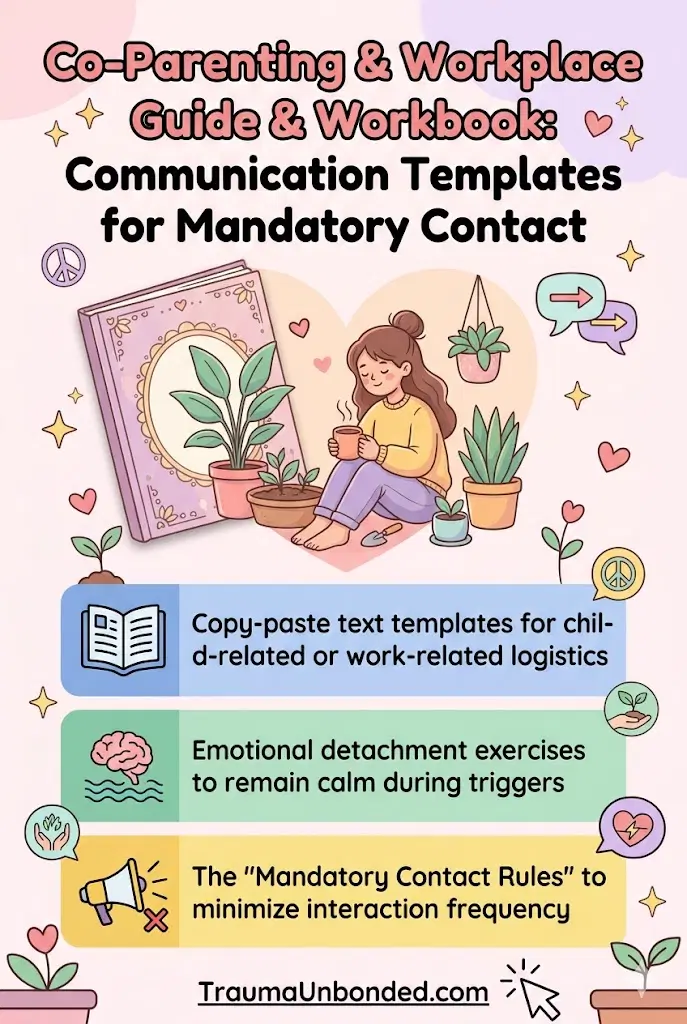
How do you explain to a child that one of the people who brought them into this world is unsafe to be around? If you are currently navigating this painful transition, preparing yourself with a practical Co-Parenting Guide & Workbook can help you establish firm boundaries while keeping your kids safe from emotional fallout. It is about protecting their peace without forcing them to carry the weight of adult problems.
Keep Explanations Age-Appropriate Without Badmouthing
When you are talking to children about a narcissistic ex, your goal is to provide clarity, not to recruit them as allies. During my own healing process, my therapist reminded me that kids process reality based on their development stage. If we dump our adult anger onto them, we risk creating a different kind of emotional wound.
Badmouthing the other parent can actually backfire on you. Children naturally view themselves as half of each parent, so when we tell them their other parent is evil, they may hear that they are half evil too. Instead, focus on behaviors rather than labels.
For Younger Kids (Ages 3 to 9)
Younger children do not need to know about personality disorders, gaslighting, or manipulation. They simply need to understand the concept of safety and kindness in simple terms. You can explain that sometimes grown-ups have a hard time being nice to each other, and it is your job to make sure the house is a happy, calm place.
Use analogies they can easily grasp. For example, explain that just like some toys need to be put away because they are broken and might hurt someone, some relationships need a timeout to stay safe. Keep your answers brief and reassure them that they are loved and did nothing wrong.
For Pre-Teens and Teenagers (Ages 10 and Up)
Older children usually notice the tension and might have already experienced some of the cold shoulder or erratic behavior themselves. For this age group, you can talk about healthy boundaries and emotional safety. You do not need to diagnose your ex, but you can say that the other parent is unable to treat people with respect right now.
Encourage them to share their observations. Ask them how they feel when they are around certain behaviors, and validate their reality. This helps them build their own radar for healthy relationships rather than just taking your word for it.
Validate Their Feelings and Expect Complex Grief

Going cold turkey on a parent triggers a profound sense of loss for a child. Even if that parent was unstable, the child may still miss them deeply. When explaining boundaries to kids, we must allow space for them to feel angry, sad, or confused without feeling like they are betraying us.
In my own home, there were nights of heavy tears and slamming doors. I had to learn not to take their grief personally. If you find yourself struggling with the emotional aftermath of this split, looking at a no-contact recovery roadmap can give you the personal grounding you need to support your family.
Your children might direct their anger at you because you are the safe parent. They know you will not abandon them, so you become the target for their frustration. When they scream that they hate you for keeping them away, take a deep breath and remember it is the pain talking, not their true hearts.
Managing the fallout of a narcissistic breakup while trying to keep your children grounded is incredibly heavy work. To help you handle the day-to-day pressure, the communications, and the boundary setup without losing your peace, I highly recommend using a structured, practical blueprint designed specifically for these situations.
Concrete Scripts to Use in Daily Conversations
Sometimes you just need the exact words to say when your child asks a direct question. Having a script ready prevents you from stammering or saying something you might regret later in the heat of the moment. Here are some simple, grounded ways to respond depending on the situation.
If they ask: “Why can’t we see Mom/Dad anymore?” you can answer: “My most important job is to make sure our home is safe and peaceful. Right now, Mom/Dad is struggling to treat people with kindness and respect, so we need to take a break until they can do that.” This focuses on behavior, not character assassination.
If they ask: “Does Mom/Dad still love me?” you can answer: “They love you in the best way they know how, but sometimes people have troubles that make it hard for them to show love in a healthy way. Their troubles have absolutely nothing to do with you.” This protects their self-esteem while maintaining the boundary.
If you find that complete cut-off is not fully possible and you are still forced to interact occasionally, mastering a grey rock coparenting guide strategy can help you keep your interactions entirely flat, boring, and free from emotional reactions. The goal is to show your children that you are the steady, unshakeable anchor in their life.
Rebuilding a Safe and Predictable Home Environment
Once you establish a boundary, consistency becomes your superpower. In my 12 years of walking on eggshells, my home was a chaotic war zone where rules changed daily depending on my partner’s mood swings. When I finally cut ties, my first goal was to build a home environment where the rules were clear and predictable.
Children thrive when they know what to expect. Establish simple daily routines, keep meal times regular, and maintain clear expectations around behavior. When their outside world feels like it is spinning out of control, their home should feel like a sanctuary.
Remember that you cannot control what the other parent does or says when they try to reach out. You can only control your response. By staying calm, consistent, and emotionally present, you show your children that safety is a real, tangible thing they can count on every single day.
Navigating this path is a marathon, not a sprint, and your children will gradually understand the truth as they grow. Be gentle with yourself as you find the right words, and know that your commitment to their emotional safety is the greatest gift you can give them. To help you stay steady and hold your ground through every challenge, check out the Co-Parenting Guide & Workbook for practical support and templates designed to protect your peace of mind.

Meet Your Guide
Helen Brooks
After surviving a 12-year NPD/BPD relationship, I dedicated over a decade to studying trauma bonding and nervous system recovery. My mission is to help you break free from the fog and reclaim your authentic self.
Ready to break the trauma bond and reclaim your life?