
What Happens After 1 Year of No Contact with a Narcissist: Long-Term Recovery
What happens after 1 year of no contact with a narcissist is a profound shift in your nervous system and mental clarity. When I finally walked away from a chaotic 12-year relationship with a partner who had both NPD and BPD traits, my life was in ruins, my social circle was gone, and I felt entirely hollowed out. But committing to a radical no-contact strategy changes your brain chemistry in ways you cannot yet imagine during the early, painful days of withdrawal.
In the beginning, your days are defined by obsessive thoughts and a physical craving to check their social media. But after a full year of complete silence, those loud, agonizing alarms in your head finally begin to quiet down. How does this long-term physical and emotional reset actually unfold over twelve months of commitment?
What Happens After 1 Year of No Contact with a Narcissist?
After 1 year of no contact with a narcissist, your nervous system exits chronic survival mode, allowing your brain chemistry to balance and your cognitive clarity to return. You transition from agonizing trauma-bond withdrawal to rebuilding your core identity, reclaiming your independence, and establishing firm personal boundaries.
To reach this milestone, you must pass through several distinct emotional phases. During the first few weeks, the intense trauma bond withdrawal symptoms make you feel like an addict trying to quit a drug. You ruminate constantly, wondering if they are happy with someone else or if they will ever realize the pain they caused you.
My own recovery was not a straight line; it was a messy process of unlearning codependency. For years, I had put my ex on a pedestal while letting my own interests, friendships, and self-respect slip away entirely. But following a structured no-contact recovery roadmap helped me rebuild my life step by step.
1. The Fog Lifts and Cognitive Clarity Returns
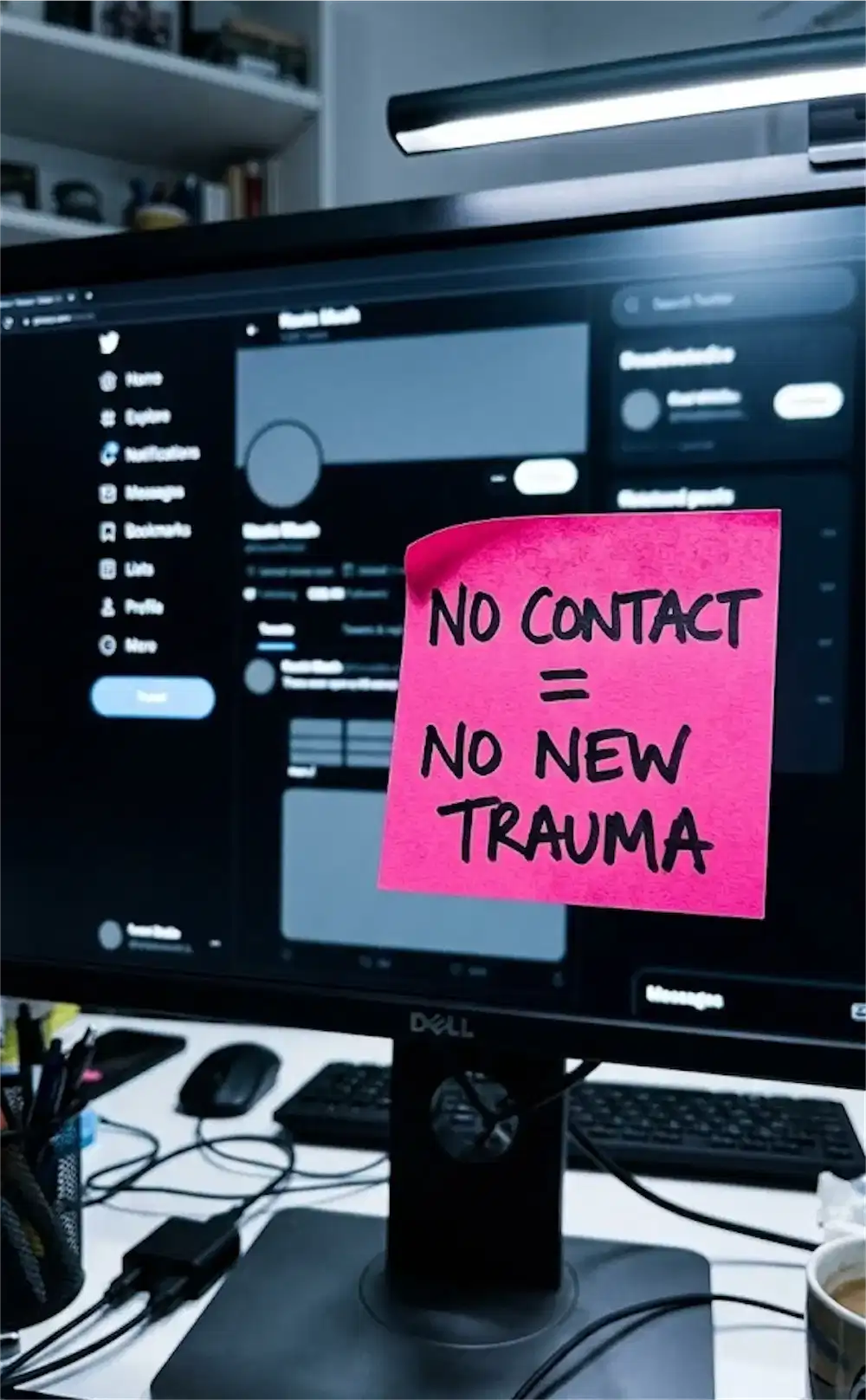
Living with a highly manipulative partner means walking on eggshells every single day. The constant gaslighting, which means manipulating someone into doubting their own reality and memories, makes you question your sanity. After a year of silence, the mental fog caused by elevated stress hormones finally dissipates.
According to articles published by Psychology Today, removing yourself from a toxic stressor allows your amygdala to calm down and your prefrontal cortex to function normally again. You will notice that you can remember details clearly, make decisions without second-guessing yourself, and focus on simple tasks at work without feeling overwhelmed.
Clear Signs Your Nervous System is Resetting
- Your sleep patterns stabilize without late-night anxiety.
- You no longer jump at the sound of incoming phone notifications.
- Your mind can focus on a single task without drifting into loops of rumination.
2. The Trauma Bond Weakens
The trauma bond is a physical and emotional addiction to the highs and lows of the abuse. When you are in it, your brain is flooded with dopamine during the reconciliation phases and cortisol during the discard phases. It feels impossible to break free because your physiology is wired to seek comfort from the very person causing you pain.
After twelve full months of keeping strict no contact boundaries, your physical addiction to their presence subsides. You no longer wake up in a panic checking your phone for an incoming call or text. Your brain has slowly rewritten its reward pathways, realizing that peace is far safer than the chaotic highs and lows of toxic love.
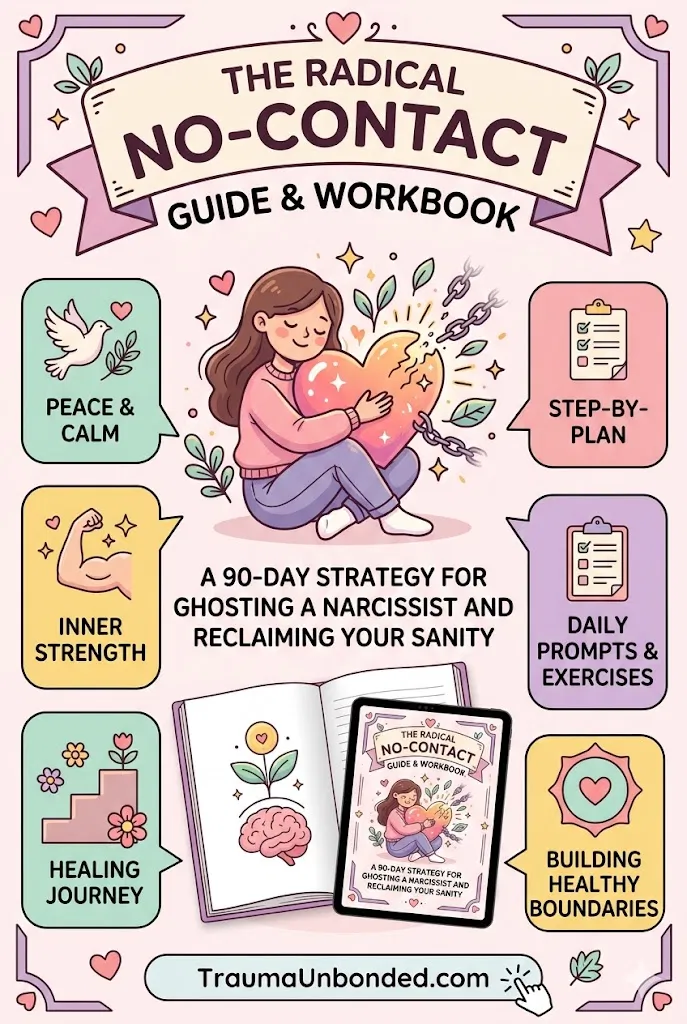
If you are struggling to stay strong during the early stages of this journey, or find yourself tempted to break silence, a structured plan can help keep you grounded. I designed a step-by-step roadmap to help you navigate this difficult path without losing your sanity.
3. Rebuilding Your Identity and Hobbies

In a toxic relationship, you gradually lose your sense of self because all your energy is spent managing your partner’s emotional volatility. When I escaped my 12-year situation, I did not even know what music I liked, what foods I enjoyed, or what I wanted to do on a Saturday morning. I felt like a ghost walking through an empty house.
At the one-year mark, you begin to reclaim these lost fragments of your soul. You might start a simple daily routine, sign up for a class, or pick up an old hobby you abandoned long ago. This is not just about keeping busy; it is a vital part of reclaiming your identity and building a life that feels safe and self-directed.
4. The Hoovering Threat Changes
Hoovering is a classic manipulation tactic where a toxic ex attempts to suck you back into the relationship using guilt, false promises, or sudden emergencies. During the first few months of silence, a hoovering attempt can easily pull you back because your defenses are low. You might think they have finally changed.
By the time you reach one year, however, your reaction to these attempts shifts completely. If they try to reach out through a mutual acquaintance or an old email address, your response is no longer panic or longing. Instead, you feel a quiet sense of detachment or even indifference because you see the manipulation for what it is.
5. Reclaiming Your Original Self
Can you remember who you were before you met your toxic ex? Many survivors worry that they are permanently broken by the chronic stress and emotional abuse. But long-term recovery proves that your core self never truly disappeared; it was simply buried under layers of self-protection.
After a year of no contact, you will find yourself laughing genuinely again and looking forward to the future. You will feel grounded, optimistic, and comfortable in your own skin. The hypervigilance, which is always waiting for the next argument or crisis, fades, replaced by a quiet confidence in your ability to protect your own peace.
Reaching the one-year mark of no contact is a massive milestone that proves you are no longer defined by the trauma of your past. While the initial months are a battle against biochemical addiction and self-doubt, staying the course rewards you with a life of genuine peace and clarity. If you are ready to take full control of your healing process, the radical no-contact guide is an invaluable tool to support you every step of the way.

Meet Your Guide
Helen Brooks
After surviving a 12-year NPD/BPD relationship, I dedicated over a decade to studying trauma bonding and nervous system recovery. My mission is to help you break free from the fog and reclaim your authentic self.
Ready to break the trauma bond and reclaim your life?