How to Reconnect with Your Authentic Self Before the Abuse Changed You
To reconnect with your authentic self after years of emotional survival, you must first recognize how the chronic manipulation of a toxic partner slowly dismantled your sense of reality. When you are healing from narcissistic abuse, the deepest wound is not just the heartbreak, but the profound loss of identity that leaves you wondering who you even are anymore.
For twelve long years, I lived with a partner who displayed extreme traits of both Narcissistic Personality Disorder (NPD) and Borderline Personality Disorder (BPD). By the time I finally escaped, my hobbies were gone, my friendships were ruined, and my life felt completely miserable and hollow.
I had to learn how to actively reclaim my identity through deep, body-based recovery, a journey that eventually led to my return to a cheerful, grounded, and optimistic self. If you are struggling with chronic people-pleasing and feel completely disconnected from your own needs, using a dedicated 12-week identity reclamation path can help you rebuild your boundaries from the ground up.
How to Reconnect with Your Authentic Self After Narcissistic Abuse
Reconnecting with your authentic self after narcissistic abuse requires safely calming your nervous system, ending the habit of chronic people-pleasing, and deliberately reviving the personal interests, values, and relationships that defined you before the trauma began.
How did you lose yourself in the first place? When I was in the thick of my twelve-year toxic relationship, I did not realize my personality was eroding day by day. Every decision I made was designed to prevent a sudden blowup or appease an unpredictable mood swing.
Did you find yourself slowly dropping your favorite activities, speaking less, and changing your opinions just to keep the peace? Over time, this constant self-censorship creates a hollow shell where your true personality used to live.
When we talk about recovering from a partner with NPD and BPD traits, we are talking about rebuilding a self that was systematically disassembled. You spent years focusing entirely on their emotional storms, which left your own emotional landscape completely barren.
You might feel like a ghost in your own life today, but that ghost is simply your authentic self waiting for a safe environment to wake up. Rebuilding that inner safety is the first step to remembering who you were before the pain took over.
The Silent Erasure of Identity in Toxic Relationships
To break free from this state, you have to understand the underlying mechanics of what kept you stuck. During the relationship, your mind was flooded with stress hormones while you navigated constant cycles of hot and cold behavior. This intense biochemical loop forms a powerful attachment that distorts your perception of reality, which is explained in detail in our resource on trauma bond brain chemistry.
You also likely developed a strong habit of fawning, which involves pleasing your abuser to ensure your basic emotional or physical safety. To find out if you are still trapped in these patterns, you can read about common fawn response traits that persist long after the relationship ends.
These survival behaviors were necessary when you were in danger, but they act as a heavy anchor when you are trying to heal and move forward. When you are constantly scanning for threats, your authentic self must stay hidden just to keep you alive.
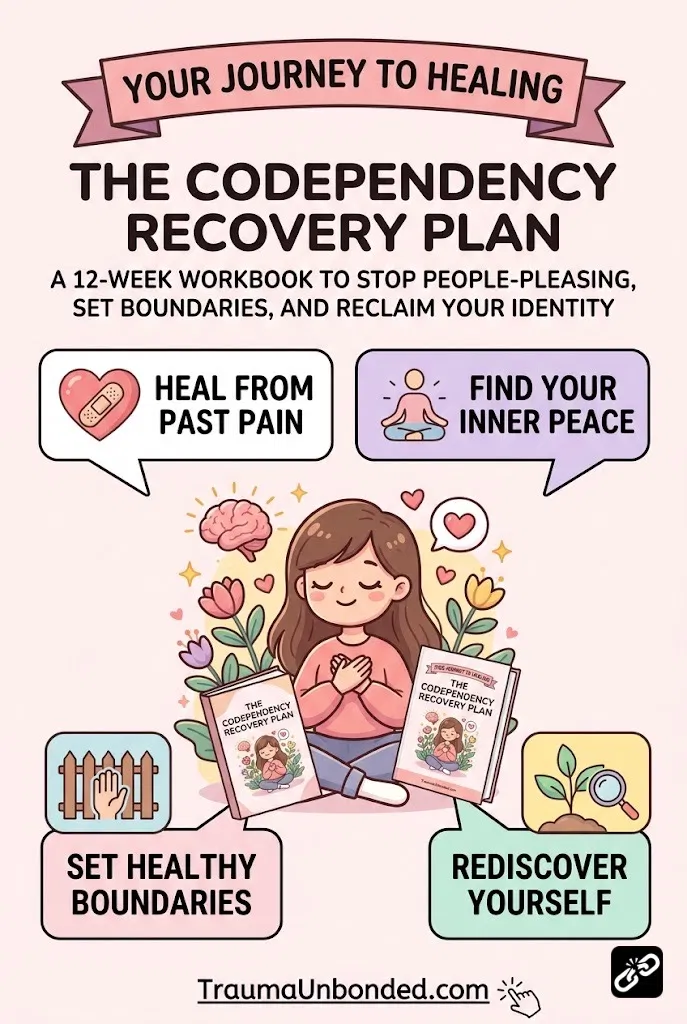
If you are ready to stop putting everyone else first and finally reclaim the vibrant person you used to be, you need a structured, step-by-step roadmap to guide you through the fog. The workbook below provides the exact psychological tools, boundary exercises, and self-discovery prompts required to break free from codependency and reconstruct your true identity.
Steps to Reconnect with Your Authentic Self
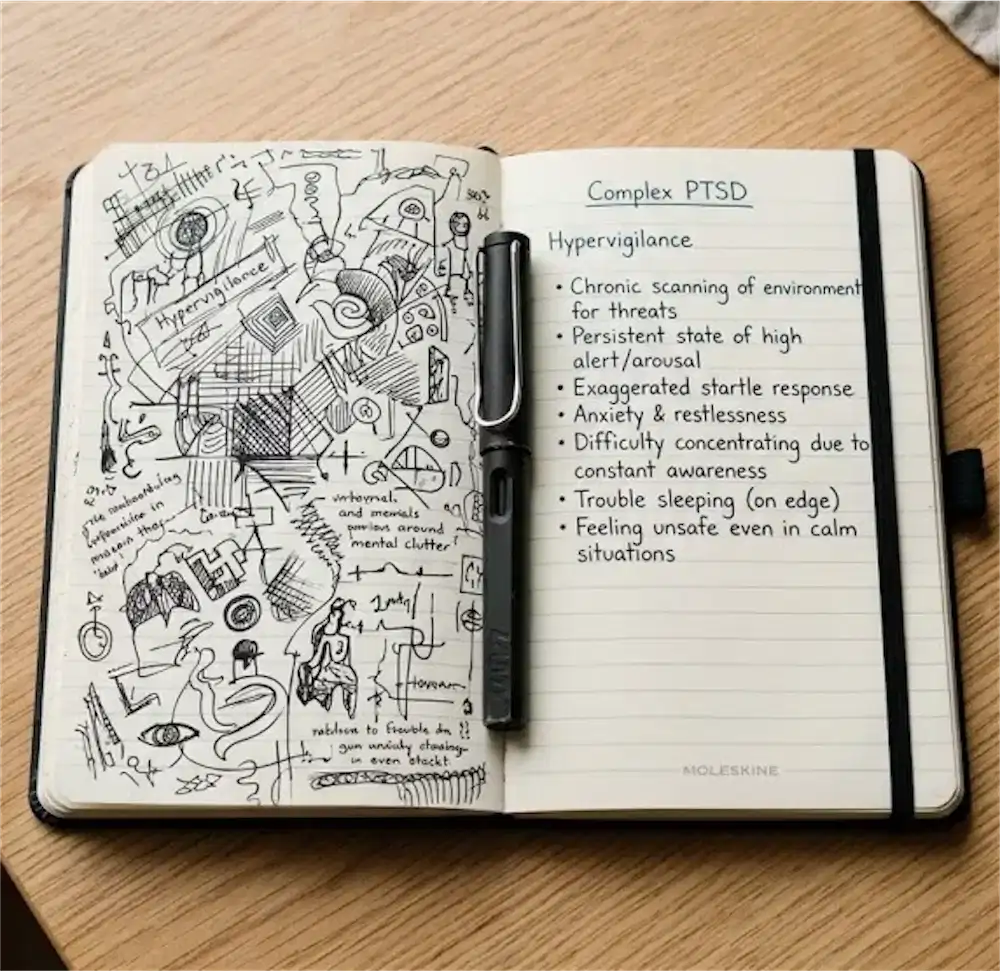
1. Audit Your Forgotten Passions and Hobbies
How do you start rebuilding when your mind feels completely blank? When my twelve-year toxic partnership ended, I sat in an empty room and realized I had no idea what I liked to do anymore.
I had spent over a decade catering to someone else’s volatile interests and dramatic crises. To heal, you must conduct a personal audit of your past self.
Make a physical list of the things you loved to do before you ever met your ex. Did you like painting, running, gardening, or writing in a journal?
Even if those activities feel completely unappealing right now due to your emotional exhaustion, pick one and spend just ten minutes on it. You are not trying to master a skill; you are simply proving to your brain that you have a life separate from the abuse.
2. Rewire Your Nervous System and Relieve Chronic Stress
Chronic emotional abuse places your body into a perpetual state of fight-or-flight, which actually alters how your brain handles cognitive tasks. The continuous flood of cortisol and adrenaline makes it incredibly difficult to focus, think clearly, or make simple choices.
This is why you feel so deeply disconnected from your natural intuition and decision-making abilities. To combat this mental fog, you must focus on physical and biological recovery.
Research from Harvard Health explains that you can counteract the damaging effects of chronic stress by practicing nervous system regulation and learning to protect your brain from stress through consistent self-healing practices. This means getting back to basics: making solid sleep a daily habit, eating grounding meals, spending time in quiet nature, and using simple deep-breathing exercises to show your body that the threat is finally over.
3. Practice Saying No Without Offering an Explanation
When you are recovering from a trauma bond, your natural instinct is to over-explain your boundaries. You spent years defending your basic rights to someone who deliberately used your words against you.
To find your true voice, you must practice setting clear, firm boundaries without justifying them to others. This is a critical step in learning how to rebuild self-worth after discard or an abrupt relationship ending.
Start incredibly small with people who are safe. If a friend invites you out and you are too tired to go, simply say, “I cannot make it tonight, but thank you for thinking of me.” Every time you set a boundary without an explanation, you send a powerful signal to your subconscious that your comfort, time, and energy are valuable.
4. Welcome Back Your Quiet Reality
In the aftermath of a highly volatile relationship, peace can often feel incredibly uncomfortable. Your brain is so accustomed to the extreme highs and lows of the BPD and NPD dynamic that a quiet, calm afternoon can feel like dangerous boredom.
You might find yourself waiting for the other shoe to drop, looking for problems where there are none. Recognize this restlessness for what it is: physical withdrawal from the chaos.
Allow yourself to sit in the quiet without needing to fill it with distraction or worry. Over time, your system will recalibrate, and you will find that peace is not boring; it is the fertile soil where your authentic self can finally grow back to its original, cheerful state.
Reclaiming your original identity is not about erasing your past; it is about recognizing that the core of who you are was never truly destroyed. It was simply buried under layers of self-protection and survival strategies.
By choosing to step away from the noise, honor your boundaries, and slowly rebuild your life on your own terms, you are already walking the path back home. If you want a compassionate, step-by-step workbook to assist you on this healing journey, consider using the 12-week identity reclamation path to help guide you back to the calm, grounded life you deserve.

Meet Your Guide
Helen Brooks
After surviving a 12-year NPD/BPD relationship, I dedicated over a decade to studying trauma bonding and nervous system recovery. My mission is to help you break free from the fog and reclaim your authentic self.
Ready to break the trauma bond and reclaim your life?