Micro-Gaslighting: Subtle, Daily Denials of Reality You Might Be Overlooking
Micro-gaslighting and the subtle, daily denials of reality can slowly erode your mental stability without you even realizing what is happening. Unlike overt manipulation, these tiny, repetitive shifts in everyday events build up over years, forcing you to second-guess your memory on a constant loop. If you have spent years doubting your memory, finding a way to restore your sanity is vital, which is why working through a dedicated path like our Healing from Gaslighting recovery guide can help you rebuild your reality.
Having spent twelve years with a partner who displayed severe narcissistic and borderline personality traits, I know exactly how this invisible erosion operates. In the beginning, there were no massive lies, only tiny rewrites of everyday details that left me feeling mildly confused and off-balance. Over a decade, that mild confusion turned into total isolation from friends, a complete loss of my favorite hobbies, and a deep sense that my life was miserable. I was constantly walking on eggshells, wondering if I was misinterpreting every look, word, and tone.
Recovering from this psychological manipulation requires a structured approach to restoring your belief in yourself. When you live with chronic emotional invalidation, your brain adapts by relying on your abuser’s version of events rather than your own eyes. Let us examine the subtle signs of these daily reality denials so you can begin to reclaim your sanity and rebuild your life on solid ground.
What is Micro-Gaslighting?
Micro-gaslighting is a subtle form of emotional manipulation where a partner consistently denies small, everyday details of shared reality, forcing the victim to slowly doubt their own memory, perception, and sanity.
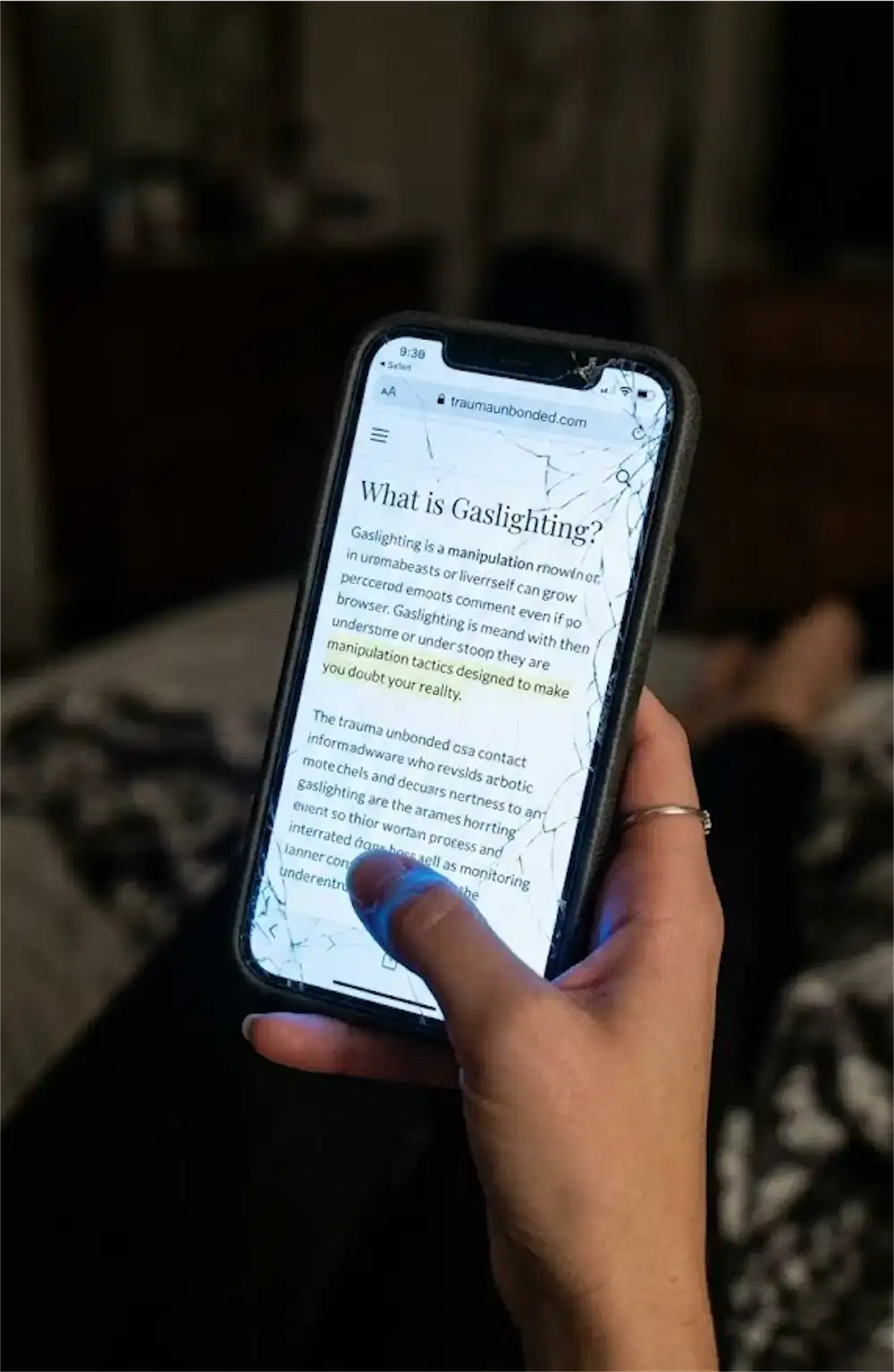
This tactic does not rely on massive, easily disproved falsehoods. Instead, it operates on a microscopic scale: a slightly altered detail here, a dismissed feeling there, or a minor conversation rewritten entirely. In my own relationship, this felt like death by a thousand cuts, as I slowly let go of my own observations just to keep the peace. Because the shifts are so tiny, you cannot point to one single event as abuse, which makes you feel even more isolated and confused.
The Innocent Escape Hatch: “I Was Just Kidding”
Have you ever raised a concern about a sharp comment, only to be met with laughter and told you have no sense of humor? This classic phrase allows an abuser to deliver a cutting remark and then shift the blame to you for taking it seriously. When this happens daily, you begin to monitor your emotional responses, wondering if you are indeed taking things too personally. It is a way for them to say whatever they want while leaving you with the responsibility for feeling hurt.
Rewriting Minor Events to Keep You Off Balance
Another common sign is the quiet alteration of everyday logistics. They might tell you they mentioned a plan days ago when they never did, or claim you agreed to something you explicitly rejected. Over time, these small contradictions accumulate, leading to severe self-doubt where you find yourself writing down conversations just to prove you are not losing your mind. You begin to feel like a detective in your own home, constantly searching for receipts and text messages to confirm your basic memory.
Pathologizing Normal Reactions as Sensitivities
When you react naturally to hurt or neglect, a manipulative partner will often focus entirely on your reaction rather than their behavior. By labeling your standard emotional responses as extreme, high-strung, or unstable, they escape accountability. This shifts the focus of the relationship to your supposed emotional instability, leaving the original bad behavior completely unaddressed. You find yourself apologizing for how you reacted instead of discussing the actual issue.
How Daily Realities Crumble into Mental Fog

Living in a state of constant doubt wears down your cognitive functioning, leaving you exhausted and unable to make simple choices. If you want to break free from this mental exhaustion, rebuild your personal boundaries, and finally learn to rely on your own perception again, taking structured action is essential.
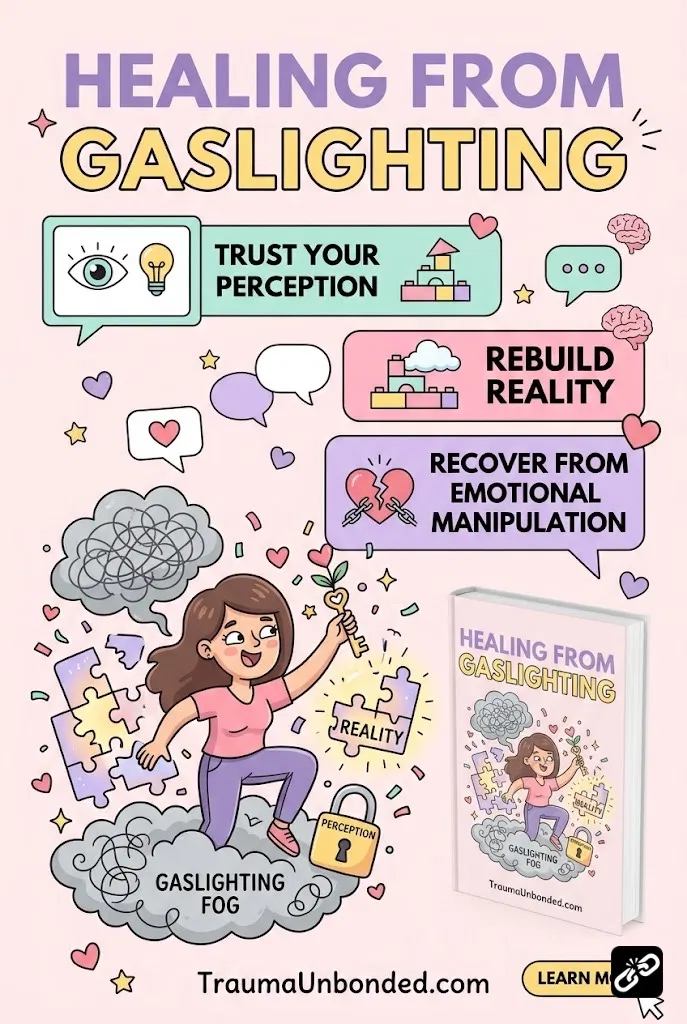
This constant shifting of the truth causes deep cognitive dissonance, where your brain tries to hold two opposing versions of reality at the same time. You know what you saw, yet the person you love insists you are wrong. This conflict creates an internal state of high alert, flooding your body with stress hormones and causing severe mental fatigue that makes even basic tasks feel incredibly heavy.
You are not crazy, and the lingering self-doubt after abuse recovery is a normal physiological response to structural invalidation. According to the classic indicators of gaslighting outlined by Psychology Today, this persistent chipping away at your sanity eventually forces you to rely entirely on the manipulator for your sense of truth. It is a powerful way to create a deep trauma bond that keeps you tethered to a toxic dynamic even when your logical brain tells you to leave.
Rebuilding Your Internal Compass After Chronic Manipulation
To heal from these subtle denials of reality, you must actively practice shifting your validation source from the outside world back to your own nervous system. When I finally left my toxic relationship, I had to learn how to rely on my own memory again. It did not happen overnight, but through consistent somatic grounding and cognitive re-patterning, I reclaimed my mind. Here are the practical, daily steps you can take to ground yourself:
- Keep a private log: Write down important conversations, agreements, and events immediately after they happen to provide a hard copy of your reality. Do not share this log with your partner; keep it as a private anchor for your own peace of mind.
- Practice reality checking: Talk to a trusted, objective friend or a therapist who can help you verify your perceptions without judgment. Having an outside voice confirm your sanity is incredibly healing.
- Stop arguing the facts: When a manipulator denies reality, do not try to convince them; state your truth once and walk away from the debate. You do not need their agreement to know what happened.
- Honor your physiological signals: If your stomach knots up or your chest tightens during an interaction, trust that your body is signaling a boundary violation. Your physical nervous system often registers manipulation long before your logical mind does.
Reclaiming your life after twelve years of persistent confusion is entirely possible. Through targeted therapy, recognizing my codependent tendencies, and processing the trauma, I slowly returned to my original self. Today, I am once again cheerful, optimistic, and grounded, living a life that feels entirely my own. You can get here too, one small, trusted perception at a time.
The ultimate takeaway is that your reality is not up for negotiation. If you are ready to stop second-guessing your every thought and rebuild the foundation of your sanity, begin your journey with our Healing from Gaslighting recovery guide to reclaim the stable, peaceful life you deserve.

Meet Your Guide
Helen Brooks
After surviving a 12-year NPD/BPD relationship, I dedicated over a decade to studying trauma bonding and nervous system recovery. My mission is to help you break free from the fog and reclaim your authentic self.
Ready to break the trauma bond and reclaim your life?