
18 Narcissistic Hoovering Tactics in 2026: Signs Your Ex is Trying to Pull You Back
You finally did it. You walked away. Maybe it took you years — it took me twelve — but you did it. And then, out of nowhere, there’s a message. A missed call. A “just thinking of you” text. And suddenly everything inside you goes quiet, confused, and pulled at all at once.
That right there? That’s hoovering. And it’s one of the most psychologically calculated things a narcissist does after a breakup.
I want to break it all down for you — what it is, why it happens, and every single tactic they use — so that the next time your phone lights up with their name, you know exactly what you’re dealing with.
What Is Narcissistic Hoovering?
The term “hoovering” comes from the Hoover vacuum cleaner brand — because the narcissist is quite literally trying to suck you back in. No contact can feel impossible when someone you spent years with suddenly reappears, acting like a completely different person.
Hoovering isn’t about genuine love or reconnection. It’s a manipulation tactic used by narcissists or emotionally abusive partners to regain control once they sense you’re leaving or have moved on. This behavior can happen days, months, or even years after the breakup.
It’s not random, either. Hoovering follows a pattern: it kicks in when the narcissist feels their supply — the validation, attention, and emotional energy they feed on — is running dry.
When you go no-contact or start to rebuild a life separate from them, it challenges the narcissist’s fragile self-esteem. That’s when they come back.

According to research published in the EBSCO Research Starters database, hoovering happens when a narcissist is unhappy after a relationship ends — or, if the narcissist ended the relationship, to keep the rejected person available should the narcissist have need of them again. The lack of control, the loss of a continual source of admiration, and the fear of rejection make them deeply uncomfortable. So they reach back.
In my 12-year relationship, hoovering happened every single time I tried to pull away. Sometimes it was sweet. Sometimes it was terrifying. Always, it worked — until I finally understood what I was actually looking at.
Why Do Narcissists Hoover? The Psychology Behind It
Before we get into the specific tactics, it helps to understand the “why.” This isn’t sentimentality. It isn’t love. Here’s what’s actually driving the behavior:
- Loss of narcissistic supply. You were their source of validation, admiration, and control. When that disappears, they feel a kind of internal panic. They need to restore that supply — fast.
- Wounded ego. Being left by someone wounds a narcissist’s fragile self-image. Pulling you back in soothes that wound. It’s not about you — it’s about their ego.
- Control. Narcissists seek power over others. When you go independent, that power slips. Hoovering is how they try to reclaim it.
- Boredom or a dry supply source. Sometimes hoovering happens because their current source of supply has dried up and they circle back to previous ones — meaning: you.
Dr. Ramani Durvasula, a clinical psychologist and one of the leading experts on narcissism, explains that hoovering can show up even when your life is moving along well — months or years after the breakup. The moment the narcissist senses you’ve moved on, gotten a new job, or started something new, they see an opening. That’s their chance to say: “Now you’re supply again.”
Research by Brunell and Campbell (2011), published in The Handbook of Narcissism and Narcissistic Personality Disorder, confirms that narcissists use strategic mate-retention behaviors rooted in a need to maintain control and dominance in their romantic relationships — a pattern that does not simply stop at breakup. You can read about the hard-won lessons from being in a 12-year relationship with someone like this.
Also worth noting: narcissists rarely handle breakups well, and that struggle is part of what fuels hoovering in the first place.
The 18 Narcissistic Hoovering Tactics to Watch For in 2026
Let’s get specific. Some of these you’ll recognize immediately. Others are so subtle you might have missed them completely — I know I did, for years.
1. The “I’ve Changed” Message
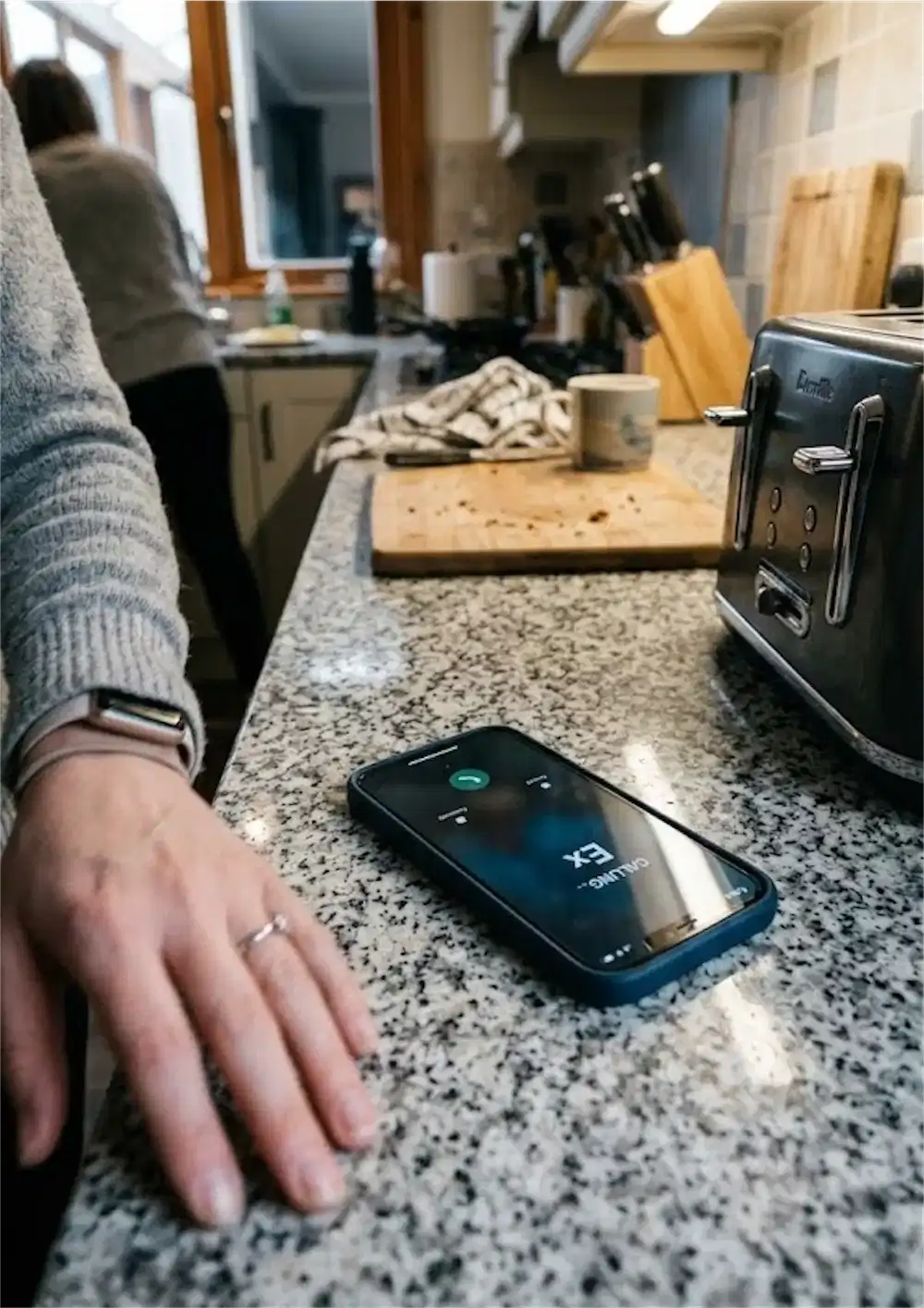
This is the most common opener. A text, an email, or a voice note explaining that they’ve been in therapy, they’ve “done the work,” and they finally understand what they did wrong.
Here’s what most people don’t know: some narcissists actually learn the language of therapy and healing specifically to use it as a manipulation tool. They’ll say the right words — “I’ve been working on my attachment style” or “I know I was emotionally unavailable” — with zero actual change underneath. The promise of change is often empty, with minimal behavioral shifts that last days, or for some, just hours.
I heard “I’ll go to therapy” roughly forty times across twelve years. Not once did a single session change the cycle.
2. Love Bombing 2.0
You remember how the relationship started — the intensity, the attention, the feeling that no one had ever really seen you before? That’s love bombing. And when a narcissist hoovers, they bring it back, often harder than before.
They might suddenly shower you with excessive affection, attention, and promises. Flowers show up. Long emotional messages arrive. Grand gestures appear out of nowhere. The goal is to overwhelm your nervous system with positive emotion so that all the bad memories temporarily blur.
If you want to understand this cycle more deeply, our guide on common mistakes people make when leaving a narcissist covers exactly how love bombing tricks survivors into going back.
3. The Pity Play
If love bombing is their carrot, pity is their stick. They tell you they’re struggling. They’re not sleeping. Work is falling apart. Their health is bad. They have no one. And they make it clear — subtly or not — that it’s your fault for leaving.
This tactic is ruthlessly effective on empathic people. If you’re someone who genuinely cares about others’ suffering, this will trigger you hard. They know that. They’re counting on it.
Narcissists manipulate by triggering hope and guilt, trapping individuals in toxic relationships by constantly delaying and promising to address issues. The pity play is just guilt dressed up as vulnerability.
4. Fake Emergencies
A sudden crisis. A family member is sick. There’s a financial emergency. They got into an accident. Something, anything, that requires your immediate response and care.
Fake emergencies are designed to bypass your rational decision to stay away by triggering your instinct to help. And because the “emergency” seems pressing, you feel you don’t have time to think — just react.
Always pause. Ask yourself: is this something I can verify? Is this something that truly requires my involvement? Would a caring friend be able to handle this without me?
5. Sending Flying Monkeys
When direct contact fails, narcissists often recruit others to do their work. These intermediaries — sometimes called flying monkeys — might be mutual friends, family members, or even your children. They relay messages like “They really miss you” or “Don’t you think you’re being too harsh?”
The narcissist is using social pressure to break your resolve. It feels like concern from people around you, but it’s orchestrated. In my situation, my ex used a mutual friend — someone I trusted completely — to send messages for months after I tried to leave.
6. The Casual “Just Checking In” Text
Sometimes the hoover is disarmingly casual. A “hey, how are you?” as if the abuse never happened. Maybe a meme they knew you’d find funny. A song lyric. Something small and harmless-looking.
This is a form of gaslighting. It rewrites history and makes you question whether things were really as bad as you remember. If they can get you to engage — even just to respond “I’m fine” — the door cracks open.
7. The Late-Night Text
11 PM. 1 AM. 3 AM. That’s when the message comes. Sometimes it’s sad, sometimes it’s romantic, sometimes it’s just “I miss you.” The timing is not accidental.
At night, your defenses are lower. You’re alone, maybe lonely, probably tired. Rational thinking slows down and emotional memory speeds up. A 3 AM text from your ex hits differently than one at 2 in the afternoon — and they know it.
8. Nostalgia Bombing
They reference a shared memory. A place you loved together. A trip. A song. An inside joke that nobody else in the world would understand.
The narcissist may remind their target of the positive aspects of their relationship, using shared history to make you feel like you owe it to those memories to give things another chance. This is particularly cruel because those memories are real — the good times did happen. They’re just being weaponized.
9. Threatening Self-Harm
This is one of the most alarming tactics, and it needs to be said clearly: if someone threatens to hurt themselves to keep you in a relationship, that is emotional manipulation — not genuine distress you are responsible to fix.
Claiming they might hurt themselves if you don’t come back is a manipulation tactic designed to exploit your empathy and your fear. If you genuinely believe someone is in danger, call emergency services (911). Do not engage personally, and do not return to the relationship to “save” them. That is not your role, and doing so will not help either of you.
10. Social Media Breadcrumbing
They post a song that was “yours.” They share a location you used to visit together. They like a photo you posted from two years ago at 2 AM. They update their story knowing you might still be watching.
This digital breadcrumbing is a passive form of contact that gives them plausible deniability. If you call it out, they can say “I was just posting normally.” But every move is calculated. If stopping yourself from checking their profiles is a struggle, read our piece on how to stop checking your ex’s social media — it’s one of the most important steps in recovery.
11. Triangulation and Jealousy Triggers
They mention a new relationship. Or exaggerated happiness. Maybe they post photos with someone new — coincidentally right after they’ve tried and failed to contact you directly. The narcissist may post about their new relationship specifically to reel you back in through jealousy.
Your reaction — even just checking their profile obsessively — is supply. Don’t give it.
12. The “Closure” Request
A request for one last conversation. “I just need to understand what went wrong.” “I think we both need closure to move on.” It sounds mature and emotionally intelligent.
Real talk: narcissists don’t actually want closure. They want access. Once they’re in the room with you — or on the phone — they have the chance to reel you back in. Know that you will most likely not get genuine closure from a narcissist. That’s something you’ll need to create for yourself.
13. Sending Gifts or Showing Up Uninvited
Flowers at your door. A package in the mail. Showing up at your workplace or a place they know you frequent “by coincidence.” Grand gestures designed to make you feel seen, wanted, and guilty for staying away.
These acts create a social obligation — because you were raised to acknowledge kindness. That’s exactly why it works. Receiving a gift from them triggers a sense of debt. Don’t let it.
14. Using Children or Pets
If you share children or pets, those become leverage. Suddenly there’s an “issue” that requires your direct involvement. A question only you can answer. An emergency involving someone or something you both love.
If you co-parent with a narcissist, keep communication to short, fact-based messages only. Consider using a co-parenting app, and consult a family law attorney if needed. Never let love for your children be used as a door back into the relationship.
15. The Fake Apology
They apologize — sort of. “I’m sorry you felt hurt.” “I’m sorry things got so difficult.” Notice the difference between that and “I’m sorry for what I did to you.”
A fake apology is an apology that centers the narcissist’s discomfort rather than your pain. It’s designed to look like accountability without requiring any. It says just enough to make you think something has shifted — while guaranteeing nothing actually has.
16. Reaching Out Through New Accounts After Being Blocked
You blocked them everywhere. New email address. New Instagram. A message from a number you don’t recognize. When direct contact is cut off, narcissists find ways around it. Creating new profiles to contact a blocked person is not just manipulation — depending on your jurisdiction, it can cross into harassment.
Document everything. If this happens, take screenshots and speak to a legal professional if it continues.
17. The “Future Faking” Offer
Everything you always wanted but never got? They’re suddenly offering it. Marriage. Moving in together. Having children. The house. The vacation you talked about for years but never took.
This is future faking — the narcissist promises a scenario down the road that gets you to come back, with no real intention of following through. The offer is the hook. Once you return, the promises quietly disappear.
I remember being offered the exact life I’d spent twelve years asking for — within 48 hours of a serious attempt to leave. Every promise evaporated within two weeks.
18. The Reverse Hoover
This one is sneaky because it looks like they’re not doing anything at all. The reverse hoover is when the narcissist doesn’t reach out directly — instead, they engineer the situation so that you reach out to them.
They might tell mutual friends the relationship is over and they want nothing more to do with you — knowing this will get back to you and provoke a response. They post something provocative and then go silent. They create a situation where your curiosity, guilt, or concern pulls you to make the first move. And then they’ve hoovered you — without ever having to reach out themselves.
How to Recognize When You’re Being Hoovered

Not every attempt to reconnect is hoovering. Someone can genuinely reach out after a relationship ends without manipulative intent. Here’s how to tell the difference:
- The timing is suspicious. Contact happens right after you set a firm boundary, post something positive on social media, or begin visibly moving on.
- There’s no real accountability. They want to reconnect but can’t clearly name what they’re taking responsibility for.
- The intensity escalates quickly. One message becomes ten. One conversation becomes daily calls. The pace is uncomfortable.
- It follows a pattern. You’ve seen this exact behavior before, at previous points when you tried to leave or distance yourself.
- Your gut feels off. Even when the words are right, something underneath feels wrong. That feeling is information.
Each tactic is designed to trigger your empathy or curiosity. You are more likely to reestablish contact if it seems like your former partner has changed or is softening — that’s the trap. Remind yourself how confusing the relationship felt, not just how you hoped it could have been.
Understanding these patterns is also part of understanding your own self-doubt and the signs it was caused by narcissistic abuse.
What Happens If You Respond to a Hoover?
This is the part no one wants to hear, so I’ll say it plainly: hoovering is not about genuine reconciliation — it’s about control. Once a narcissist feels they’ve regained access to you, the same cycle of manipulation continues.
There will be a brief period of calm or love bombing, followed by criticism, withdrawal, and blame — often worse than before. When you reconnect after a hoover, the narcissist’s supply has been restored. When they no longer feel threatened by your independence, the affection fades — and the abuse typically resumes. Sometimes more intensely than before.
Cycles of abuse beginning with idealization and love bombing, followed by devaluation and discard, repeat — and narcissists can hoover targets back into the relationship until they no longer consider them a viable source of supply. You were never being loved back. You were being recycled.
If you’re studying these cycles, this piece on the long-term effects of narcissistic abuse is one of the most important reads on this site.
How No Contact Protects You from Hoovering
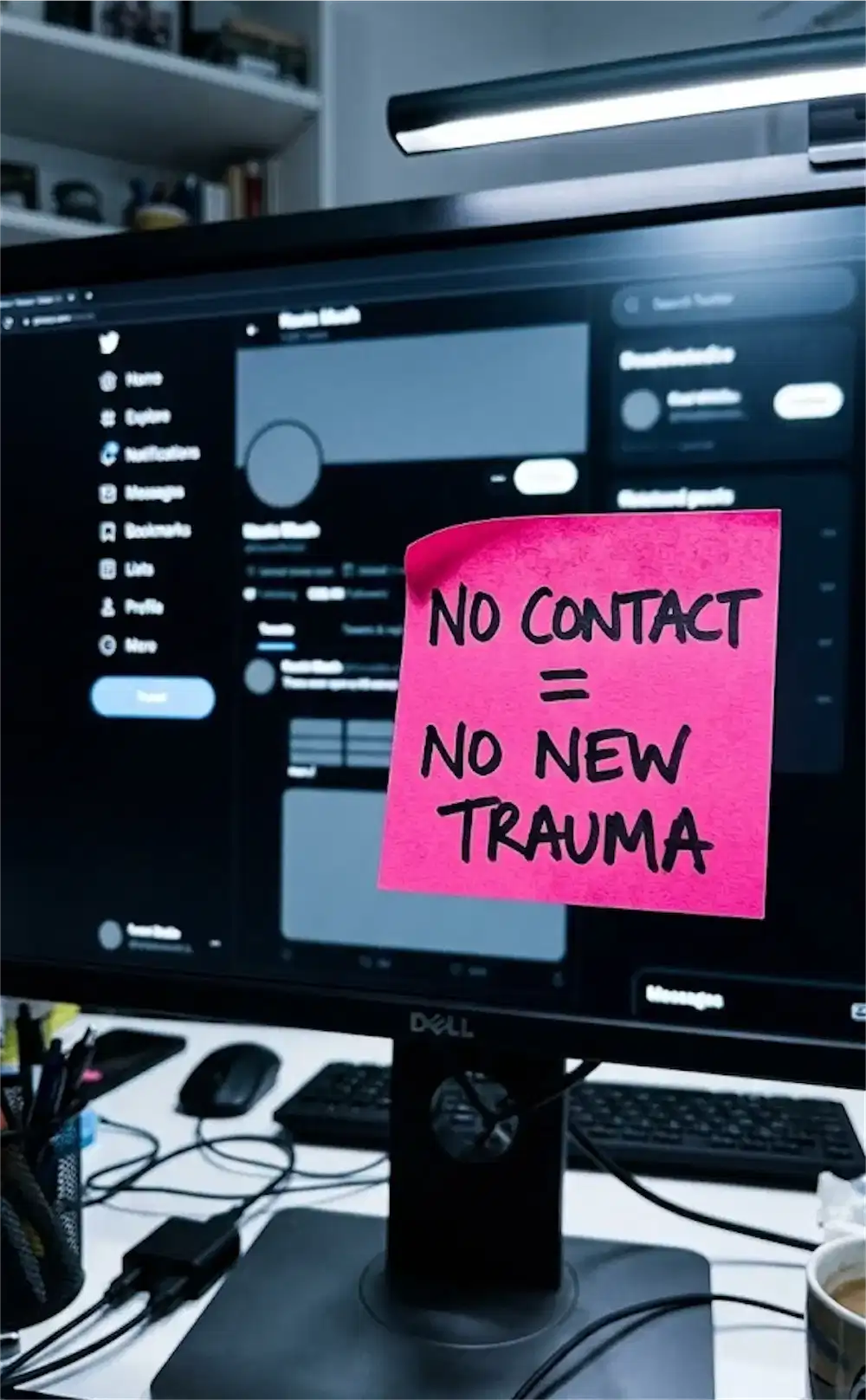
No contact is the single most effective tool against hoovering. It removes the narcissist’s ability to reach you with any of the above tactics. But it only works if you stay consistent.
Here’s what that looks like practically:
- Block everywhere — phone, email, all social platforms. Not “muted.” Blocked. If they create new accounts to reach you, block those too and document the attempts.
- Tell mutual contacts where you stand. Let trusted people in your circle know you are not in contact, so flying monkeys can’t operate without your awareness.
- Don’t check their profiles. Even passively viewing their content is giving them data and giving yourself emotional setbacks.
- Have a plan for “weak moments.” Know what you will do when you feel the urge to respond — whether that’s calling a friend, writing in a journal, or going for a walk.
- Gray rock if full no contact is impossible. If you share children or work in the same place, use the gray rock method — short, flat, emotionally neutral responses that give them nothing to feed on.
Our full narcissist no-contact guide walks through every step of this in detail — including how to handle it when shared responsibilities make full no-contact complicated.
Professional support isn’t optional here — it’s genuinely necessary. The effects of hoovering go hand-in-hand with trauma bonding, which makes it exponentially harder to resist without outside support. A good therapist who understands narcissistic abuse can be the difference between going back and staying free.
To understand more about how trauma bonds make hoovering so effective, read our breakdown of trauma recovery after BPD and NPD relationships.
Equipping yourself with knowledge about narcissistic abuse is also one of the most powerful defenses. A good place to start: a book like It’s Not You by Dr. Ramani Durvasula cuts through the confusion and helps you name what happened to you. Understanding intermittent reinforcement alone can explain why hoovering feels so hard to resist — and naming the tactic strips much of its power away.
Another invaluable resource is Should I Stay or Should I Go? by Dr. Ramani Durvasula, which directly addresses the push-pull dynamic that makes escaping a narcissist so psychologically exhausting.
The Bottom Line
Hoovering is not a sign that they love you. It is not proof that they’ve changed. It is not evidence that the relationship was real in the way you deserved it to be real.
It is a calculated move to restore their access to you — your energy, your attention, your emotions — because they need a source of supply and you were a reliable one.
Recognizing this pattern helps you see the contact for what it is: an attempt to reset power, not rebuild love.
The day I stopped seeing my ex’s attempts to contact me as proof of love — and started seeing them as proof of the pattern — everything changed. I stopped feeling flattered. I started feeling clear. That clarity is available to you too. You just have to know what you’re looking at.
You didn’t cause this. You can’t cure it. But you can protect yourself from it — one blocked number, one unanswered message, one firm boundary at a time.
Recommended Resources
These are books and tools that genuinely helped me understand and resist hoovering during my own recovery. Each one is worth your time.
- In Sheep’s Clothing by Dr. George K. Simon — A deep look at covert manipulation and how to identify it in real time. Essential reading for understanding why hoovering tactics feel so convincing.
- Psychopath Free by Jackson MacKenzie — Written by a survivor, this book covers the full cycle of narcissistic relationships including the idealize-discard-hoover pattern with clarity and compassion.
- Whole Again by Jackson MacKenzie — Picks up where Psychopath Free leaves off, focusing on what comes after: rebuilding your identity and learning to trust yourself again after years of manipulation.

Meet Your Guide
Helen Brooks
After surviving a 12-year NPD/BPD relationship, I dedicated over a decade to studying trauma bonding and nervous system recovery. My mission is to help you break free from the fog and reclaim your authentic self.
Ready to break the trauma bond and reclaim your life?