Yoga Poses to Release Tension in the Jaw and Throat: Unblocking Your Voice After Abuse
Yoga poses to release tension in the jaw and throat are essential tools when you are working on unblocking your voice after abuse. For twelve long years, I lived with a partner who cycled constantly between narcissistic rage and quiet borderline splitting, leaving me walking on eggshells every single day. If you are struggling with a tight throat, a clenched jaw, or chronic neck pain, utilizing The Somatic Trauma Reset can help you release the physical imprints of this constant survival mode.
We rarely talk about how trauma physically lives in the body. When you are forced to hide your truth to survive a highly toxic home, your nervous system responds by tightening the muscles of expression. How many times did you choke back a response, clenching your teeth so hard your teeth ached the next morning? This is not just stress; it is stored somatic trauma that restricts your literal and metaphorical voice.
Why Narcissistic and BPD Abuse Locks Your Jaw and Throat
Abuse locks the jaw and throat because the nervous system triggers a chronic freeze or fawn response, forcing the physical suppression of self-expression, boundaries, and grief. This constant survival state patterns a muscular “armoring” in the neck and temporomandibular joint (TMJ) as the body attempts to block you from speaking or crying out.
During my twelve-year relationship, my body became a vault of unspoken truths. In a bpd relationship trauma recovery journey, we learn that the body holds onto the words we were never allowed to say. The throat and jaw are the gateways of self-protection; when saying “no” or explaining your reality results in a smear campaign or silent treatment, your brain tells these muscles to freeze.
According to research on the somatic effects of trauma published in Psychology Today, chronic stress causes our throat muscles to spasm and the TMJ to lock as a defensive mechanism to prevent crying or screaming [1]. This muscular armoring keeps you trapped in a loop of high anxiety and physical fatigue. Have you noticed how hard it is to speak up or even swallow when you are near your ex, or even months after you left?
4 Gentle Yoga Poses to Release Tension in the Jaw and Throat

To heal this deep somatic blockage, we have to bypass our logical minds and communicate directly with the nervous system. These targeted movements help signal to your vagal nerve that it is finally safe to let go. You can perform these in a quiet space where you do not have to worry about being seen or heard, which is incredibly liberating after years of being monitored.
1. Lion’s Pose (Simhasana)
This is arguably the absolute best posture for releasing repressed anger and reclaiming your voice. Sit comfortably on your heels or in a cross-legged position, press your palms into your knees, inhale deeply, and then open your mouth wide, stretch your tongue down toward your chin, and exhale with a loud “HA” sound while looking up. When I first did this in therapy, I sobbed because it felt like a decades-worth of swallowed screams were finally rushing out.
It stretches the superficial muscles of the throat and stimulates the throat chakra, directly addressing the feeling of being silenced. Practice this three to five times, allowing any emotion, even a cracking voice or tears, to flow without judgment.
2. Fish Pose (Matsyasana)
Fish pose is a beautiful heart and throat opener that counteracts the protective, hunched-over posture we adopt when living under constant threat. Lying on your back, slide your hands under your hips, press into your elbows, and gently lift your chest while letting your head drape back so the crown rests lightly on the mat. This stretch expands the thyroid region, stretches the front neck muscles, and physically forces open the spaces we spent years trying to guard.
Make sure to keep your breath slow and deep, focusing on the expansion of your collarbones. If your jaw feels incredibly tight, try gently parting your lips in this posture to let the air drift out effortlessly.
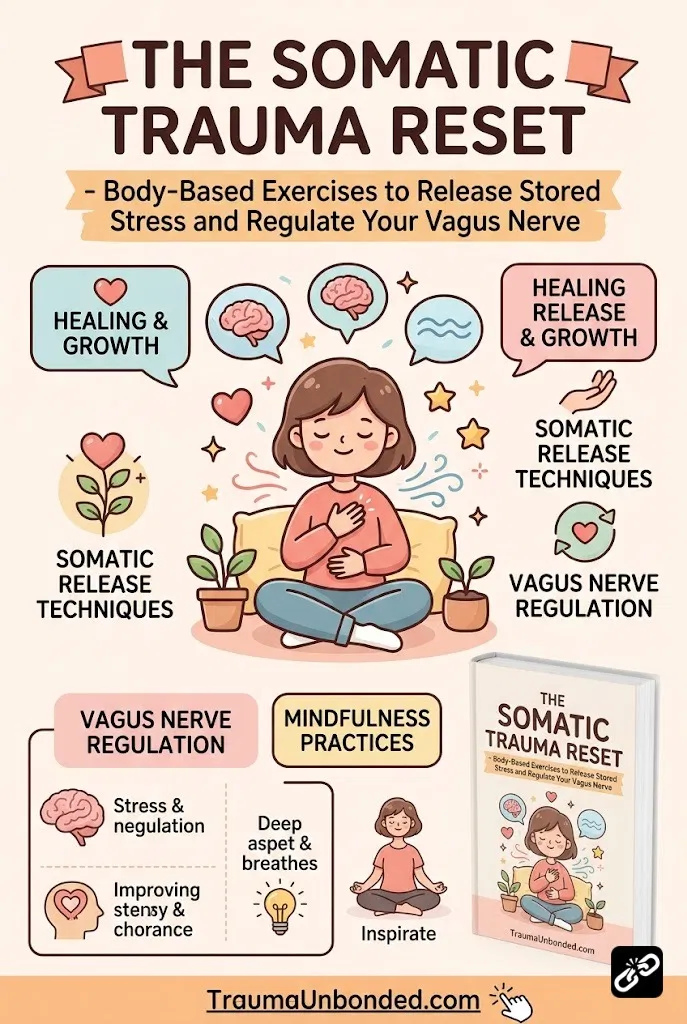
If you are finding that these postures trigger deep emotional releases or if your body feels incredibly stiff, you are experiencing the natural unraveling of a trauma bond. To guide you step-by-step through regulating your nervous system and clearing these physical blockages, I recommend using this comprehensive somatic program:
3. Supported Sphinx with Jaw Release
Lie on your belly, prop yourself up on your elbows directly under your shoulders, and draw your chest forward. Once you are stabilized, gently drop your chin toward your chest, and slowly roll your head from shoulder to shoulder. To specifically target jaw tension, open your mouth wide as you do these neck rolls, sliding your lower jaw side to side.
Doing this allows the deep muscles of the TMJ to stretch under the weight of gravity. It is a fantastic way to soothe your trigeminal nerve, which gets highly overstimulated when you are stuck in a hypervigilant state.
4. Child’s Pose with Forehead and Jaw Grounding (Balasana)
Wide-legged Child’s Pose is a classic grounding posture that provides a deep sense of emotional safety. Sit on your shins, bring your big toes together, open your knees wide, and fold forward, resting your forehead flat on the floor or on a block. While in this posture, let your lower jaw completely hang loose, letting your teeth part and your tongue drop away from the roof of your mouth.
This grounding posture is excellent for combining with vagus nerve anxiety exercises. The physical pressure on your forehead combined with a completely relaxed jaw tells your amygdala that you are finally out of danger.
Integrating Vocal Toning for Deep Somatic Release
When you spent years in a toxic environment, quietness was your armor. But true recovery requires us to break that silence in a safe, controlled way. Adding simple hums or vocal tones to these physical postures can accelerate the somatic release. Try making a low “vhu” or “mmm” sound during your exhalations in Sphinx or Child’s Pose.
This gentle vocalization triggers the throat muscles to vibrate, which naturally massages the vagus nerve and down-regulates your sympathetic nervous system. It might feel incredibly awkward or scary at first; my own voice was shaky and faint when I started. But as you continue, that shake will transform into a steady, grounded resonance.
This process of finding your voice is heavily tied to breaking the addiction to the chaos of toxic dynamics. Engaging in somatic breathwork drama addiction practices can help you bridge the gap between physical release and emotional freedom, teaching your nervous system that peace is safe.
Unblocking your voice after survival is not an overnight event; it is a gentle, layer-by-layer peeling back of the protective walls your body built to keep you safe. Be patient with your jaw, your neck, and your heart as they slowly learn that the storm is over and it is safe to speak again. If you are ready to fully release this physical armor and rebuild your sense of self, step deeper into your healing with The Somatic Trauma Reset today.

Meet Your Guide
Helen Brooks
After surviving a 12-year NPD/BPD relationship, I dedicated over a decade to studying trauma bonding and nervous system recovery. My mission is to help you break free from the fog and reclaim your authentic self.
Ready to break the trauma bond and reclaim your life?