8 Effective Strategies to Stop Checking Your Ex’s Social Media After a Breakup
You tell yourself you’ll just check once. One quick look. And then suddenly it’s 1:47 AM and you’re scrolling through photos from three years ago, feeling that familiar sick knot in your stomach. Sound familiar?
I spent 12 years in a relationship with someone who had both narcissistic and borderline personality traits. After it finally ended, I became obsessed with their social media. Not because I wanted them back — at least, that’s what I told myself. I told myself I was “gathering information.” I was “staying aware.” But really? I was addicted. Completely, painfully hooked on a loop that brought me nothing but more pain every single time.
If you’re here, you probably know exactly what I mean. And the good news is: this habit can be broken. Not easily, but deliberately and with the right strategies.
Why You Can’t Stop Checking (It’s Not Weakness)
Before we talk about how to stop, you need to understand why it’s so hard. This isn’t a willpower problem. It’s a brain chemistry problem.
When you were with your ex, every interaction released dopamine — the brain’s “feel-good” neurotransmitter linked to reward and motivation. After the breakup, that consistent dopamine source disappears. After 12 years of that chemical pull, my nervous system didn’t just miss them — it was going through withdrawal.
Here’s the science: intermittent reinforcement — the pattern where rewards arrive unpredictably — is one of the most psychologically addictive forces known to behavioral science. Occasionally seeing something on your ex’s social media, even something painful, can still trigger a small dopamine hit, creating an intermittent reinforcement schedule — the most powerful type of conditioning, making the behavior incredibly hard to break. Think of it like a slot machine. Like a gambler pulling a lever, you keep checking their profile hoping for a rare “win” — a sign they miss you, a clue they’re unhappy, or confirmation they’re still thinking of you.
And the research backs this up. A study analyzing data from 464 participants found that social media surveillance of an ex was associated with greater current distress over the breakup, more negative feelings, desire for the ex-partner, and lower personal growth. That study, led by psychologist Tara C. Marshall at Brunel University, was published in Cyberpsychology, Behavior, and Social Networking — and you can read it on PubMed here.
Further, research highlights that passive observation is not harmless. Simply remaining friends with an ex or following them allows their content to infiltrate your feed, which is linked to daily spikes in negative emotion. Active surveillance appears even more detrimental, predicting lingering distress that carries over into subsequent days.

You’re not weak. Your brain interprets a breakup much like a drug withdrawal, and social media checking is a compulsive behavior that actively sabotages your recovery by repeatedly triggering stress responses, reinforcing false hope, and preventing the necessary emotional detachment required for true healing.
Now that you understand the “why,” let’s talk about what actually works.
Strategy 1: Block or Mute Without Guilt
The first thing my therapist told me was to block. I resisted for months. Blocking felt dramatic. It felt final. It felt like I was admitting something. But that resistance was exactly the problem — my brain was still negotiating access.
Blocking isn’t hostility. It’s not a statement. Blocking isn’t necessarily a hostile act. It’s a boundary that protects your peace of mind during a vulnerable time. You can unblock later if you ever feel emotionally ready. But right now, during active recovery, you need friction between you and that profile.
Do it across every platform. Instagram, TikTok, Facebook, LinkedIn, Spotify, even Venmo if they’re on it. Anywhere their name can surface unexpectedly is a potential trigger.
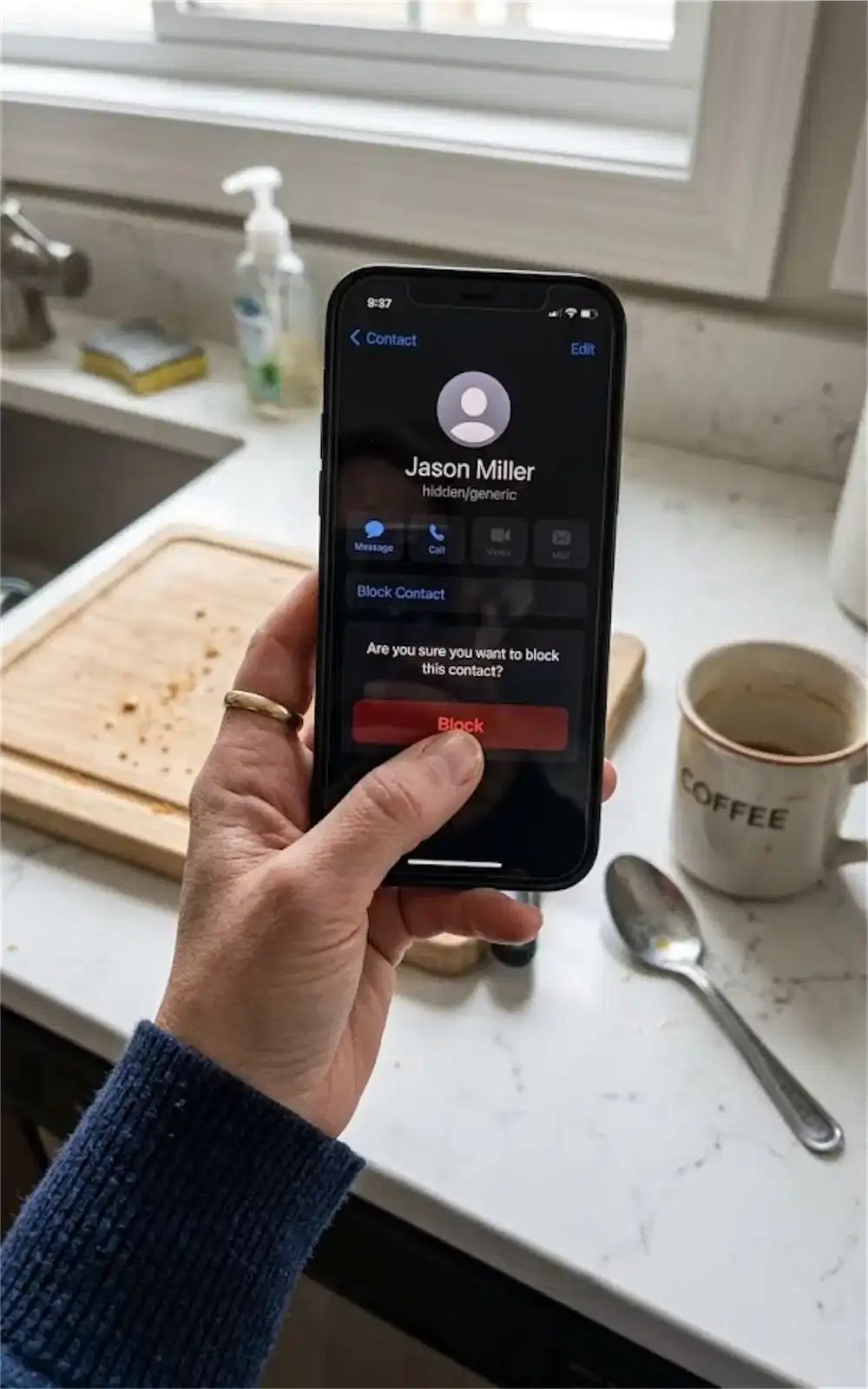
If blocking feels like too big a step right now, muting is a start. But be honest with yourself — muting still lets you consciously navigate to their profile when the urge hits. Blocking creates an actual barrier. That barrier is the point.
Read more about why cutting digital contact is one of the most powerful moves you can make: Why No Contact Works in Narcissistic Abuse Recovery.
Strategy 2: Do a Full Digital Detox From Your Ex
Blocking their main profile is just the beginning. True digital detox means auditing every corner of your digital life where they might appear.
Go through your phone. Delete the photos. Yes, all of them — or at minimum, move them to a folder you’ve archived off your main camera roll. True healing requires a deliberate digital detox from your ex. This means unfollowing, blocking, and removing access across all platforms.

Also consider:
- Muting or unfollowing mutual friends who regularly post about your ex or tag them
- Turning off notifications for any apps where they might resurface
- Deleting saved conversations in your DMs
- Removing them as a “suggested contact” in your phone (delete the number)
- Clearing their name from your search history on every platform
I know it sounds extreme. But after 12 years, my ex’s name was literally woven into my phone’s autocomplete. Everywhere I turned, there was a digital breadcrumb trail leading back to them. Cleaning that up was one of the most liberating things I did.
If you want to make digital avoidance even more automatic, app blockers like screen time blocker tools can be set to restrict access to specific apps during vulnerable times (like late at night).
Strategy 3: Understand the Trauma Bond Connection
Here’s something a lot of people miss: checking your ex’s social media isn’t just a breakup habit. If you came out of a relationship with a narcissist or someone with BPD traits, what you’re dealing with is likely a trauma bond — a powerful psychological attachment formed through cycles of abuse and intermittent reward.
A trauma bond works like this: the relationship alternated between pain (rage episodes, devaluation, withdrawal of affection) and reward (love bombing, apologies, affection, the “good version” of your partner). This behavior can significantly disrupt your natural healing process and create what psychologists call “intermittent reinforcement” — one of the most addictive psychological patterns known to behavioral science.
That’s why logging onto Instagram to check their profile feels almost involuntary. It’s not that you want to torture yourself. Your nervous system has been conditioned to seek them out as a source of regulation. The brain doesn’t automatically understand that the relationship is over — it just knows it wants relief from the withdrawal.
Understanding this mechanism was genuinely a turning point for me. I stopped blaming myself for checking and started treating it like what it actually was: a symptom of trauma that needed healing, not a character flaw. If you want to go deeper on this, here’s what 12 years with a narcissist actually taught me about trauma bonds.
A book that helped me finally understand what was happening inside my own head was The Body Keeps the Score by Dr. Bessel van der Kolk — it explains how trauma physically lives in the nervous system and why purely cognitive approaches often aren’t enough. You can find it on Amazon here: The Body Keeps the Score.
Strategy 4: Use Urge Surfing to Ride Out the Impulse
Urge surfing is a mindfulness-based technique that sounds simple but is genuinely powerful. The premise: instead of fighting the urge to check, you observe it — like watching a wave rise and fall — until it passes on its own without acting on it.
Urge surfing was developed by Marlatt and Gordon in 1985 to help individuals better cope with cravings and urges associated with addictive substances and behaviors. It has since been applied far beyond addiction treatment. The science behind why it works is solid: research shows that cravings and impulses typically last no longer than 20–30 minutes if left unmet. While they may feel overwhelming in the moment, their intensity naturally diminishes over time.
That means you only need to get through about 20 minutes without picking up your phone. Not forever. Just 20 minutes.
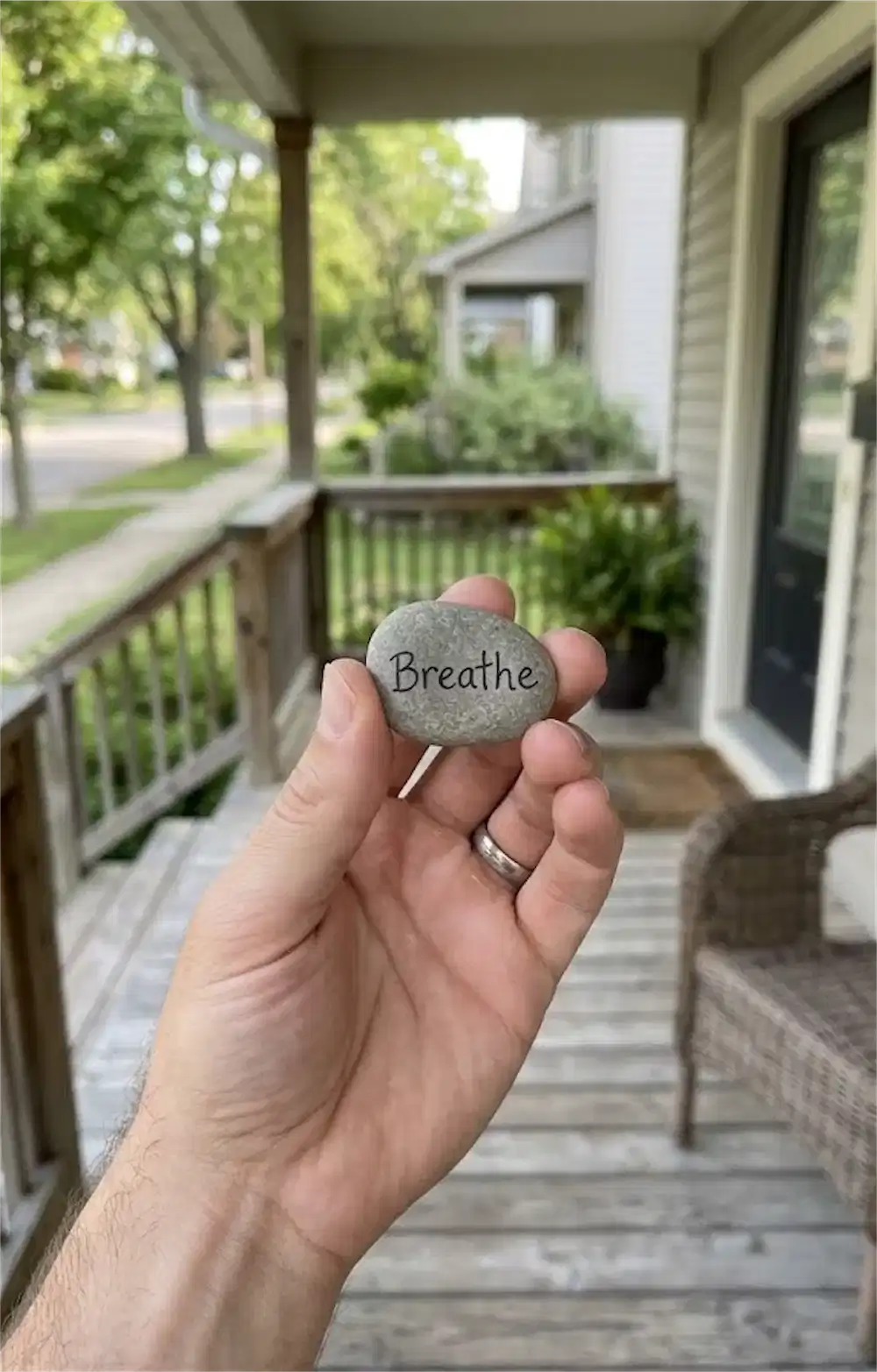
Here’s how to do it when the urge to check hits:
- Name it. Say out loud or in your head: “I have the urge to check their profile.”
- Locate it in your body. Tightness in the chest? Restlessness in the hands? Knot in the stomach?
- Breathe into it. Don’t try to push it away. Just observe it.
- Imagine it as a wave. If the intensity is increasing, imagine it is like a rising wave. A craving can feel as though it will keep rising until we stop it. But if we learn to stay without reacting, these experiences typically crest, then subside.
- Wait. Set a 15-minute timer. Go make tea. Walk outside. The urge will pass.
Research shows urge surfing reduces impulsivity, improves emotional regulation, and supports overall well-being. It also works well alongside journaling — if you write down what triggered the urge (boredom, loneliness, a specific song), you start recognizing your patterns and can plan ahead.
Strategy 5: Replace the Habit Loop With a Competing Behavior
Habits are loops: trigger, behavior, reward. The trigger (loneliness, boredom, seeing a mutual friend’s post) leads to the behavior (checking), which delivers a micro-reward (information, however painful). Many habits operate on this cycle of trigger, behavior, and reward. Urge surfing and habit replacement interrupt this loop by introducing a mindful pause between the trigger and the behavior. Over time, this reduces the brain’s association between the trigger and the habitual response.
To break the loop, you don’t just remove the behavior — you replace it. When the urge hits, you need a go-to alternative that’s ready before the moment comes. The replacement needs to be:
- Immediately accessible (not something that requires planning)
- Physically engaging (occupies your hands and attention)
- Genuinely rewarding enough to compete with the dopamine pull
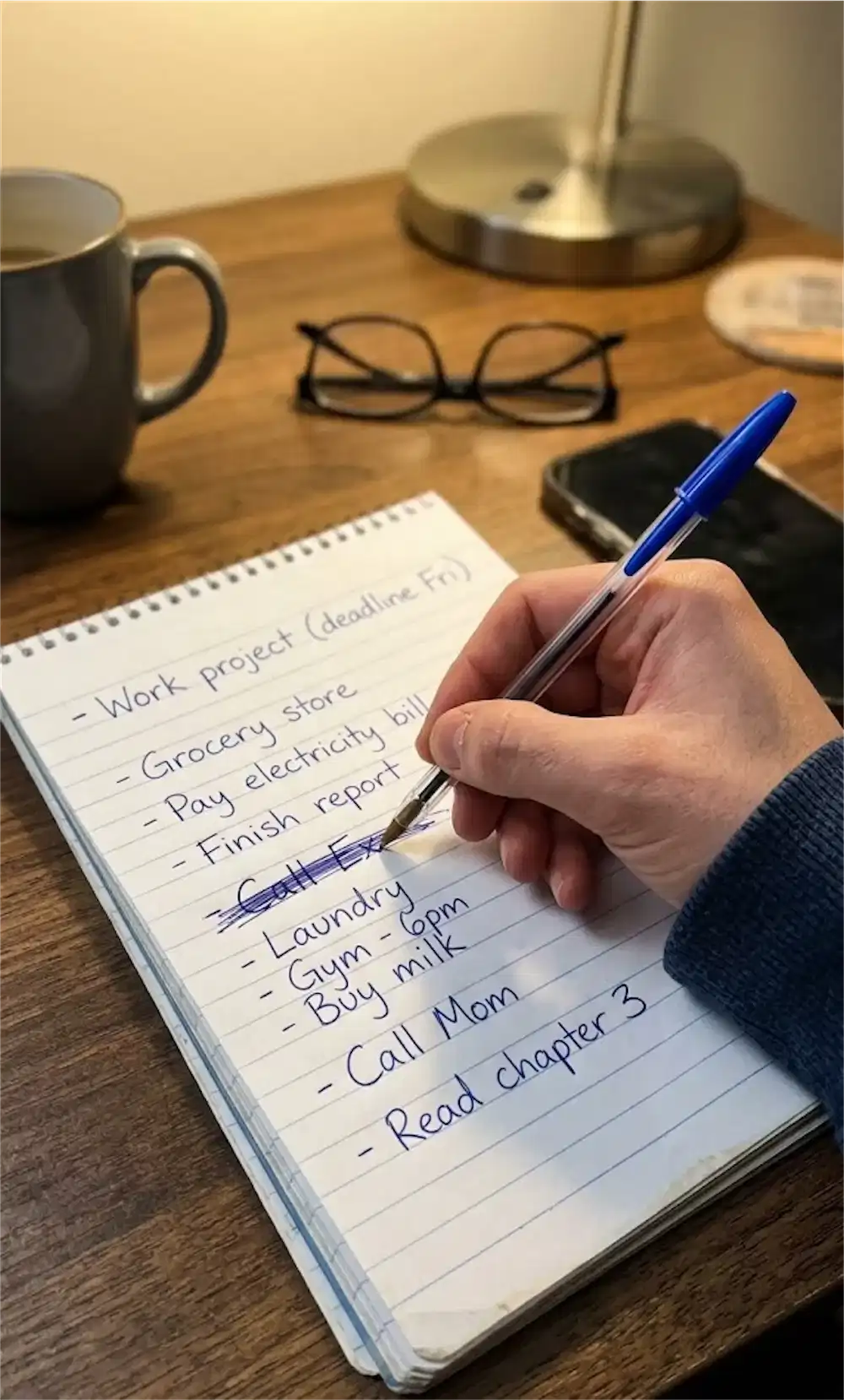
Some options that worked for me and for people I’ve spoken to in recovery: going for a walk, doing 10 minutes of a workout video, journaling, calling a friend, brewing a cup of tea, or even just changing rooms entirely. The location shift alone can interrupt the mental pattern.
If you haven’t built new daily habits yet, take a look at these habits to quit after a narcissistic breakup — several of them directly address the compulsive checking loop.
A guided journal can also be incredibly useful here. Trauma recovery journals give your hands and brain a place to go when the urge strikes, and the act of writing physically shifts your nervous system state.
Strategy 6: Keep a “Why I’m Not Going Back” List
This one sounds almost too basic, but don’t dismiss it. One of the cruelest tricks of a trauma bond is something called cognitive dissonance — your brain simultaneously holds two contradictory truths (“they hurt me” and “I miss them”) and tends to resolve the tension by softening or forgetting the painful parts.
Social media feeds that instinct perfectly. You see a smiling photo and your brain does a fast edit on 12 years of psychological abuse — or 2 years, or 5 years — and suddenly the fantasy replaces the reality.
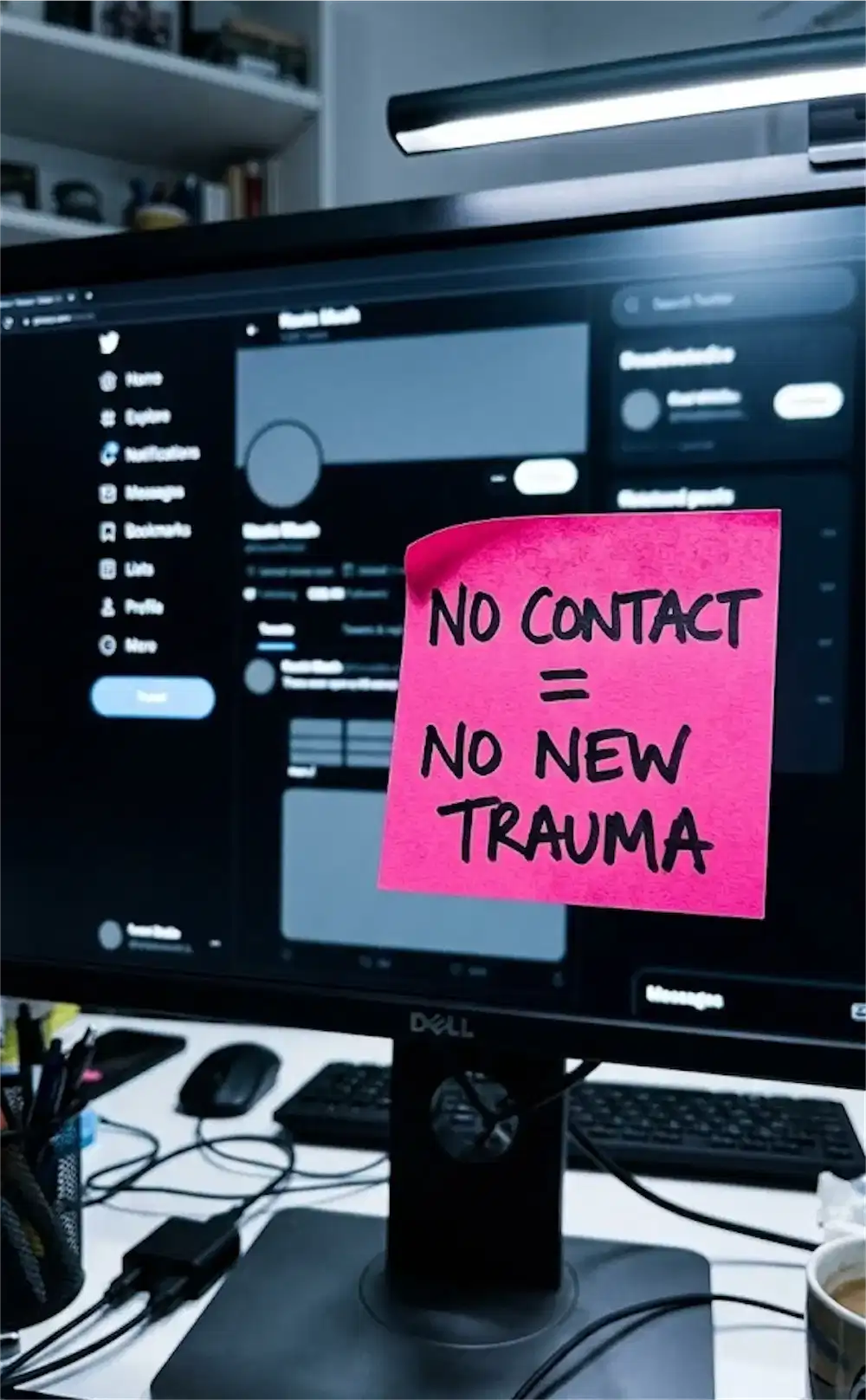
A “Why I’m Not Going Back” list fights this directly. Write it once, in detail, when you’re clear-headed. Keep it somewhere accessible — notes app, a sticky note on your laptop, the first page of your journal. When the urge to check surfaces, read the list before you do anything else.
Your list might include:
- Specific incidents you don’t want to forget
- How you felt during the worst periods
- What you gave up (friends, hobbies, your own identity) to stay
- What your body felt like — the constant anxiety, the walking on eggshells
- What you want for your future that wasn’t possible in that relationship
I kept mine on my phone’s notes app labeled simply “Remember This.” Some days I read it three times. Other days I didn’t need it at all. Over time, those numbers shifted dramatically in favor of the latter.
Strategy 7: Build (or Rebuild) Your Support System
One of the things narcissistic and BPD-coded relationships do so effectively is isolate you. By the end of my 12-year relationship, I had almost no close friends left. My entire social world was that one person. So when it ended, the social checking wasn’t just about them — it was about the fact that I had nothing and no one else to reach for.
If you’re checking your ex’s social media at 11 PM, part of what you’re really feeling is loneliness. When your energy and emotional bandwidth are consumed by your ex’s new life, you have nothing left for your own. You’re not present for new friendships, new hobbies, or new romantic possibilities.
The antidote is connection. Deliberately rebuild your support network:
- Text a friend you’ve drifted from during the relationship
- Join an online or in-person support group for survivors of narcissistic abuse (Reddit’s r/NarcissisticAbuse is a starting point; formal groups through therapists are better)
- Consider working with a therapist who specializes in trauma bonds and attachment
- Be honest with people you trust about what you’re going through — isolation is the enemy of recovery
The book Attached by Amir Levine and Rachel Heller helped me understand why I was so pulled back to someone who hurt me — it’s a clear, research-backed breakdown of attachment styles, and understanding it changed how I approached all my relationships after. You can find it here: Attached by Amir Levine.
Strategy 8: Work With a Therapist — Specifically on Codependency and Attachment
I want to be honest here: the strategies above work. But for many of us coming out of long-term toxic relationships, the compulsive checking is just one symptom of a deeper pattern. Without addressing the root — the attachment wounding, the codependency, the way we learned to outsource our sense of safety to another person — the urge just keeps coming back in different forms.
Therapy was not optional for me. It was the actual thing that healed me. Specifically, working with a therapist on attachment theory, codependency, and the trauma bond mechanism gave me a framework to understand my own behavior — not just try to suppress it.
You can also use Codependent No More by Melody Beattie as a companion to therapy — it’s considered a foundational text in codependency recovery and speaks directly to the pattern of obsessing over another person as a way of avoiding your own pain.
If accessing a therapist isn’t immediately possible, there are also solid resources available. A therapist can provide strategies, support, and a safe space to process your emotions, challenge destructive thought patterns, and develop healthier coping mechanisms. They can also help you understand underlying attachment issues or trauma that might be fueling this compulsion.
Research published in Computers in Human Behavior (Marshall, Tara C., McMaster University) confirms what therapy already knew: the collective findings across multiple studies present a consistent pattern — observing an ex-partner on social media tends to be associated with poorer recovery from a breakup, and this holds true across different countries and platforms. You can read the most recent study here.
The Real Takeaway
Stopping this habit is not about having more willpower. It’s about removing access, understanding the neurochemical loop driving the behavior, and replacing it with something that actually nourishes your recovery.
Every time you ride out an urge without checking, you are literally rewiring your brain. You are building new neural pathways. You are choosing yourself, maybe for the first time in years.
It took me months. There were setbacks. But every day that number of times I checked went down, my sense of myself went up. And eventually, I stopped caring what they were posting entirely — not because I forced myself not to care, but because I had rebuilt a life that was genuinely worth paying attention to.
You can do this too. Start with strategy one. Just one. Block the account. Tonight.
For more on navigating early recovery from narcissistic abuse, read: Self-Healing Tips for Narcissistic Abuse Survivors.
Resources
These are books and tools I’ve personally found useful in breaking the social media checking habit and healing from a trauma bond:
- The Body Keeps the Score – Bessel van der Kolk, M.D. — The definitive book on trauma and the nervous system. Explains why your body stays addicted to the familiar even when the familiar hurt you.
- Attached – Amir Levine & Rachel Heller — A clear, research-backed guide to understanding why you bonded so deeply to someone who was unavailable or harmful, and how to build securely attached relationships going forward.
- Codependent No More – Melody Beattie — The foundational text on codependency. Essential reading if your sense of self became wrapped around another person.
- Trauma Recovery Guided Journal — A structured journaling tool for processing emotions during recovery. Writing is one of the most effective ways to interrupt the urge-checking loop.
- Why Does He Do That? – Lundy Bancroft — Especially useful if you still find yourself making excuses for your ex’s behavior. Bancroft breaks down abusive thinking patterns with unflinching clarity.

Meet Your Guide
Helen Brooks
After surviving a 12-year NPD/BPD relationship, I dedicated over a decade to studying trauma bonding and nervous system recovery. My mission is to help you break free from the fog and reclaim your authentic self.
Ready to break the trauma bond and reclaim your life?