When Your Mutual Friend Group Chooses the Narcissist: Coping with the Double Discard
Realizing your mutual friend group chooses the narcissist after a difficult breakup feels like a second wave of deep betrayal. This painful phenomenon, known as the double discard, leaves you feeling completely isolated just when you need a safe harbor the most. Having survived a twelve-year toxic relationship with a partner who displayed both narcissistic and borderline traits, I remember the absolute shock of watching people I loved believe a carefully crafted lie and quietly drift away.
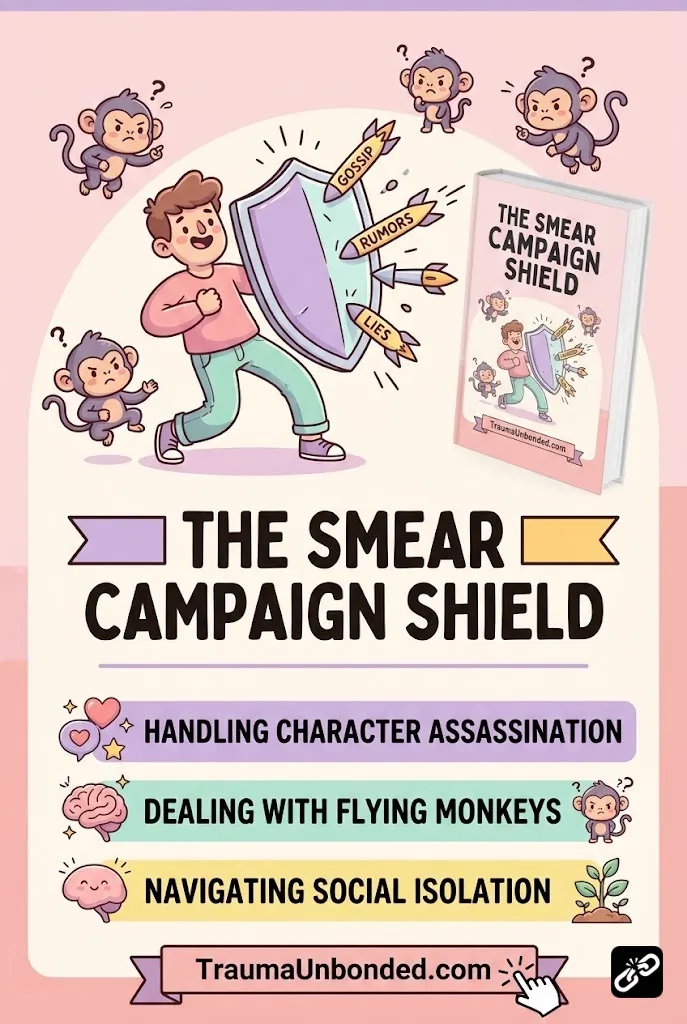
During my own recovery, I found myself with zero hobbies, cut off from my old life, and wondering if I would ever feel like my cheerful self again. It was only through deep therapy, learning about codependency, and understanding how trauma bonds keep us trapped that I began to heal. If you are currently facing this painful social isolation, you can find guided support to protect your sanity in The Smear Campaign Shield.
How did this happen to your social circle? Why do the very people who watched you suffer suddenly turn their backs on you? Let us walk through the psychology behind this social rejection and discuss how you can reclaim your peace.
What Is the Double Discard in Narcissistic Abuse?
The double discard occurs when your mutual friends side with an abusive ex-partner, leaving you cut out of your social circle while reinforcing the abuser’s false narrative. This dual rejection forces you to grieve both the loss of your romantic relationship and your entire support system at the same time.
When you escape a toxic partner, you expect your friends to welcome you back with open arms. Instead, you might find cold shoulders, unreturned texts, or outright exclusion. This is the sting of the double discard, a systemic removal of your safety net by the person who claimed to love you.
During my twelve-year relationship, my partner slowly laid the groundwork for this social coup. By the time I left, the entire friend group had been conditioned to see me as the unstable, difficult one. It was a secondary trauma that cut deeper than the end of the relationship itself, leaving me completely disoriented in my own living room.
Why Your Mutual Friend Group Chooses the Narcissist
It is natural to feel angry at your friends for falling for the manipulation. However, understanding the underlying tactics of a toxic partner can help remove the personal sting of their betrayal. Narcissistic individuals use highly structured social tactics to ensure they maintain control over the narrative.
First, they initiate a preemptive smear campaign long before the relationship actually ends. They drop subtle hints about your “erratic behavior” or claim they are “deeply worried” about your mental health. By framing themselves as the long-suffering savior, they secure the group’s sympathy in advance.
Second, mutual friends often choose the path of least resistance. Standing up to a toxic person is exhausting, and many people simply do not have the stomach for conflict. They align with the louder, more charismatic personality because it feels safer than questioning the narrative.
This social exclusion is not just an emotional hurdle; it is a physical strain. Research on social rejection featured in Psychology Today shows that our brains process ostracism similarly to physical pain. Your body is reacting to this social exile as a genuine threat to your survival.
If you are struggling to make sense of this sudden isolation and want a clear path to shield your reputation, block flying monkeys, and reclaim your peace, this manual is designed specifically for your situation.
How to Cope with the Double Discard
When the reality of your new isolation settles in, your first instinct might be to defend yourself. You want to show your friends the text messages, the call logs, and the evidence of the gaslighting. However, trying to convince people who have already chosen a side usually backfires.
Here are practical steps to help you navigate this transition period and start rebuilding your life on your own terms:
- Embrace radical acceptance: Accept that you cannot control what others believe. If your old friends are willing to drop you without asking for your side of the story, they were not the safe, authentic allies you deserved.
- Go completely silent: Do not engage in arguments or defend your character. Your dignified silence is highly protective and prevents the toxic ex from getting more fuel to use against you.
- Allow yourself to grieve: Do not rush the process. Grieving the loss of multiple friendships at once is heavy, exhausting work that requires gentle self-compassion.
Managing Social Circles and Mutual Friends
Navigating social networks post-breakup requires a delicate touch. You may want to look into handling mutual friends after a breakup to prevent constant anxiety when seeing updates from your former group. Seeing them gather without you can trigger intense trauma bond withdrawal symptoms.
In my experience, trying to maintain partial contact with friends who still hang out with the ex was a recipe for constant hypervigilance. Every conversation felt like an interrogation or a potential leak. Creating a clean break, although incredibly painful, was the single choice that allowed my nervous system to finally settle.
Rebuilding Your Social Identity from Scratch
When you have spent a decade or more adapting to a toxic partner, your sense of self is often completely eroded. Losing your friend group on top of that can leave you feeling like an empty shell. How do you find your footing when everything you knew is gone?
This is actually a quiet, clean canvas. I began rebuilding by finding tiny hobbies I used to love before the relationship. I signed up for local pottery classes, went on solitary morning walks, and slowly reconnected with old friends I had been forced to isolate from years prior.
If you are struggling with the emotional fallout of this transition, consulting a toxic breakup survival guide can offer a stabilizing framework to help you navigate the initial weeks of profound silence.
Shifting Your Focus to Authentic Connections
It takes time to realize that the friend group choosing the narcissist is doing you a favor, even if it feels like a curse right now. Authentic friends do not participate in smear campaigns or make you audition for their loyalty. By removing themselves, they are leaving space for healthy, safe people to enter your life.
Today, I am back to my original self, cheerful, grounded, and optimistic. The friends I have now know the real me, and there is no walking on eggshells or keeping up appearances. Your circle will shrink, but its quality will increase dramatically.
The pain of watching your mutual friend group side with your toxic ex is a devastating chapter, but it is not the end of your story. Use this quiet season to focus entirely on your physical health, your nervous system regulation, and your personal healing. When you are ready to reclaim your life and navigate the fallout of character assassination, consider using The Smear Campaign Shield to guide your steps toward peace and clean boundaries.

Meet Your Guide
Helen Brooks
After surviving a 12-year NPD/BPD relationship, I dedicated over a decade to studying trauma bonding and nervous system recovery. My mission is to help you break free from the fog and reclaim your authentic self.
Ready to break the trauma bond and reclaim your life?