The Sunk Cost Fallacy in Relationships: Why We Stay with Toxic Partners
The sunk cost fallacy in relationships explains why we stay with toxic partners far longer than we should, even when we know the connection is actively draining us. If you have ever asked yourself *why do I stay with a toxic partner*, the answer often lies in the mental trap of valuing past investments over future happiness.
We convince ourselves that walking away means all the tears, sleepless nights, and endless arguments were completely in vain. This cognitive trap turns our history into an emotional anchor, locking us in a loop of waiting for change that never comes.
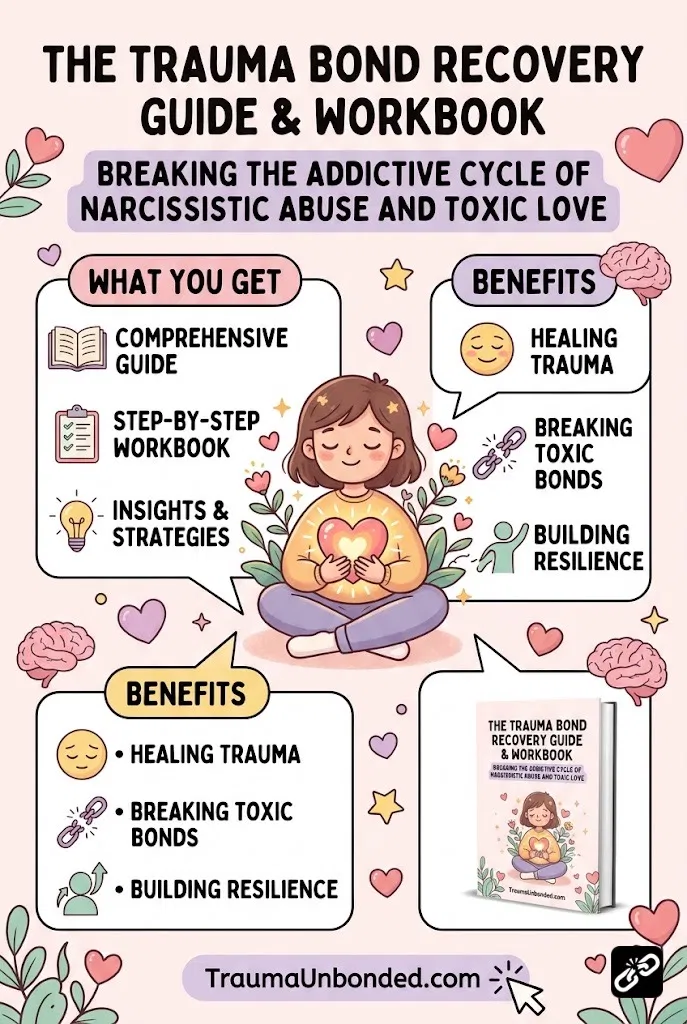
During my own 12-year toxic relationship with a partner exhibiting narcissistic and borderline personality traits, I spent years trying to fix what was already broken because I could not bear the thought of “wasting” over a decade of my life. To stop this painful cycle, many survivors need a structured guide like The Trauma Bond Recovery Guide & Workbook to help dismantle the subconscious patterns holding them hostage.
What Is the Sunk Cost Fallacy in Relationships?
The sunk cost fallacy in relationships is a psychological bias where we refuse to leave a toxic partner because of the years, energy, and love we have already invested, mistakenly believing that staying longer will somehow redeem our past sacrifices.

How does this feel when you are in the thick of it? You look at your partner and think of the thousands of days you shared, the holidays, the mutual friends, and the quiet moments. You tell yourself that if you just give it six more months, your investment will finally pay off.
This survival mechanism is why we find ourselves trapped in an endless loop of misery, unable to cut our losses. According to researchers studying relationship dynamics, people are highly susceptible to continuing failing endeavors when they have already committed significant personal resources. A study published in Psychology Today highlights that this cognitive bias leads people to irrationally persist in dissatisfying relationships. It is not a sign of weakness; it is a deeply wired human tendency to avoid pain and regret.
The Emotional Currency of a Toxic Relationship
We invest far more than just calendar dates when we are with a toxic person. We spend our health, our peace of mind, and our very sense of self. Have you noticed how your memory of the early “good times” keeps you anchored today?
This is closely tied to the trauma bond biochemical addiction that leaves us craving validation from the very person causing our pain. Each time they offer a tiny scrap of warmth, your brain receives a hit of dopamine, reinforcing the belief that your struggle is worth it. You treat these small moments as a return on your investment, ignoring the weeks of cold shoulders and quiet hostility.
Why Cognitive Dissonance Distorts Our Reality
To survive the daily pain of a toxic partnership, our minds develop complex coping mechanisms. This is where cognitive dissonance takes over, forcing us to hold two contradictory beliefs at the same time.
On one hand, you know this person is destroying your mental health; on the other, you believe they are your soulmate who just needs more time to heal. Your mind bridges this gap by making excuses for their behavior, telling you that leaving now would make you a quitter.
During my 12-year survival battle, I convinced myself that my partner’s erratic behavior was just a temporary phase. I ignored the warning signs because admitting the truth meant admitting that my decade-long investment had failed. How can we possibly walk away when our own brain is working against us?
Breaking this heavy cycle requires more than just willpower; it demands a clear roadmap to untangle your mind from these invisible threads. If you are struggling to separate your past efforts from your future survival, taking a structured approach can give you the clarity you desperately need.
To help you break this exhausting loop and understand the hidden forces holding you back, we highly recommend checking out our comprehensive resource below.
The Intersection of Codependency and the Sunk Cost Fallacy
Why do some of us fall harder for this trap than others? Those of us with codependent tendencies are particularly vulnerable to the sunk cost trap because we view relationship success as a personal mission. We believe that if we just love harder, explain better, or tolerate more, we can cure our partner’s deep wounds.
In a toxic dynamic, this means your self-worth becomes directly tied to the survival of the relationship. To leave would mean admitting defeat, which feels like a direct indictment of your value as a human being. The toxic partner exploits this by subtly shifting the goalposts, keeping you endlessly chasing their approval.
You find yourself thinking: “If I leave now, someone else will get the healed version of them.” But ask yourself honestly: has their behavior shown any real, consistent improvement, or are you just funding a fantasy with your own life force?
How to Reframe Your Past and Rebuild Your Future

The hardest step in healing is changing how you view the years you spent in the storm. You must realize that walking away does not mean those years were wasted. Instead, they were the costly tuition you paid to learn lessons that will protect you for the rest of your life.
When I finally ended my relationship, I felt completely hollowed out. I had no hobbies, my friends were gone, and my daily routine was a mess of anxiety. But once I stopped viewing my exit as a loss, I was able to rebuild my self-worth from the ground up.
You cannot get your time back, but you can choose to stop spending your future on a bad investment. Your past is gone, but your next twenty years are entirely up to you. What would you do today if you were not afraid of regret?
Breaking Free from the Sunk Cost Trap
To pull yourself out of this mental quicksand, you have to change the questions you ask yourself. Stop asking: “How much have I already given?” Start asking: “If I met this person today, knowing exactly how they treat me, would I choose to build a life with them?”
This simple shift forces you to evaluate the relationship based on its current value rather than its historical cost. It is a painful realization, but it is also the key that unlocks your cage. You do not owe your future to a past mistake.
- Acknowledge the grief: Accept that it hurts to let go of the dream of who they could have been.
- Stop justifying: Stop making excuses for the crumbs of kindness they throw your way.
- Set absolute boundaries: Protect your remaining energy like your life depends on it, because your quality of life absolutely does.
You deserve to be in a partnership that gives back to you, not one that requires you to slowly disappear. By choosing to let go of what you cannot recover, you open up space for a peaceful, grounded life.
If you are ready to stop pouring your life force into a bottomless pit, consider checking out The Trauma Bond Recovery Guide & Workbook. It is designed to walk you step-by-step through the process of reclaiming your identity and building a future free from toxic cycles.

Meet Your Guide
Helen Brooks
After surviving a 12-year NPD/BPD relationship, I dedicated over a decade to studying trauma bonding and nervous system recovery. My mission is to help you break free from the fog and reclaim your authentic self.
Ready to break the trauma bond and reclaim your life?