Intermittent Reinforcement in a Relationship: Breaking the Cycle
One day they love you so deeply it takes your breath away. The next day they act like you don’t exist. And you spend every moment in between trying to figure out what you did wrong. Sound familiar?
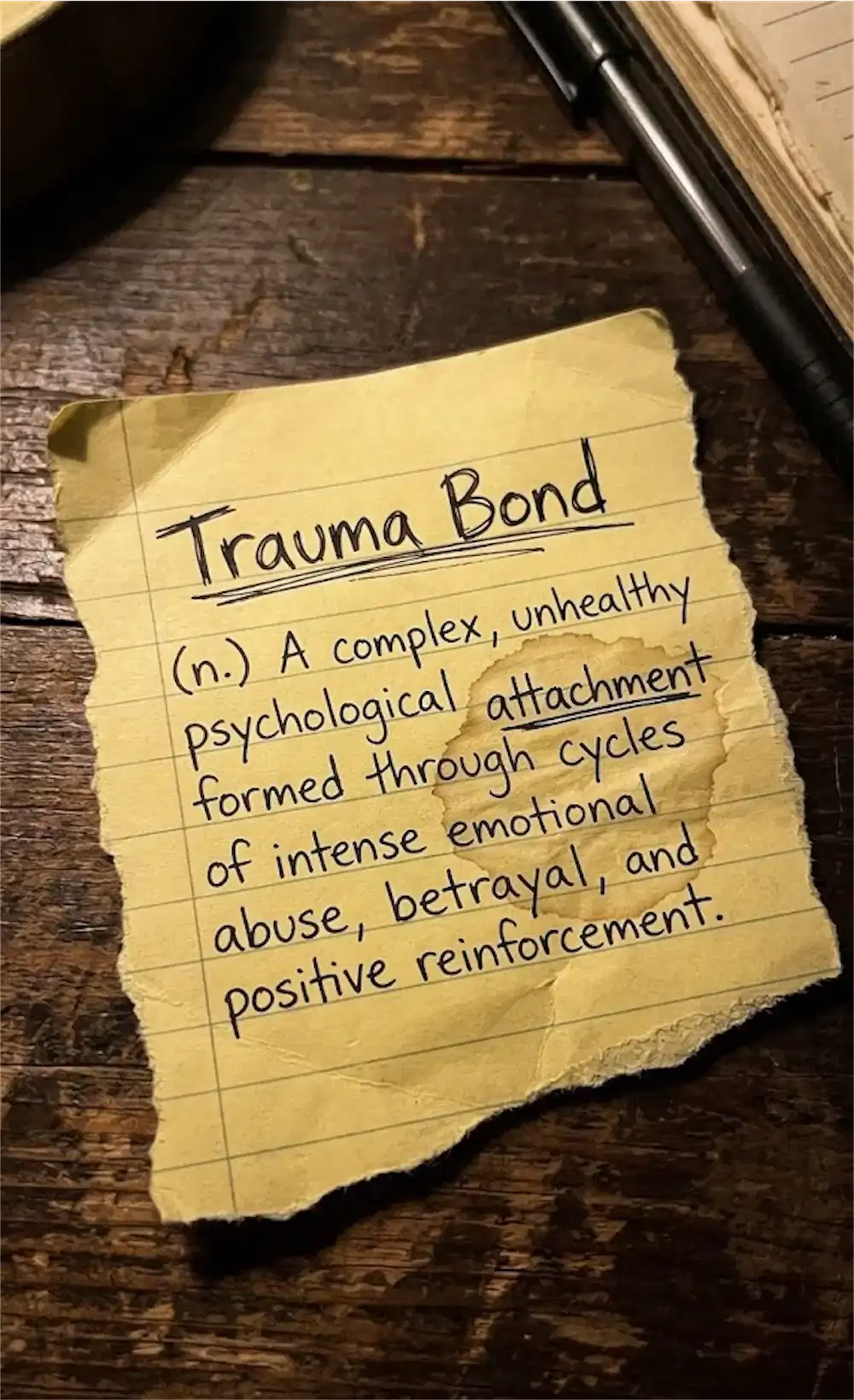
That pattern has a name. It’s called intermittent reinforcement, and it is one of the most psychologically damaging dynamics that can exist in a relationship. I lived inside that cycle for twelve years. The unpredictable mix of warmth and coldness, affection and silence, kept me hooked like nothing else ever could. It wasn’t love. It was a slot machine. And I kept pulling the lever, hoping the next spin would finally pay out. If you’re searching for answers about why you can’t leave a hot and cold relationship, this article is for you. I also recommend the Breaking Intermittent Reinforcement Guide if you want a structured, step-by-step path out of this pattern.
What Is Intermittent Reinforcement in a Relationship?
Intermittent reinforcement is when rewards (love, attention, affection, validation) are given unpredictably. Sometimes you get the sweetest version of your partner. Other times you get ice. There’s no consistent pattern you can rely on, and that inconsistency is exactly what makes it so addictive.
Think about it this way. If someone treated you badly every single day, you’d eventually leave. If someone treated you well every single day, you’d feel secure but not obsessed. But when the good and bad come at random? Your brain goes into overdrive trying to predict the next reward. This is the same mechanism behind gambling addiction. You keep going back because maybe this time will be different.
In my relationship, the reinforcement looked like weeks of coldness followed by a single evening where my partner was suddenly present, affectionate, and attentive. That one evening erased weeks of pain in my mind. I’d think, “See? They do love me. We’re going to be okay.” And then the withdrawal would start again. The cycle of love bombing then withdrawing affection kept me confused for over a decade.
Why Intermittent Reinforcement Creates a Trauma Bond

Here’s the part that nobody tells you until it’s almost too late. Intermittent reinforcement literally rewires your brain chemistry. When you receive affection after a period of emotional starvation, your brain releases a massive surge of dopamine. It’s the same chemical that fires during drug use. The relief of getting love back feels so intense that it bonds you to the source of both the pain and the pleasure.
This is how a trauma bond becomes a biochemical addiction. Your nervous system starts to confuse anxiety with excitement and relief with love. I remember feeling physically sick when my partner was distant, and then feeling an almost euphoric high when they came back around. That rollercoaster was not passion. It was a conditioned response.
People often search for things like “why do I miss someone who treated me badly” or “why can’t I stop going back to my toxic ex.” The answer, almost always, traces back to intermittent reinforcement. Your rational mind knows the relationship is harmful. But your brain’s reward system has been hijacked.
How to Recognize the Intermittent Reinforcement Pattern
If you’re wondering whether your partner is using intermittent reinforcement, here are some signs I wish someone had pointed out to me years earlier:
They alternate between warmth and withdrawal with no clear reason. You can’t connect their mood shifts to anything you actually did. One morning they’re holding your hand. By evening they won’t look at you. You replay every conversation trying to find the moment you “messed up,” but there isn’t one.
The good moments feel disproportionately amazing. After days of being ignored or criticized, even a small act of kindness from them feels like the greatest gift. A normal compliment from them hits like a wave of ecstasy because you’ve been starving for it.
You feel constantly on edge, walking on eggshells. Your body is always scanning for cues. Are they in a good mood? Is it safe to talk? Should you bring up what happened yesterday or just pretend everything is fine? This hypervigilance is a trauma response, not normal relationship anxiety.
You’ve started to believe the crumbs are the meal. When someone trains you to expect nothing, even a small gesture feels like everything. I used to feel grateful when my partner simply didn’t yell at me for a day. That is not a standard anyone should accept.
Breaking the Intermittent Reinforcement Cycle

Breaking this cycle is one of the hardest things you will ever do. And I don’t say that to scare you. I say it so you give yourself the grace you deserve when it feels impossible. Because it will feel impossible at first. Your brain has been trained to crave the very thing that is destroying you.
Step one is naming what is happening. You cannot fight what you cannot see. The moment I learned the term “intermittent reinforcement” during therapy, something shifted in me. Suddenly the chaos had a framework. It wasn’t my fault. It wasn’t because I wasn’t loving enough. It was a pattern, and patterns can be broken.
Step two is cutting off the supply. The reinforcement cycle needs contact to survive. Every text you answer, every call you pick up, every time you check their social media, you are pulling the lever on that slot machine again. Going no contact is not about punishing your partner. It is about starving the addiction so your brain can begin to heal.
If you’ve been trapped in this hot and cold cycle and need a concrete plan to dismantle it, this guide was designed exactly for that:
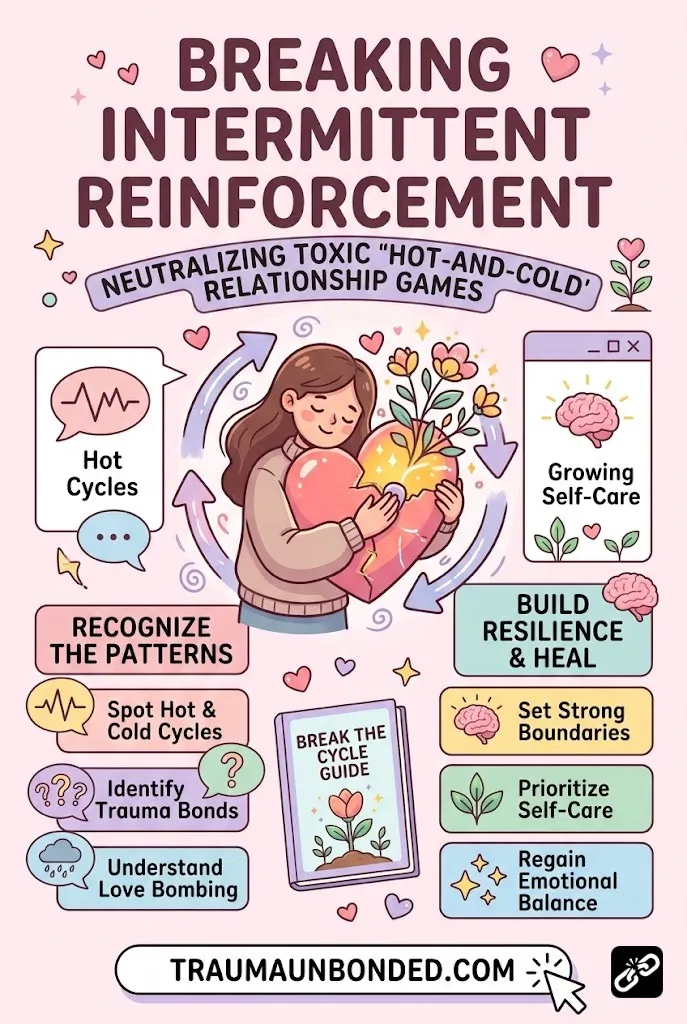
Step three is replacing the dopamine source. Your brain doesn’t care where the dopamine comes from, it just wants it. Exercise, creative projects, meaningful friendships, even cooking a meal you’re proud of. These things won’t feel as intense at first. They’ll feel flat compared to the highs of the cycle. That flatness is withdrawal, and it passes. I promise you it passes.
Step four is learning to sit with discomfort. The urge to reach out, to check their profile, to “just send one text” will be overwhelming at times. That urge is not love. It is your nervous system craving its fix. Sit with it. Breathe through it. Journal about it. Let the wave crest and crash without acting on it. Every time you survive that urge without caving, you are rewiring your brain.
What Healing From Intermittent Reinforcement Actually Looks Like
Healing doesn’t look like waking up one morning and feeling fine. It looks like having a bad day and not calling them. It looks like catching yourself mid-thought when you start romanticizing the good times and gently reminding yourself of the full picture. It looks like learning to stop romanticizing your toxic ex even when your heart aches for the version of them that never consistently existed.
After my twelve year relationship ended, I spent months in a fog. I had no friends left, no hobbies, no sense of who I was outside of that person. But slowly, with therapy and a lot of uncomfortable self-honesty, I started to come back. The cheerful, curious, grounded person I had been before was still in there. She’d just been buried under years of unpredictable love.
If you are in the middle of this right now, reading this at 2 a.m. because you can’t sleep, I want you to know something. The fact that you’re searching for answers means a part of you already knows the truth. That part of you is stronger than the addiction. Trust it.
You don’t have to figure this out alone. The Breaking Intermittent Reinforcement Guide walks you through exactly how to dismantle this pattern, rebuild your emotional baseline, and reclaim the stability you deserve. You survived the cycle. Now it’s time to break it for good.

Meet Your Guide
Helen Brooks
After surviving a 12-year NPD/BPD relationship, I dedicated over a decade to studying trauma bonding and nervous system recovery. My mission is to help you break free from the fog and reclaim your authentic self.
Ready to break the trauma bond and reclaim your life?