How Trauma Lives in the Nervous System: Understanding Hyperarousal and Hypoarousal
Trauma stored in the nervous system is not something you just “think” your way out of. If you have ever wondered why your body still reacts to things that are no longer happening, why you can’t sleep, why you flinch at a raised voice, or why you feel numb and disconnected for days at a time, this article is for you. Hyperarousal and hypoarousal after narcissistic abuse are two survival states that your nervous system gets stuck in long after the relationship ends. I know this because I lived in both of those states for over a decade, and for months after I finally left.
During my 12-year relationship with a partner who had both NPD and BPD traits, I didn’t realize my body was keeping score of every silent treatment, every explosive argument, every night I lay awake wondering what version of them I would wake up to. My nervous system was dysregulated for so long that I forgot what calm actually felt like. It took professional therapy and a lot of education about somatic trauma and nervous system regulation before I understood that healing wasn’t just about changing my thoughts. It was about changing what was happening inside my body.
If you are searching for answers about why your body won’t calm down after a toxic relationship, or why you feel frozen and unable to function, keep reading. What you are experiencing has a name, and more importantly, it has a path forward.
What Does It Mean When Trauma Lives in the Nervous System?
When trauma lives in the nervous system, it means your body remains locked in a survival response long after the danger has passed, causing chronic physical and emotional symptoms that cannot be resolved through logic or willpower alone.
Your autonomic nervous system has two main branches. The sympathetic branch handles your fight-or-flight response. The parasympathetic branch handles rest, digestion, and recovery. In a healthy system, these two branches work together like a thermostat, turning up when there is danger and turning down when you are safe.
But when you live with ongoing emotional abuse, gaslighting (which is when someone manipulates you into questioning your own reality, your memory, your sanity), and unpredictable mood swings for years? That thermostat breaks. Your nervous system stops toggling back to safety. It gets stuck.
I remember the first time my therapist explained this to me. She said, “Your body doesn’t know the relationship is over.” And honestly? That one sentence changed everything. Because I had been blaming myself for not being able to “just move on.” But my nervous system hadn’t gotten the memo that I was safe now. Research published through the National Institutes of Health confirms that chronic interpersonal trauma creates lasting changes in autonomic nervous system function, keeping survivors stuck in dysregulated states.
Hyperarousal After Narcissistic Abuse: When Your Body Won’t Turn Off
Hyperarousal is the state where your nervous system is running on overdrive. Think of it as your internal alarm system blaring at full volume, even when there is no fire. Your body is convinced that danger is imminent. All the time.
What does hyperarousal actually feel like after leaving a narcissistic or BPD relationship? Let me describe it from experience:
- Insomnia or restless sleep, because your body won’t let its guard down even at 3 AM
- Startle responses to normal sounds like a door closing or a phone notification
- Racing thoughts and rumination, replaying arguments that happened years ago
- Muscle tension, especially in your jaw, shoulders, and stomach
- Irritability and emotional flooding over small triggers
- Hypervigilance, constantly scanning people’s faces and tones for signs of anger or disapproval
For years inside my relationship, I was hypervigilant every single day. I could read my partner’s mood within seconds of them walking through the door. The angle of their jaw. The speed of their footsteps. I became an expert at detecting danger, and that skill didn’t just disappear when I left. It followed me into friendships, work meetings, and even grocery store interactions. Have you ever flinched when a coworker raised their voice slightly, even though they weren’t talking to you? That is hyperarousal running the show.
If you are stuck in this state and cannot stop replaying arguments in your head, please know that this is not a character flaw. This is your nervous system doing exactly what it was trained to do during years of intermittent reinforcement and emotional chaos.
Hypoarousal After Emotional Abuse: The Freeze and Shutdown Response
Hypoarousal is the opposite end of the spectrum, but it is just as painful. This is the freeze response. The shutdown. The collapse. If hyperarousal is your alarm blaring nonstop, hypoarousal is your entire system going dark.
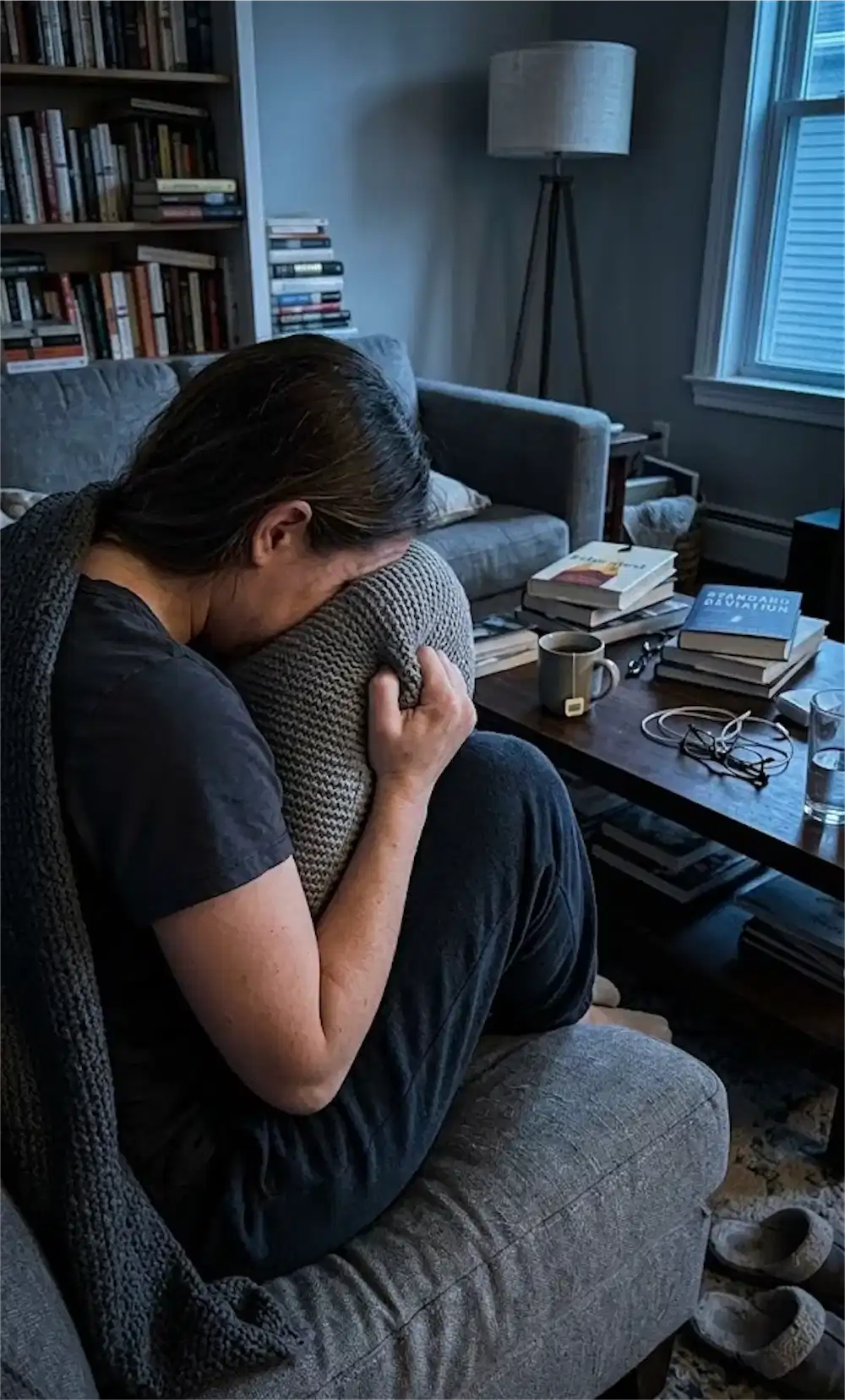
Hypoarousal shows up as:
- Emotional numbness, feeling disconnected from your own life, like watching it through glass
- Chronic fatigue that sleep doesn’t fix
- Brain fog and difficulty concentrating or making simple decisions
- Feeling “flat” with no motivation, no excitement, no sadness either
- Dissociation, losing time, spacing out, or feeling like you are not real
- Social withdrawal and an inability to connect with people you used to love
After I left my relationship, I swung between hyperarousal and hypoarousal like a pendulum. Some days I couldn’t stop crying, couldn’t sleep, couldn’t eat. Other days I sat on my couch for eight hours straight and couldn’t tell you what I did. I wasn’t sad on those days. I wasn’t anything. I was just… gone. That blankness was terrifying in its own way. Because at least when you are panicking, you know you are alive.
What I didn’t understand then is that hypoarousal is your body’s last resort survival mechanism. When the nervous system decides that fighting or fleeing won’t work, it shuts everything down to protect you. It is the same response animals use when they play dead. And after years of walking on eggshells around someone with unpredictable rage and emotional volatility, your body learned that shutting down was the safest option.
The Window of Tolerance: Why You Swing Between Both States
There is a concept in trauma therapy called the window of tolerance. It was developed by Dr. Dan Siegel, and it describes the zone where you can function, feel emotions without being overwhelmed, think clearly, and respond rather than react.
When you live through chronic emotional abuse, your window of tolerance shrinks. Dramatically. Things that would barely register for someone with a regulated nervous system send you flying into hyperarousal or crashing into hypoarousal. A text from an unknown number. A song that reminds you of them. Someone canceling plans at the last minute.
The goal of trauma recovery is not to never feel triggered again. That is not realistic. The goal is to widen that window so you can experience stress without your entire system going into crisis mode. And that happens through body-based work, not just talk therapy.
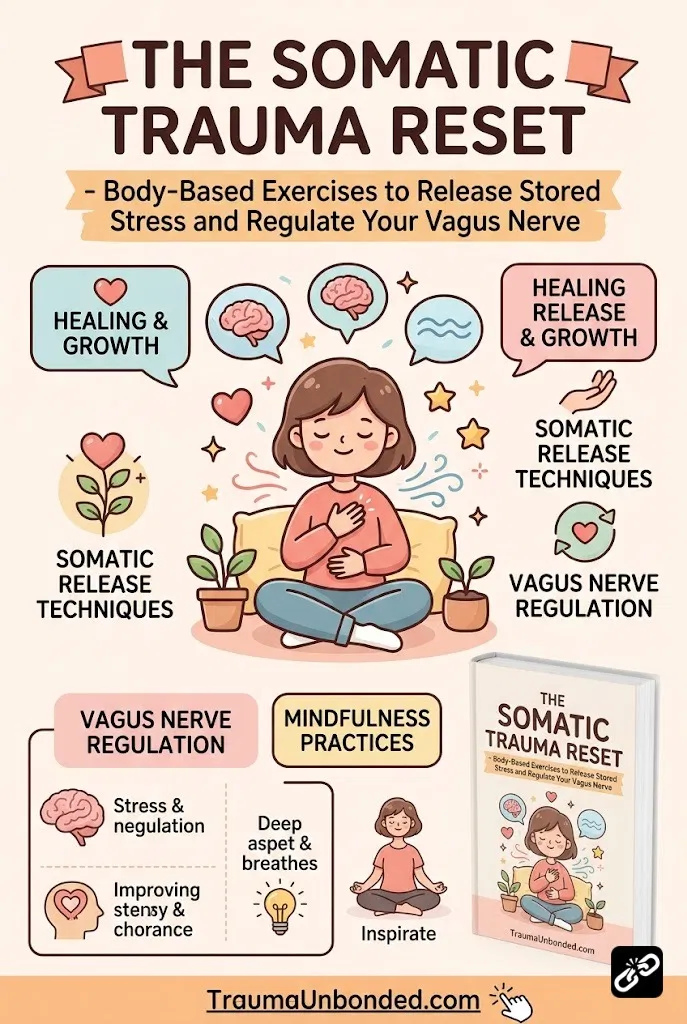
If you have been struggling with this pendulum swing and want a structured, daily approach to calming your system, I created my own regulation practice using the strategies from the Somatic Trauma Reset guide, which focuses on vagus nerve exercises and body-based techniques specifically designed for abuse survivors.
How to Start Regulating Your Nervous System After Trauma
Here is what actually helped me move from survival mode back into my body. None of this happened overnight. It took months. But each small step widened my window of tolerance just a little more.
Vagus nerve exercises. The vagus nerve is the longest cranial nerve in your body, and it is the main communication line between your brain and your gut. Stimulating it tells your nervous system that you are safe. Simple techniques include cold water on your wrists, humming, slow exhale breathing, and gentle neck stretches.
Grounding techniques. When you are dissociating or spiraling, grounding brings you back to the present. Hold ice cubes. Name five things you can see. Press your bare feet into the floor. These are not cute wellness tips. They are nervous system interventions.
Movement. Not intense exercise. Gentle, intentional movement. Walking. Stretching. Yoga. Shaking your hands and arms to literally discharge stored stress. Your body holds trauma in your muscles, and movement is how it releases.
Reducing stimulation. During the worst of my dysregulation, I had to limit social media, news, and even certain music. My nervous system was so overloaded that every input felt like another threat. Giving it less to process was an act of mercy, not weakness.
Co-regulation. Being around safe, calm people. This was hard for me because my ex had isolated me from most of my friends. But even sitting in a coffee shop near other humans, or calling one trusted person, helped my nervous system learn that connection could be safe again.
Your Body Is Not Broken. It Adapted.
If you are reading this and recognizing yourself in every paragraph, I want you to hear something clearly. There is nothing wrong with you. Your nervous system did exactly what it needed to do to keep you alive in an environment that was psychologically unsafe. Hyperarousal and hypoarousal are not signs of weakness. They are proof that your body fought for you when you couldn’t fight for yourself.
But survival mode was never meant to be permanent. And you deserve to live in your body again, not just survive in it.
Recovery is not linear. Some weeks you will feel like yourself again, and then a random trigger will send you right back into freeze mode. That doesn’t mean you have failed. It means your nervous system is still learning. Be patient with it. It kept you alive through something most people cannot even imagine. The least you can do now is give it time to rest.
If you want a structured, step-by-step approach to body-based healing that was designed specifically for survivors of narcissistic and BPD abuse, the Somatic Trauma Reset guide walks you through daily vagus nerve exercises, grounding practices, and nervous system regulation techniques that actually work. It is the resource I wish I had during my first year of recovery, and it might be exactly what your body needs right now.

Meet Your Guide
Helen Brooks
After surviving a 12-year NPD/BPD relationship, I dedicated over a decade to studying trauma bonding and nervous system recovery. My mission is to help you break free from the fog and reclaim your authentic self.
Ready to break the trauma bond and reclaim your life?