Why Healthy Relationships Feel Boring After the Chaos of a Narcissistic Partner
If you find that healthy relationships feel boring after narcissistic abuse, you are not losing your mind. Many survivors of toxic dynamics experience an unsettling emptiness when they finally meet someone who is calm, reliable, and respectful. You might ask yourself why do stable partners feel dull now, or why you suddenly miss the high-stress environments of your past. This strange reaction is actually a classic sign of trauma bond withdrawal, where your body is struggling to adapt to a life without constant threat.
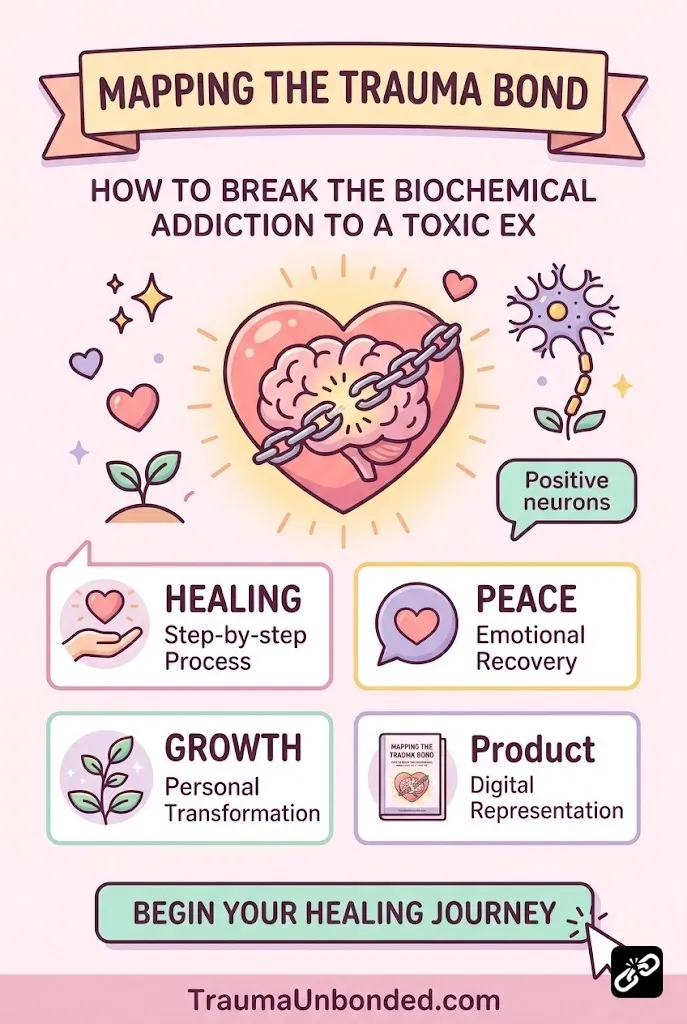
I spent twelve years walking on eggshells with a partner who showed severe traits of both Narcissistic Personality Disorder and Borderline Personality Disorder. By the time I finally escaped, I was entirely isolated from my friends, had abandoned all my favorite hobbies, and felt completely hollow inside. Through professional therapy and a deep commitment to my own recovery, I slowly learned how codependency had kept me trapped. For those who are currently trying to untangle their own past, the Mapping the Trauma Bond guide offers a practical way to break the physical addiction to a toxic ex.
Why do we find ourselves yearning for the very storms that nearly broke us? The answer is not that you are broken or that you prefer being mistreated. Instead, it is a direct consequence of how your nervous system was systematically rewired during your years of survival. Let us examine the biological reasons behind this flat feeling and look at how you can help your body accept peaceful love.
Why Healthy Relationships Feel Boring After a Narcissistic Partner
Healthy relationships feel boring after narcissistic abuse because your nervous system has become conditioned to associate high drama, unpredictable cycles, and constant threat with intense passion and love. When the chaos stops, the sudden drop in stress hormones can feel like a depressing vacuum rather than true peace.
During my twelve years in that toxic dynamic, my baseline of a normal day was completely warped. There was never a quiet moment that did not feel like the prelude to a massive blowout. When I finally began dating a kind, predictable person, my brain did not know how to handle the lack of conflict. I found myself thinking that their kindness was uninspired, and I desperately missed the electric intensity of my past relationship.
What we fail to realize in the aftermath of abuse is that our definitions of romance have been hijacked. We mistake the rapid heartbeat of fear for the butterflies of excitement. We mistake the desperate relief of a makeup conversation for deep, soulmate-level intimacy. When a stable partner offers simple, quiet consistency, our bodies react with confusion because there is no adrenaline to feed the loop.
The Biochemical Addiction of the Trauma Bond
Living with an abusive or highly volatile partner forces your brain to operate like a slot machine player. You never know when the next payout of affection, warmth, or validation will come, but you keep playing because the payout feels so incredibly sweet. This pattern is known as intermittent reinforcement, and it is the strongest psychological anchor in existence. It builds a physical dependency in your brain that is identical to drug addiction.
According to Psychology Today, a powerful neurochemical storm of dopamine, cortisol, and oxytocin reinforces biological attachment to toxic partners, making emotional abuse function much like a physical dependency. During the silent treatments and the discards, your cortisol levels skyrocket, leaving you in physical pain. When the partner finally returns with sweet words, your brain releases a massive flood of dopamine to soothe the distress. When you enter a peaceful relationship, this cycle is broken. To understand why your body misses this loop, you can study your own trauma bond biochemical addiction.
Conditioned to Wait for the Next Threat
When you spend years surviving emotional volatility, your body becomes highly efficient at staying alive. Your amygdala is constantly on high alert, scanning for minor shifts in your partner’s facial expressions, tone of voice, or text messaging frequency. This state of hypervigilance keeps you prepared to fight, flee, or freeze at a moment’s notice.
When you are finally safe with a healthy partner, your alarm system does not simply turn off. Your brain still has a massive surplus of survival energy with nowhere to go. Without a real threat to focus on, your mind begins to manufacture anxiety. You might start overanalyzing your new partner’s quietness, wondering if they are secretly angry or planning to leave you. This restlessness is a major reason why survivors find themselves addicted to chaos relationship patterns.
It can be incredibly confusing to realize that your body actually feels safer when there is a fight to react to. When there is an active crisis, you know exactly what to do. You apologize, you appease, and you manage the storm. When there is peace, you are left alone with your own thoughts and your own unhealed wounds, which can feel far more terrifying than any argument.
Recognizing these patterns is the key to breaking free from the cycle of toxic attraction. If you are struggling to enjoy peaceful connection because your body is still craving the highs and lows of your past, you can benefit from a clear, structured plan to guide your recovery.
In a secure, healthy relationship, there are no explosive arguments, no middle-of-the-night screaming matches, and no cruel threats of abandonment. There is only a steady, predictable flow of daily life. For someone whose nervous system was forged in a decade of relationship warfare, this predictability can feel chillingly cold.
I remember sitting on the couch during an early date with a kind, stable person and feeling a profound wave of sadness. I kept waiting for them to say something sarcastic, or to suddenly turn cold and ignore me for days. When they didn’t, I felt an uncomfortable, anxious boredom. It took months of hard work in therapy to realize that what I thought was boring was actually the unfamiliar feeling of safety.
When love is healthy, it does not demand all of your attention. It does not force you to abandon your friends, your family, or your self-respect to keep the peace. Because healthy love leaves you with so much free space, you are suddenly forced to look at the parts of yourself you neglected during the chaos. That self-reflection is where true healing begins.
Practical Steps to Adjust to Peaceful Love
If you want to stop sabotaging good, stable connections, you must actively teach your nervous system that calm is not a sign of danger. This is a physical process of retraining your body, not just your thoughts. Here are a few ways to begin that transition:
Acknowledge the physical detox: Understand that your restlessness is a biological withdrawal from chronic stress hormones. It is not a sign that your partner is wrong for you; it is a sign that your body is resetting.
Reframe boredom as a gift: When you feel that familiar itch of boredom, stop and tell yourself: This is peace. This is what it feels like when nobody is trying to hurt me.
Savor the small, quiet moments: Focus your attention on simple, gentle interactions. Notice the warmth of a reliable text, the comfort of a quiet dinner, or the ease of a partner who does not keep score.
Find external outlets for intensity: If your body still craves a rush, find healthy ways to satisfy that need. Try intense exercise, martial arts, or creative projects instead of generating relationship drama.
By taking these slow, deliberate steps, you can begin to heal trauma bond loops that keep you running back to toxic dynamics. It takes time, but your body can learn to find comfort in consistency.
Reclaiming Your Life and Finding Peace in the Quiet
It took me years of patience and practice to finally feel comfortable in a quiet life. When I first stepped away from my toxic ex, my daily routine was completely empty. The silence in my house felt heavy, and I had to learn how to exist without a constant emergency to solve. I had to slowly reach out to old friends, rebuild my support network, and discover what actually brought me joy when nobody was tearing me down.
Eventually, my original self returned. I became cheerful, optimistic, and deeply grounded in my daily life. I realized that a healthy, stable relationship is not a cage of boredom; it is the launchpad that allows you to pursue your dreams, enjoy your friendships, and live a life of real meaning.
If you are sitting in the quiet today and feeling anxious, please remind yourself to be gentle. Your system is detoxing from years of intense, chronic stress. Given time, professional support, and a commitment to your own recovery, you will find that the quiet is not a vacuum. It is the very place where your true self can finally breathe, grow, and learn to love without fear. To help you navigate this physical transition and break the silent hook of your past, the Mapping the Trauma Bond guide can help you find your footing and build a peaceful, lasting future.
Meet Your Guide
Helen Brooks
After surviving a 12-year NPD/BPD relationship, I dedicated over a decade to studying trauma bonding and nervous system recovery. My mission is to help you break free from the fog and reclaim your authentic self.
Ready to break the trauma bond and reclaim your life?