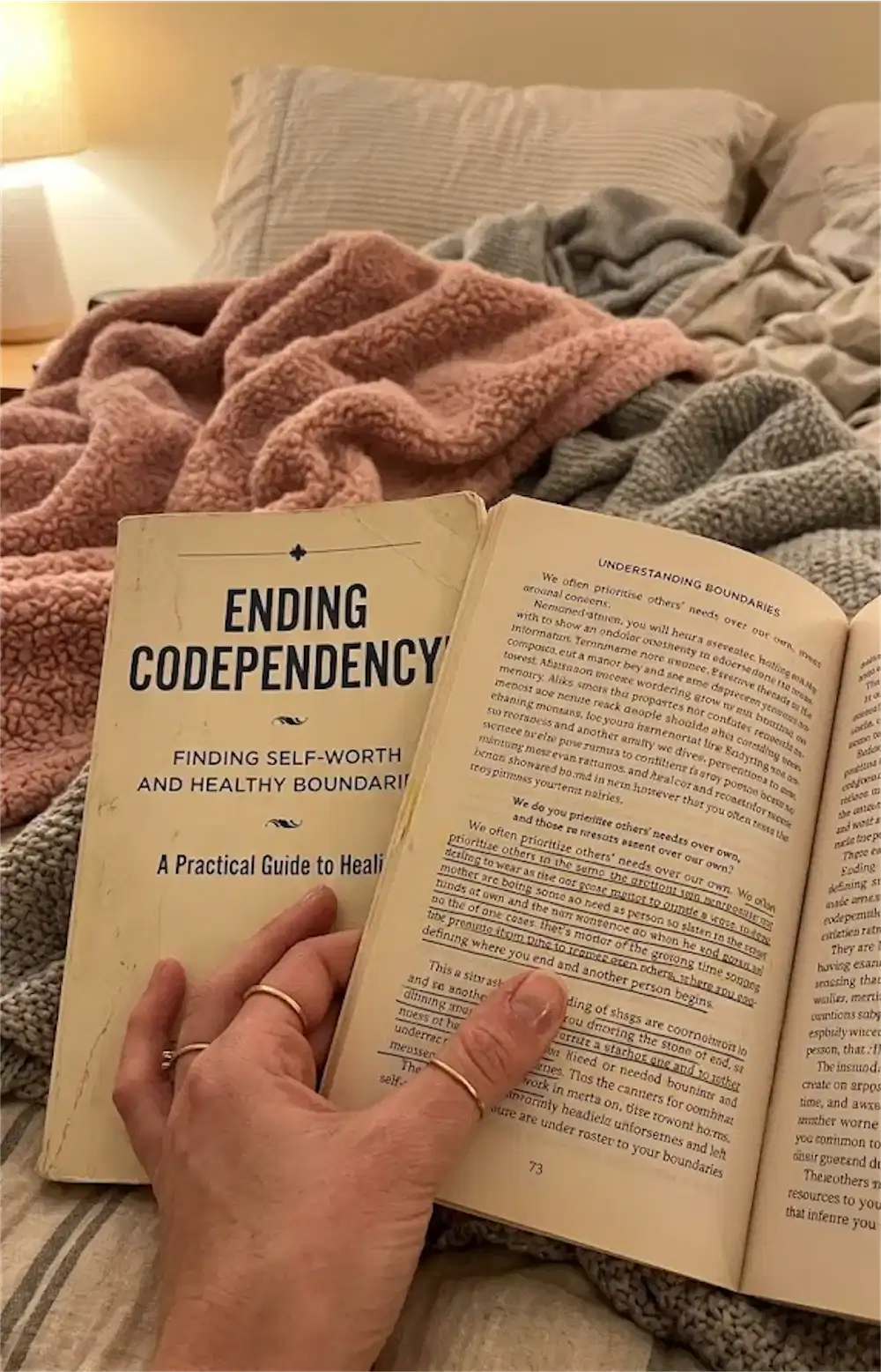
9 Nighttime Habits to Regulate Your Nervous System After a Trauma Bond
If you have ever laid in bed at 1 a.m., heart pounding, replaying conversations that happened months ago, you already know that leaving a trauma bond does not mean your body got the memo. The relationship might be over. Your nervous system is still running the old emergency program.
I know this firsthand. After 12 years in a relationship with a partner who had both narcissistic and BPD traits, my nights were the worst part of recovery. The days were manageable — I had tasks, distractions, movement. But the moment I got into bed, everything came flooding back. The hypervigilance, the anxiety, the obsessive replaying of every fight and every moment of cruelty. I was exhausted but could not sleep. Calm but constantly braced for something bad.
What helped me was not willpower or “just thinking positively.” It was building a specific evening structure that told my body, slowly and consistently, that it was safe now. These nine nighttime habits are what I used — and what research in trauma recovery actually supports.
What a Trauma Bond Actually Does to Your Nervous System
Before getting into the habits, it helps to understand what you are actually dealing with. A trauma bond is a psychological attachment formed through cycles of abuse and intermittent reward. Your brain gets conditioned to a constant loop of threat and relief, tension and release. Over time, that loop becomes the baseline your nervous system expects.
The result is a dysregulated autonomic nervous system — meaning your body cannot easily shift between its “alert” mode and its “rest” mode. According to research by Dr. Bessel van der Kolk, author of the landmark work on trauma physiology, the body literally keeps score of traumatic experiences, storing stress responses in the nervous system long after the threat is gone. Survivors often report hyperarousal (constant alertness, difficulty sleeping, exaggerated startle responses) or hypoarousal (emotional numbness, shutdown, inability to feel present) — and sometimes both, alternating unpredictably.
Nighttime is when all of that hits hardest, because you have removed all the daytime buffers. No distractions. No noise. Just you and your activated nervous system. That is why the evening hours matter so much in trauma recovery — and why having a structured nighttime routine is one of the most underrated healing tools available.

Habit 1: Put Your Phone Away at Least One Hour Before Bed
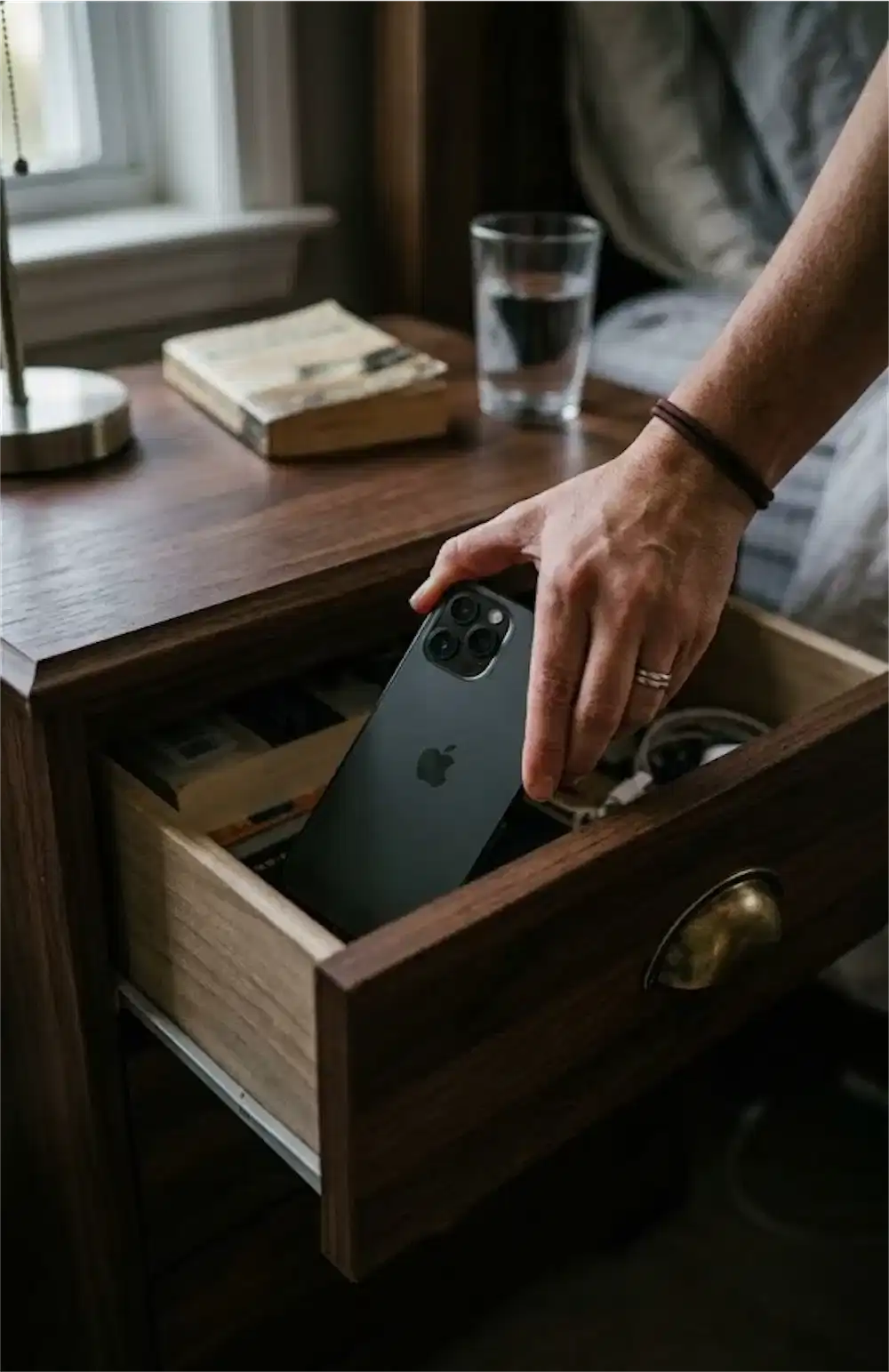
This one sounds simple. It is not, especially early in recovery. The phone becomes a crutch — a way to avoid sitting with the discomfort of your own thoughts. And if you are still tempted to check their social media (which nearly everyone is), keeping the phone next to your bed at night is like keeping a lit match near gasoline.
Beyond the trauma-specific issues, blue light from screens suppresses melatonin production and delays sleep onset. But the bigger problem for survivors is that scrolling keeps the nervous system in a reactive, scanning state — the exact opposite of what you need before bed. One hour of phone-free time before sleep is not a luxury. It is neurological maintenance.
I started putting my phone in a kitchen drawer at 9 p.m. every night. The first two weeks felt genuinely uncomfortable. By week four, it was the most protective habit I had built. If you are still fighting the urge to check on your ex online, the strategies in this post on stopping the social media surveillance habit are a good companion read.
Habit 2: Do a Brain Dump Journal Entry
The hyperactive mind at night is not random. It is your brain trying to process unresolved emotional content — and it will keep looping until you give it somewhere to go. A brain dump journal is exactly what it sounds like: you write down everything that is circling in your head before bed, without structure, without editing, without trying to make it make sense.
This is different from gratitude journaling or reflective journaling, both of which are valuable but serve different purposes. The brain dump is purely about emptying the mental buffer. Research on expressive writing by psychologist James Pennebaker at the University of Texas found that regular expressive writing about emotional experiences can reduce intrusive thoughts and improve sleep quality in people dealing with stress and trauma.
For the first six months after my breakup, I filled two or three pages every single night. Sometimes it was coherent. Sometimes it was just “I am so angry and I do not know at what.” Both were useful. The page held it so I did not have to.
If you want more structured prompts to work through trauma-specific thoughts, the journaling prompts for post-narcissist breakup I put together are a good starting point. A dedicated journal like the trauma recovery guided journal on Amazon also gives you structure when your thoughts are too scattered to start from scratch.
Habit 3: Light a Candle and Create a Sensory Anchor
This might sound too soft to matter. It is not. Your nervous system is heavily influenced by sensory cues. When you were in the relationship, certain sensory experiences became associated with anxiety, unpredictability, or emotional pain. Building new sensory associations with safety and calm is an active part of nervous system retraining.
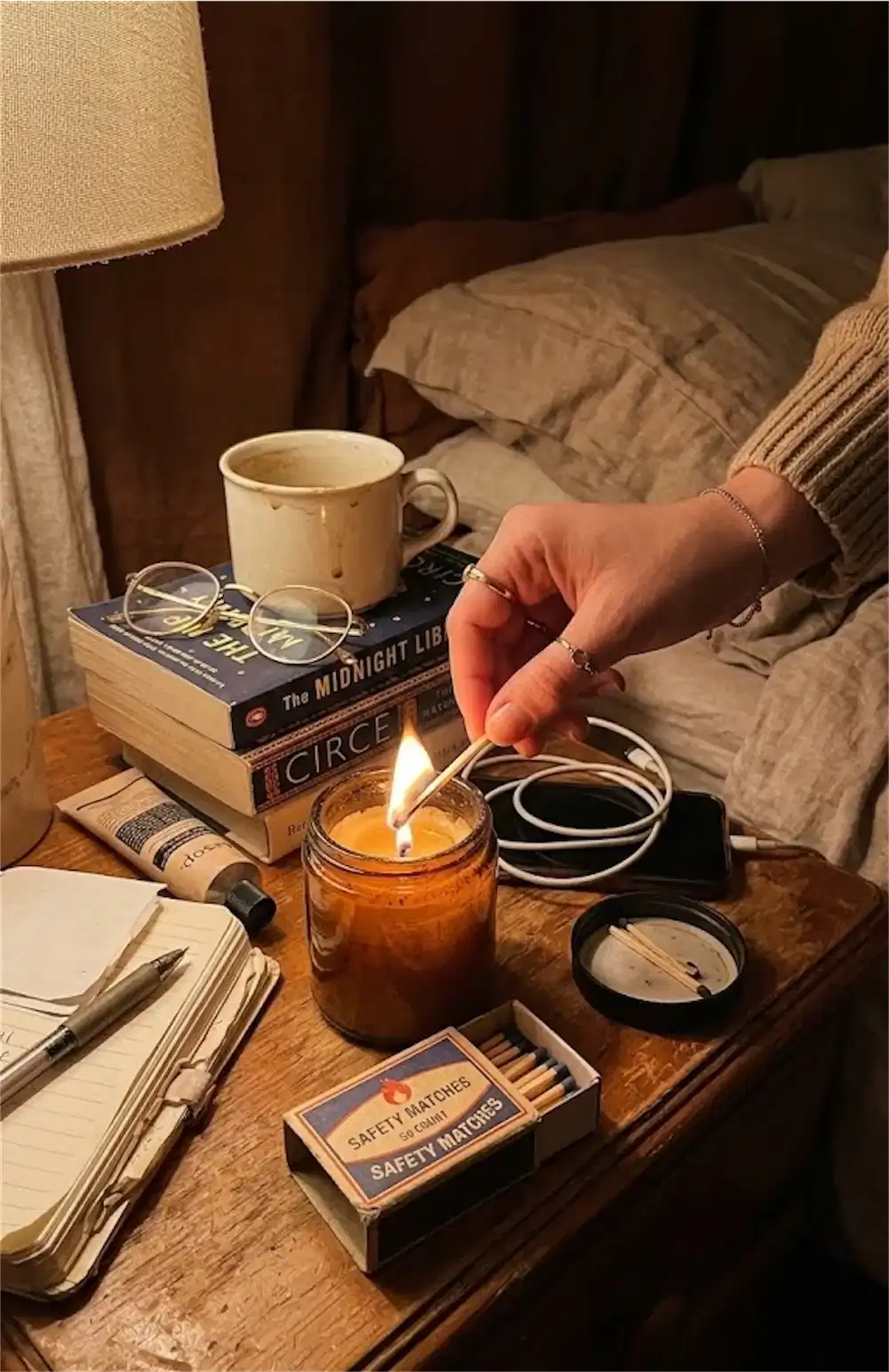
Lighting a specific candle every night — same scent, same time, same ritual — creates what is called a conditioned safety cue. Over time, the smell and the warmth of that candle begin to signal to your body that this is a safe moment. Lavender, in particular, has documented anxiolytic (anxiety-reducing) properties. A study published in Phytomedicine found that lavender aromatherapy has measurable effects on reducing anxiety and improving sleep quality without sedative side effects.
I use an unscented candle with a lavender diffuser next to it every single night. It took about three weeks before my shoulders actually dropped the moment I lit it. That is conditioning working in your favor. You can grab a lavender essential oil diffuser on Amazon — I have gone through a few and the ultrasonic ones are the best for bedroom use.
Habit 4: Try 4-7-8 Breathing or Box Breathing
Breathwork is one of the few tools you have that can directly access your autonomic nervous system and shift it in real time. The vagus nerve — the long nerve that connects your brain to your gut and heart — responds to slow, controlled exhales. Lengthening your exhale activates the parasympathetic nervous system (your “rest and digest” mode) and dials down the fight-or-flight response.
The 4-7-8 technique: inhale for 4 counts, hold for 7, exhale slowly for 8. Box breathing is slightly simpler: inhale 4, hold 4, exhale 4, hold 4. Either one works. The key is the extended exhale — that is the mechanism doing the neurological work.
In the thick of recovery, I used to lie in bed in full-blown panic mode with no visible cause. Four rounds of box breathing was sometimes the only thing that interrupted the cycle. It does not fix everything. But it gives your nervous system a handhold when it is spinning.
Pair breathwork with the grounding techniques discussed in the nighttime habits guide for a more complete toolkit. A biofeedback device like the heart rate variability biofeedback wearable can also help you track whether your nervous system is actually shifting — which some people find motivating early in recovery.
Habit 5: Take Magnesium Before Bed
Chronic stress depletes magnesium from the body. And chronic stress is exactly what a long-term trauma bond creates. Magnesium is involved in over 300 enzymatic processes, including the regulation of the nervous system, GABA production (your brain’s calming neurotransmitter), and melatonin synthesis. Low magnesium is directly linked to increased anxiety, poor sleep quality, and hyperarousal.
Magnesium glycinate is the form most commonly recommended for sleep and anxiety — it is highly bioavailable and gentle on the stomach. I started taking it about three months into recovery on my therapist’s suggestion, and the difference in my ability to fall asleep and stay asleep was noticeable within the first two weeks.
This is not a replacement for therapy or processing the actual trauma. But it is a physiological support that makes the other work easier. If you want to explore supplements that specifically support nervous system recovery after narcissistic abuse, there is a full breakdown in the supplements for stress and narcissistic abuse recovery post. You can find quality magnesium glycinate supplements on Amazon — look for at least 200-400mg elemental magnesium per dose.
Habit 6: Do a Simple Skincare or Body Care Ritual
When you are in a trauma bond, your body often stops feeling like your own. You spend so much energy managing the other person’s emotions, walking on eggshells, and monitoring their moods that your own physical self becomes almost irrelevant. After you leave, reclaiming your body through simple, gentle touch is more therapeutic than it sounds.
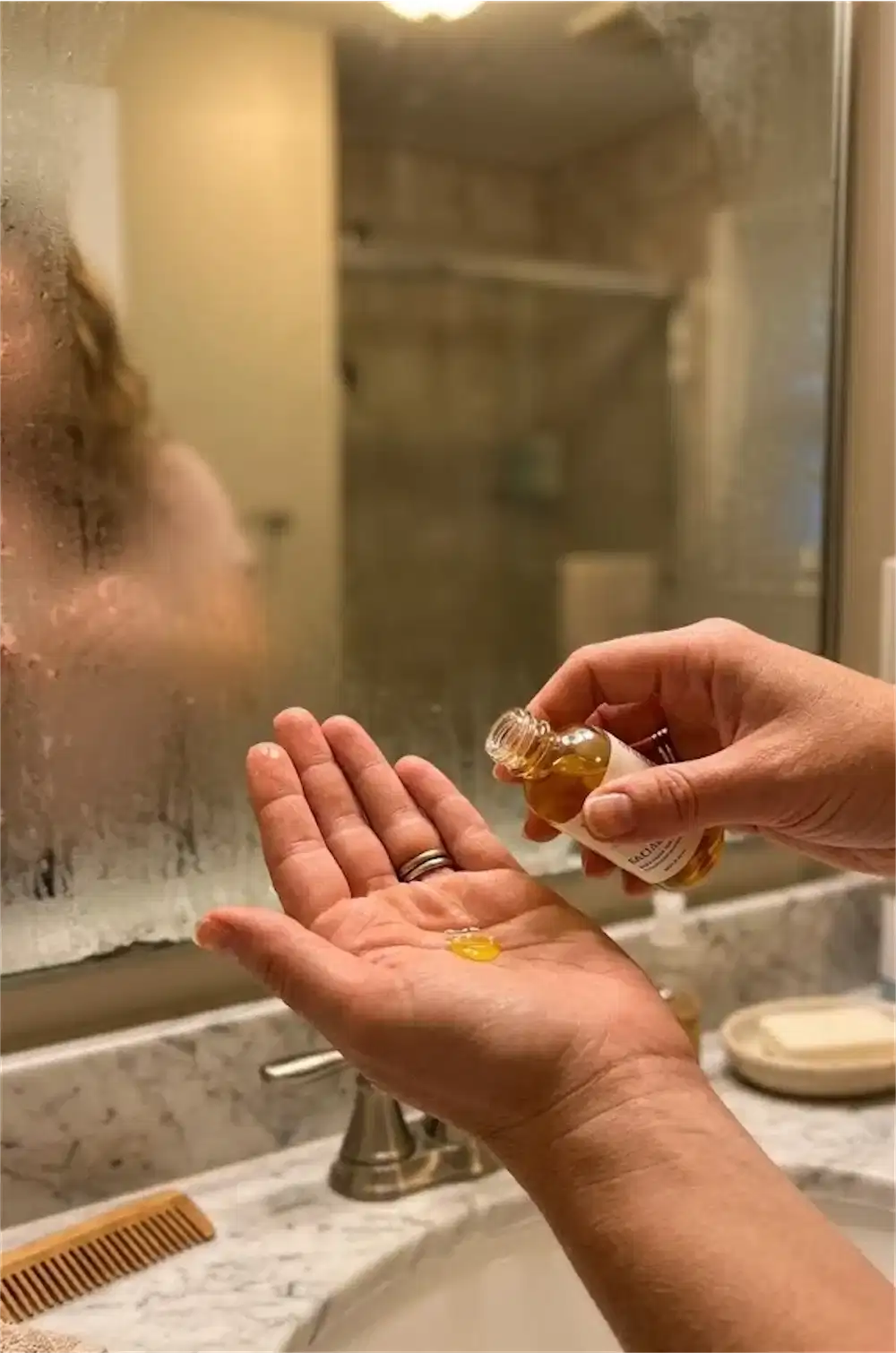
A nighttime skincare ritual — even just washing your face and applying a moisturizer or body oil mindfully — is an act of self-directed attention. You are touching your own skin with care. That experience, repeated nightly, begins to rebuild the relationship between your mind and your body that the abuse eroded. It is slow. It works.
This is also an opportunity to practice being present in your body without judgment, which is a core skill in somatic trauma recovery. The ritual does not need to be elaborate or expensive. It just needs to be consistent and intentional.
Habit 7: Use a Weighted Blanket
Deep pressure stimulation — the kind provided by a weighted blanket — activates the parasympathetic nervous system through proprioceptive input. In simpler terms: the gentle, even pressure on your body tells your nervous system that it is contained and safe. It is a physical way of calming a system that has been in overdrive.
Research published in Occupational Therapy in Mental Health found that weighted blanket use reduced electrodermal activity (a physiological measure of arousal and anxiety) in a significant number of participants. For trauma survivors who experience hyperarousal at night, this is not just a comfort item — it is a nervous system tool.
I was genuinely skeptical about weighted blankets until a therapist specifically recommended one for nighttime hypervigilance. Within a week it had become non-negotiable. A good general guideline is to choose a blanket that is roughly 10 percent of your body weight. You can find well-reviewed options by searching for weighted blankets for anxiety and sleep on Amazon.
Habit 8: Set a No-Contact Boundary With Yourself
No contact is not just about blocking their number (though that matters too). It is also about the internal contact — the mental visits you make to them at night. The imaginary conversations. The rehearsed confrontations. The wondering what they are doing right now.
Part of your nighttime routine needs to be a clear internal rule: after a certain hour, you do not entertain thoughts about them. Not because the thoughts are shameful, but because late-night rumination keeps your nervous system activated and does not produce anything useful. It just keeps the loop going.
A practical way to implement this is to write down anything that comes up about them in your brain dump journal earlier in the evening — contained and time-limited. Once that window closes, if a thought about them surfaces, you notice it and redirect. “I will give that space at 8 p.m. tomorrow.” Then redirect to something physically grounding — your breath, the texture of your blanket, the scent in the room.
This is one of the most overlooked aspects of no contact, and the why no contact works post explains the neuroscience behind why this internal boundary matters just as much as the external one.
Habit 9: End With One Grounding Affirmation
Before you dismiss this as too “self-help-y” — hear me out. After years of hearing that you were too much, not enough, crazy, oversensitive, or the cause of all the problems, your internal narrative has been shaped by someone else’s distorted view of you. The last thought you have before sleep is the one your subconscious marinates in for the next several hours.
One simple, believable affirmation is enough. Not a string of aspirational claims you do not believe yet. One thing that is true right now. “I am safe in this moment.” “My body is learning to rest.” “I did not cause this and I am allowed to heal.” Say it out loud if you can. Whispered words carry more neurological weight than silent thoughts.
Research in cognitive restructuring supports the idea that intentionally replacing automatic negative thoughts with accurate, compassionate alternatives — done consistently over time — changes the neural pathways associated with those thought patterns. This is not instant. It is gradual, and that is fine. Gradual is how nervous system repair actually works.
For a list of affirmations specifically designed for emotional regulation after a toxic breakup, the post on affirmations for emotional regulation has a solid set to work from.
Why Consistency Matters More Than Perfection Here
You are not going to do all nine of these every night. That is fine. The point is not to build a perfect routine. The point is to introduce predictability into your evenings — because predictability is the opposite of what a trauma bond creates. Predictability says: “Nothing terrible is about to happen. You can relax now.”
Your nervous system learns through repetition. Every night you do even three or four of these habits consistently, you are sending a message to your body that the emergency is over. That message takes time to land. In my experience, the first real shift came around week six — not in some dramatic way, but I noticed I was waking up less. My jaw was less clenched. The 3 a.m. panic spirals were becoming 3 a.m. mild discomforts instead.
That is nervous system regulation in action. Small, boring, daily — and genuinely healing.
If you want to see how the evening routine connects to a full-day recovery structure, the evening routines to heal a trauma bond post has a longer framework that covers the transition from afternoon into night. And for the morning side of things, the morning routines for NPD breakup recovery is a good bookend to this.
You do not have to fix everything tonight. You just have to give your nervous system one safer night than yesterday. That is enough to start.
Recommended Resources
These are books, tools, and supplements that I have personally used and that directly support nervous system recovery after a trauma bond. Not a sales pitch — just what actually helped.
- The Body Keeps the Score by Bessel van der Kolk, M.D. — The most thorough explanation of what chronic relational trauma does to the nervous system, and what actually works to undo it. If you read one book in recovery, make it this one.
- Waking the Tiger: Healing Trauma by Peter Levine — Levine is the founder of Somatic Experiencing therapy. This book explains how trauma gets stored in the body and how to release it through body-based practices — directly relevant to nighttime hyperarousal and the habits above.
- Magnesium Glycinate 400mg (supplement) — A physiological support for the nervous system during recovery. Look for a clean-label brand with no unnecessary fillers. Taken 30-60 minutes before bed.
You can also browse the full recovery tools page and the recommended books list for more vetted resources across every stage of narcissistic abuse recovery.
Sources:
Dr. Bessel van der Kolk — The Body Keeps the Score: Brain, Mind, and Body in the Healing of Trauma (Official Resource Page)
Dr. James W. Pennebaker, University of Texas — Research on Expressive Writing and Emotional Processing

Meet Your Guide
Helen Brooks
After surviving a 12-year NPD/BPD relationship, I dedicated over a decade to studying trauma bonding and nervous system recovery. My mission is to help you break free from the fog and reclaim your authentic self.
Ready to break the trauma bond and reclaim your life?