8 Critical Insights for the First 3 Months of Narcissistic Abuse Recovery
The first three months after leaving a narcissistic relationship are unlike anything else. Not because they are the hardest part of recovery — though they often are — but because nothing about them makes logical sense. You left someone who hurt you repeatedly, and yet you feel like you are the one falling apart. You know the relationship was damaging, and yet your brain keeps pulling you back toward it. You are free, and somehow you feel worse than when you were still in it.
I remember those first months vividly. After 12 years with a partner who had both narcissistic and BPD traits, the breakup did not feel like relief. It felt like a part of me had been surgically removed without anesthesia. I had lost my friend group, my sense of self, and any semblance of a personal life outside of managing someone else’s emotional chaos. The first 90 days were disorienting in a way I had not been prepared for, because nobody had told me what to actually expect.
These eight insights are what I wish someone had handed me in week one. They are grounded in trauma psychology, and they are tested by lived experience across one of the longest, most psychologically complex relationship dynamics I have ever heard described — my own.
1. What You Feel Right Now Is Closer to Withdrawal Than Heartbreak
Most survivors enter recovery expecting to feel sad. What they are not prepared for is the physical, biochemical craving for someone who hurt them. That is not heartbreak in the traditional sense. That is withdrawal — and understanding the difference matters enormously for how you treat yourself in month one.
When you are in a trauma bond (a psychological attachment formed through cycles of abuse and intermittent reward), your brain’s dopamine and cortisol systems become entangled with the relationship. The unpredictable highs and lows of an abusive relationship activate the same reward circuits as addiction. Research by neurologist Dr. Helen Fisher and her colleagues at Rutgers University found that romantic rejection activates the same brain regions as cocaine craving and withdrawal — and in abusive relationships, those neural patterns are intensified by the unpredictability of intermittent reinforcement.
What this means practically: the longing you feel, the urge to call them, the physical discomfort in your chest — that is not love misfiring. That is your dopamine system in withdrawal. You are not weak for feeling it. You are human, and your brain has been chemically conditioned by years of unpredictable reward cycles.
This is also why no contact feels almost impossible in the first weeks. Your brain is literally looking for a hit of a substance it has become dependent on. Treat yourself accordingly — with the same patience you would extend to someone in early addiction recovery, because neurologically, that is not far off from what is actually happening.
For a deeper breakdown of the trauma bond mechanism and why understanding it changes everything, see the lessons from 12 years with a narcissist post — it goes into the specific patterns that create and sustain this kind of attachment.

2. You Will Grieve Someone Who Hurt You, and That Is Not Confusion
One of the most disorienting parts of early recovery is grieving a person you intellectually know was harmful. People around you do not understand it. Sometimes you do not understand it. “But they were terrible to you” is a sentence well-meaning friends say as if it should end the grief. It does not.
What you are grieving is layered. There is the person they pretended to be in the beginning — the idealized version who made you feel seen, chosen, and special. There is the future you imagined together, which no longer exists. There is the version of yourself you were before the relationship changed you. And sometimes, there is genuine grief for the parts of them that were real — the vulnerability beneath the disorder, the moments of connection that were not entirely manufactured.
All of that grief is valid. Grief does not require the other person to have been a good person. It requires only that the loss was real to you. And it was.
The problem comes when grief turns into revisionist history — when the pain of missing them gets rewritten as “maybe it was not that bad” or “maybe I gave up too soon.” That is when cognitive dissonance (holding two contradictory beliefs at once) starts working against your recovery. A practical way to interrupt that process: keep a written factual record of specific incidents from the relationship, not to ruminate, but as a reference point for when your memory starts softening the edges of what actually happened.

3. No Contact Is Not Punishment — It Is Recovery Infrastructure
A lot of survivors in the first three months treat no contact as a tactic — something you do to seem strong, or to make them miss you, or to “win” the breakup. That framing makes it almost impossible to stick to, because tactics require motivation, and motivation fluctuates. No contact works when you understand what it actually is: the minimum structural condition your nervous system needs in order to begin detaching.
Every time you check their social media, respond to a text, or take a call from them, you restart the neurological withdrawal cycle. You are essentially giving your brain a small dose of the substance it is trying to detach from, which extends the withdrawal period. The relief you feel in that moment of contact is real. So is the crash that follows it — and the crash is usually worse than whatever prompted you to reach out in the first place.
Narcissists with BPD traits are also particularly skilled at what is called hoovering — reaching out after a period of silence specifically to pull you back in, often during moments when they sense you are gaining ground. It can look like an apology. It can look like a crisis. It can look like them forwarding a funny video like nothing happened. The intent, whether conscious or not, is reconnection and re-engagement.
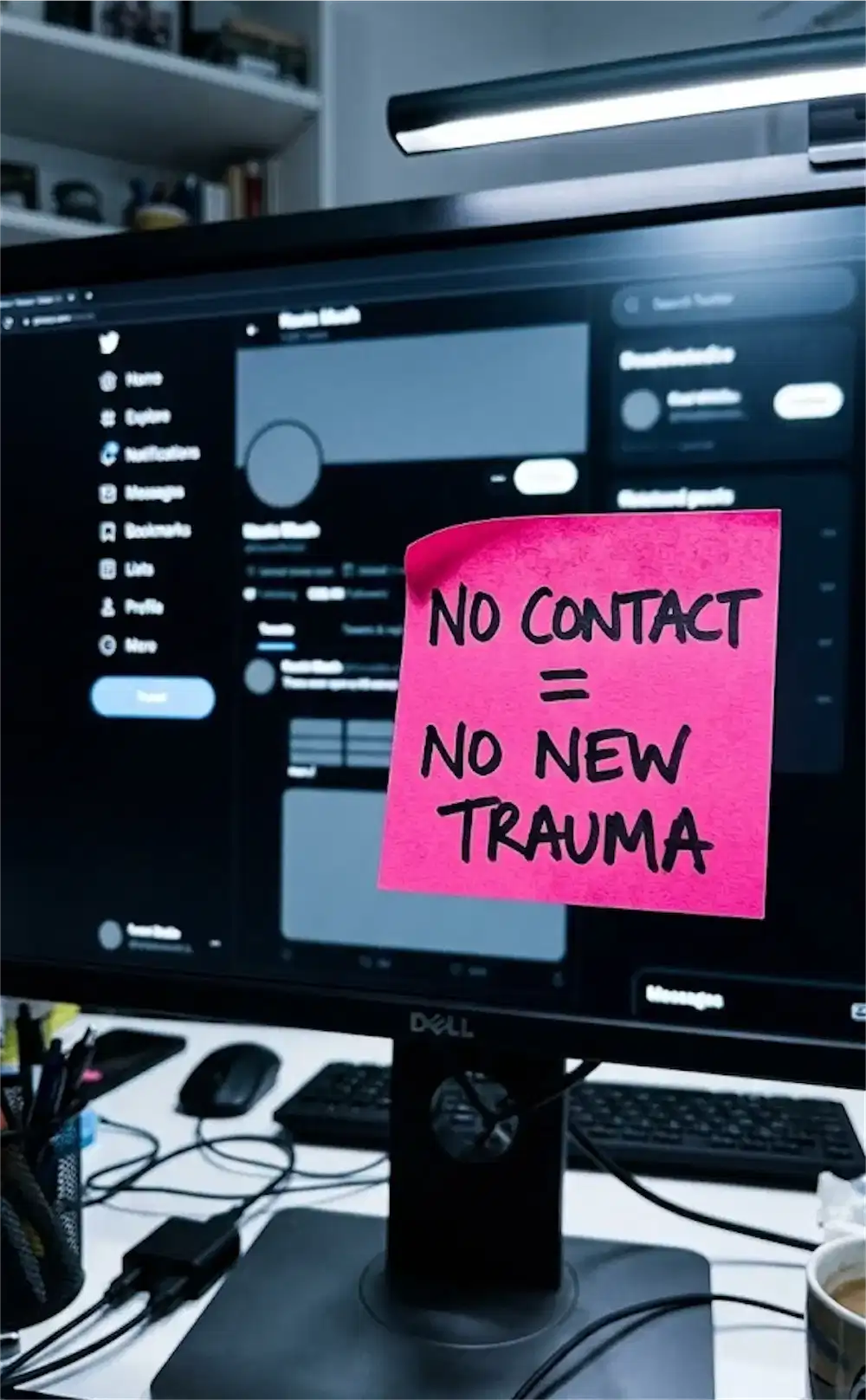
No contact has to be a firm structural decision, not a day-by-day emotional one. Write it down. Block them on every platform from the start, not when it feels necessary. Make the decision once so you do not have to keep making it. The complete no contact guide on this site walks through the full protocol, including how to handle shared social circles and unexpected contact.
4. Your Body Is in Recovery Too, Not Just Your Mind
Narcissistic abuse is not only a psychological experience. It is a full-body physiological event. Years of chronic stress, hypervigilance, and emotional unpredictability elevate cortisol levels, suppress the immune system, disrupt sleep architecture, and dysregulate the HPA axis (the body’s stress response system). When you leave, your body does not immediately understand that the threat is over. It keeps running the emergency protocol.
In the first three months, many survivors report physical symptoms they cannot fully explain: hair loss, digestive problems, skin flare-ups, fatigue that sleep does not fix, chronic tension headaches, jaw clenching, and a depressed immune system that seems to catch every illness going around. These are not random. They are the body processing and releasing stored stress.
Taking your physical recovery as seriously as your emotional recovery is not optional in this phase. Sleep, nutrition, movement, and hydration are not “nice to haves” — they are neurological inputs that directly affect how your brain processes trauma. Omega-3 fatty acids in particular have research-backed support for reducing cortisol and supporting brain function during periods of chronic stress. A quality high-potency omega-3 supplement is one of the most practical additions to a physical recovery routine.
For a detailed breakdown of the physical symptoms that appear after leaving a toxic relationship and why they happen, the post on physical health symptoms of toxic relationships is worth reading alongside this one.
5. The Obsessive Thinking Will Peak Before It Fades
Intrusive, looping thoughts about your ex are one of the most universally reported experiences in early narcissistic abuse recovery, and one of the most distressing. You replay conversations. You rehearse things you should have said. You analyze their behavior looking for patterns. You wonder what they are doing right now, who they are with, whether they miss you. Even when you do not want to think about them, you think about them.
This is not you being obsessive by nature. It is your brain trying to process an overwhelming volume of unresolved emotional material. The relationship was likely filled with inconsistency, confusion, and unfinished emotional cycles — and your mind is now trying to close all of those open loops simultaneously. The result is mental congestion that feels like obsession.
Here is what nobody tells you: this usually gets worse before it gets better, typically peaking somewhere around weeks four through eight. That peak is not a sign you are not healing. It is often a sign that your brain is doing the heaviest processing work. What you do with those thoughts during that period matters a lot.
Journaling is one of the most effective tools for managing intrusive thoughts without suppressing them. Writing the thought down gives it somewhere to go outside your head, which reduces its urgency. Structured journaling prompts designed specifically for post-narcissist breakup processing are available in the journaling prompts for post-narcissist breakup guide. A dedicated guided journal for anxiety and intrusive thoughts can also provide structure when you cannot locate your own starting point.
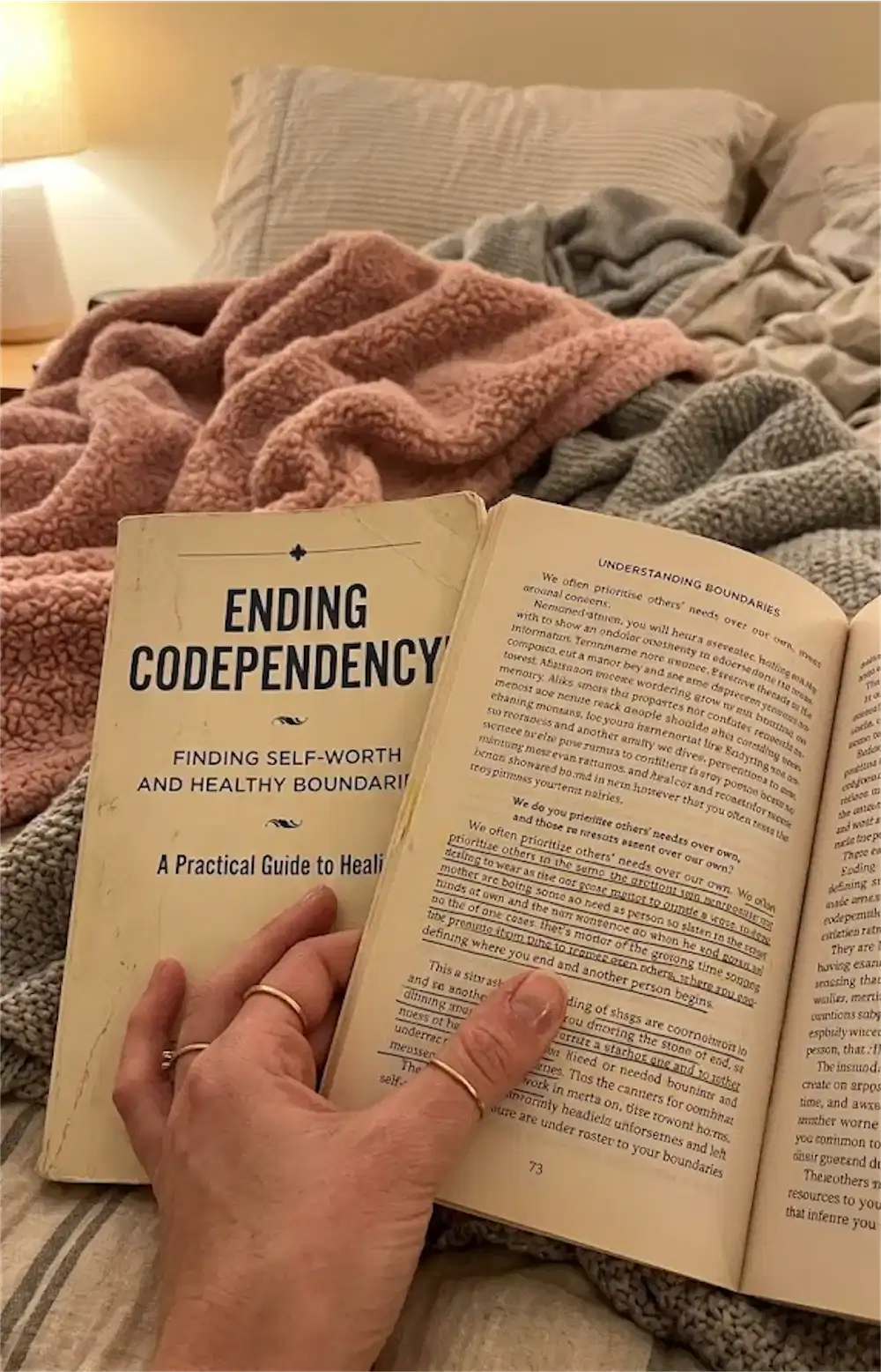
6. Codependency Was the Hook — Understanding It Changes Everything
Codependency is not about being needy or weak. It is a learned relational pattern — usually developed in childhood — where your sense of safety and self-worth becomes tied to managing other people’s emotional states. In a relationship with a narcissist, codependency is not just a risk factor; it is the very mechanism that makes the dynamic so difficult to break.
When you are codependent, the narcissist’s emotional state becomes your primary reality. Their moods determine the weather inside the relationship. You become skilled at reading the smallest signals — the tone of a text, the set of their jaw, the rhythm of their footsteps — and adjusting your behavior accordingly. Over time, your own needs, desires, and opinions become secondary, then invisible, then forgotten.
In the first three months of recovery, understanding your own codependent patterns is not about self-blame. It is about self-knowledge — and self-knowledge is what prevents you from walking into the same dynamic with someone else. The goal is not to become emotionally detached or to stop caring about people. It is to rebuild a self that exists independently of any relationship.
One of the most accessible and genuinely useful books on this is Codependent No More by Melody Beattie — it was written in the 1980s and has aged remarkably well in its core psychology. For more structured guidance on breaking codependent patterns specifically in the aftermath of a toxic relationship, the strategies to overcome codependency and toxic stress post goes into practical daily approaches.
7. Good Days Will Be Followed by Crashes — and That Is Part of the Process
Recovery from narcissistic abuse is not a straight upward line. It is more like a tide. Some days you wake up and feel like yourself — almost good. You make breakfast, you go outside, you laugh at something. You think maybe you turned a corner. Then the next day hits like a wall, and you feel like you are back at square one.
This is the non-linear nature of trauma recovery, and it is completely normal. According to the work of Dr. Judith Herman, a leading researcher in complex trauma at Harvard Medical School, trauma recovery does not progress in a predictable sequence and is commonly characterized by oscillation between intrusion and avoidance, with movement back and forth between states being a normal part of the healing trajectory.
The danger in those good days is that they sometimes prompt survivors to break no contact — you feel strong enough to “handle” a conversation, or generous enough to check on how they are doing. And then the crash that follows the contact hits even harder than the natural crash would have. The good day was real. Use it to do something for your recovery — go for a run, call a friend, read a book, sit outside. Not to re-engage with the source of the trauma.
Tracking your days in a simple mood journal helps you see, over weeks, that the good days are actually becoming more frequent even when it does not feel that way. Progress in trauma recovery is easier to see in retrospect than in real time.
8. Therapy in the First Three Months Is Not a Luxury — It Is Triage
There is a version of recovery that people attempt through self-help books, podcasts, and online communities alone. Those resources have genuine value — I used all of them. But in the first three months, if you are coming out of years in a narcissistically abusive relationship, self-help alone is rarely enough. What you are dealing with is closer to complex PTSD (C-PTSD) — a form of trauma that results from prolonged, repeated interpersonal abuse — and that requires professional support.
C-PTSD is not simply “stress from a bad relationship.” It involves changes to self-perception, emotional regulation, and the capacity to form trusting relationships. Without targeted therapeutic intervention, these changes can persist for years and affect every relationship that comes after. This is not alarmist — it is just what the research shows, and what I saw in my own life before I finally committed to working with a trauma-informed therapist consistently.
Look specifically for therapists trained in one of the following: EMDR (Eye Movement Desensitization and Reprocessing), somatic therapy, Internal Family Systems (IFS), or schema therapy. General talk therapy can help, but these modalities work at the level where narcissistic abuse actually lives — in the body, in core beliefs, and in the nervous system. For more on the therapeutic approaches that work specifically for this kind of relational trauma, the schema therapy guide for healing narcissistic relationships is a useful primer.
If access to in-person therapy is limited, Complex PTSD: From Surviving to Thriving by Pete Walker is the most practically useful book I have encountered for self-directed trauma recovery — written by a therapist who is himself a survivor of childhood abuse. It reads like a therapy session in book form.
What the First Three Months Are Actually For
It is worth naming this directly: the first three months are not for healing. Not completely. They are for stabilizing. There is a difference.
Healing — the deeper work of rebuilding identity, processing the full scope of what happened, and reorganizing your relational patterns — takes longer than 90 days. Expecting to be “over it” in three months sets an impossible standard and generates unnecessary self-criticism when you inevitably are not.
What is realistic in three months: establishing no contact and holding it, beginning to understand the trauma bond intellectually, rebuilding one or two consistent daily habits that support your physical and emotional baseline, starting therapy, and allowing yourself to grieve without judgment. That is actually quite a lot. It does not feel like much when you are in the middle of it, but looking back from a year or two out, those 90 days were the foundation everything else was built on.
Month one is about survival. Month two is about structure. Month three is where the first genuine glimpses of yourself start to reappear — small and fragile at first, but real. If you want to see what recovery looks like further down the road, the post on long-term effects of narcissistic abuse and healing gives an honest picture of both the challenges and the possibilities.
You are not behind. You are not broken. You are in triage, and that is exactly where you are supposed to be right now.
Recommended Resources
These are the books, tools, and resources that genuinely helped in the first months of recovery. Not a curated list for appearances — just what actually worked and why.
- Whole Again by Jackson MacKenzie — Specifically written for survivors of narcissistic abuse and psychopathic relationships. The section on “the shield” — the protective emotional armor survivors build — was one of the most accurate descriptions of my own inner state I had ever encountered. Excellent for the first three months when you are trying to understand what actually happened to you.
- It’s Not You by Dr. Ramani Durvasula — Dr. Ramani is a licensed clinical psychologist and one of the most credible voices on narcissistic personality disorder. This book is practical, validating, and written specifically to help survivors disentangle the confusion of the early recovery period.
- Trauma Recovery Workbook (PTSD and Narcissistic Abuse) — A structured workbook format gives you something concrete to do with the swirling thoughts and feelings of early recovery. Working through prompts on paper is not the same as therapy, but between sessions (or before you start therapy), it is one of the most grounding things you can do.
For a broader collection of resources organized by recovery stage, browse the recommended books page and the recovery tools section — both are updated regularly with vetted recommendations.
Sources:
Dr. Helen Fisher, Rutgers University — Neuroscience of Romantic Love, Loss, and Craving (Peer-Reviewed Research Summary)
Dr. Judith Herman, Harvard Medical School — Trauma and Recovery: The Aftermath of Violence (National Center for Biotechnology Information, PMC)

Meet Your Guide
Helen Brooks
After surviving a 12-year NPD/BPD relationship, I dedicated over a decade to studying trauma bonding and nervous system recovery. My mission is to help you break free from the fog and reclaim your authentic self.
Ready to break the trauma bond and reclaim your life?