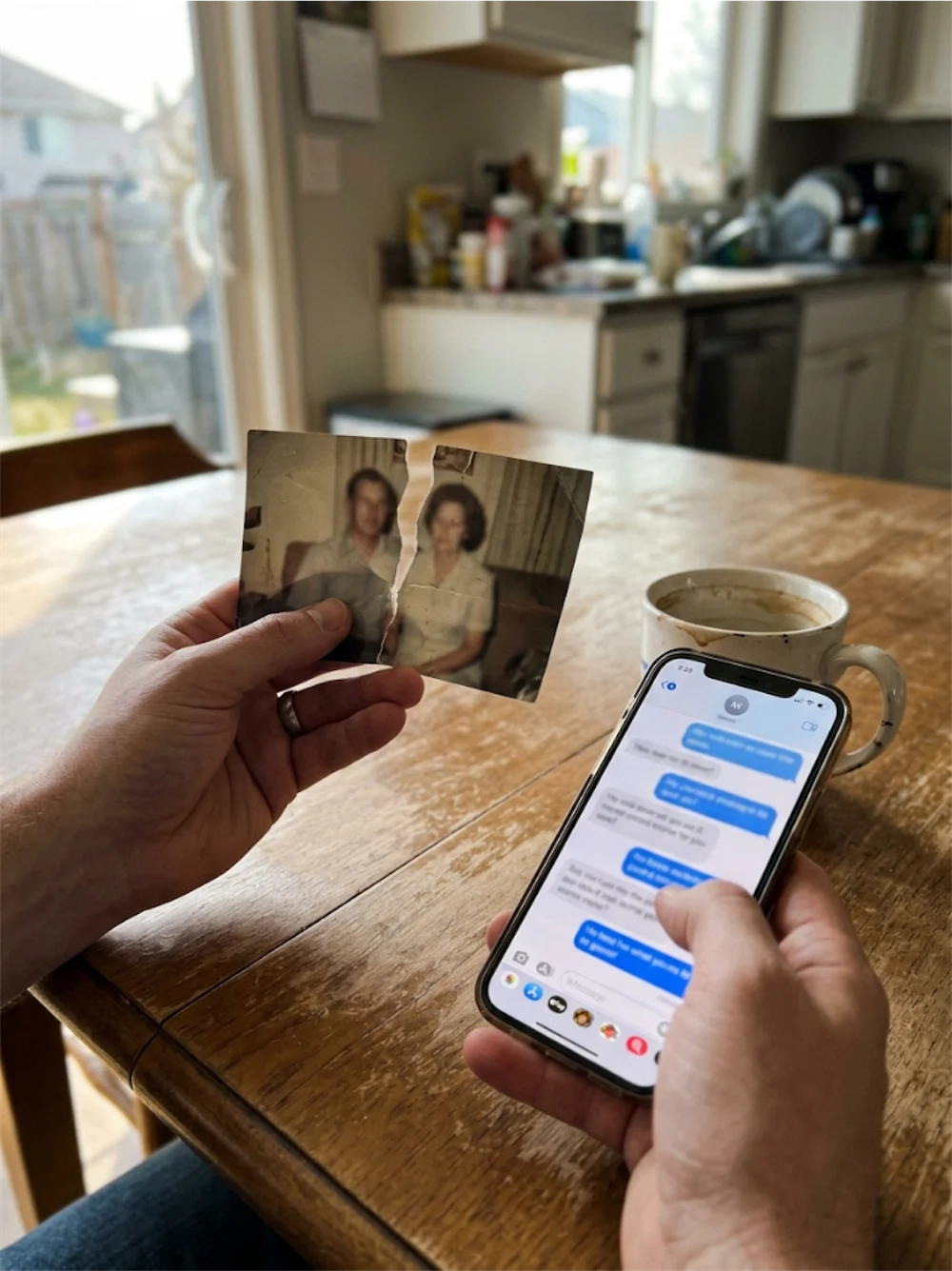
18 Ways to Stop Idealizing a Toxic Ex and Break the Trauma Bond Fast
If you keep idealizing a toxic ex even after everything they did, you’re not “weak” or “dramatic.” You’re most likely stuck in a trauma bond, which can feel a lot like craving, withdrawal, and mental obsession.
I’m writing this as someone who survived a 12-year toxic relationship with a partner who showed strong NPD and BPD traits (not a diagnosis, just patterns). After the breakup, I was wrecked. I’d been isolated from friends, I had no hobbies left, and I honestly felt like my life was miserable without them. Therapy, learning about codependency, and understanding trauma bonding is what brought me back to my original self: cheerful, grounded, and calm again.
This article is the “mentor version” of what I wish someone had handed me in week one. Not fluffy. Not clinical. Just practical steps that work in real life.
When you miss them, it doesn’t always mean you miss them. Sometimes you miss the relief your nervous system felt during the “good parts.”
Safety note: If you’re in danger or being threatened, please prioritize safety planning and local support. If you’re in the U.S., you can call the National Domestic Violence Hotline at 1-800-799-7233 (or text START to 88788).
Why You Idealize a Toxic Ex (Trauma Bond + Intermittent Reinforcement)

Idealizing a toxic ex is usually not about “forgetting.” It’s about your brain grabbing the highlight reel to protect you from the full weight of the truth. In relationships with power imbalance, isolation, and on-and-off affection, people can form extremely strong emotional attachments that don’t match how they were treated. That dynamic has been studied in the context of abusive relationships and is often discussed under traumatic bonding theory.
In plain English: when someone cycles between warmth and cruelty, your system starts chasing relief. You stop asking, “Is this love?” and start asking, “How do I get back to the good version of them?” That’s the hook.
Behavioral psychology has a name for this kind of hook: intermittent reinforcement (rewards that show up unpredictably). Unpredictable rewards tend to create habits that are harder to extinguish than consistent rewards. That’s one reason toxic relationships can feel like an addiction loop.
And after the breakup? Your body can react like you’re detoxing. You might get intrusive thoughts, looping memories, or compulsive urges to reach out. Intrusive thoughts are a real thing, and evidence-based therapies like CBT are commonly used to help people change how they respond to them.
One more truth that stings: idealization often gets worse when you are exhausted, lonely, or dysregulated. That’s why “just block them” sometimes fails. We have to work from both ends: remove the reinforcement, and regulate the nervous system.
If you want a deeper read that connects this to long-term exposure, I wrote about my own timeline here: https://traumaunbonded.com/lessons-12-years-with-narcissist/
18 Ways to Stop Idealizing Your Toxic Ex and Break the Trauma Bond Fast

“Fast” doesn’t mean instant. It means you stop doing the things that secretly keep the bond alive, and you start doing the things that make your brain update the story.
Here are 18 steps that helped me (and that line up with what trauma-informed therapists teach).
- Name what’s happening: “This is trauma bonding, not destiny.” Say it out loud when the craving hits.
- Stop calling it “missing them.” Be more precise: “I’m craving relief. I’m craving familiarity. I’m craving the apology I never got.” Precision breaks the spell.
- Make a ‘Reality List’ and read it daily for 30 days. Not insults. Facts. Dates. Exact quotes. Broken promises. The time they punished you for having feelings.
- Do a 2-column journal: Fantasy vs Facts. Fantasy: “They were my best friend.” Facts: “They isolated me from friends and made me feel guilty for leaving the house.”
- Track the cycle, not the chemistry. If it was love, why did it require you to shrink?
- Stop “researching their childhood” as a way to excuse harm. Compassion is fine. Self-abandonment is not.
- Use a rumination interrupt: set a 90-second timer, stand up, and do one physical action (cold water on wrists, slow exhales, short walk). Rumination feeds on stillness.
- Give your brain an alternative obsession: a recovery project. A class. A 30-day walking plan. A declutter corner. Something measurable.
- Remove your “hope triggers”: keep gifts/photos in a sealed box, not on display. If you are not ready to delete, at least archive them.
- Stop checking their social media (including “just curiosity”). Every check is reinforcement. If you need help with this specific habit: https://traumaunbonded.com/stop-checking-ex-social-media-strategies/ (bookmark it).
- Break the music anchor: if certain playlists bring them back into your body, make a brand-new “me now” playlist. Yes, it matters.
- Write the breakup narrative you never got: one page: “What happened. What it cost me. What I’m choosing now.” (This is not about them understanding. It’s about you integrating reality.)
- Do one daily “anti-isolation” action: text one safe person, join a class, sit at a cafe for 15 minutes. Isolation is glue for trauma bonds.
- Practice “urge surfing”: when you want to reach out, delay 20 minutes. Then delay again. Cravings rise and fall like waves.
- Learn codependency patterns without shaming yourself. If you keep thinking “Why did I stay?”, start here: https://traumaunbonded.com/strategies-overcome-codependency-toxic-stress/
- Replace self-blame with skills. A practical tool that helped me a lot was DBT-style emotional regulation (especially distress tolerance). If you want a workbook you can flip through during cravings: DBT skills workbook options on Amazon.
- Body first, story second: eat real meals, hydrate, sleep on a schedule, move your body daily. When your body is crashing, your brain writes desperate love stories.
- Get trauma-informed support. Therapy was my turning point. If you want a book that explains why your body reacts so intensely to relational trauma, this is a solid starting place: The Body Keeps the Score (search on Amazon).
If you’re thinking, “Okay but I still feel like they were the one,” I get it. I used to feel physically panicky imagining them with someone else, even though they’d hurt me for years. That panic wasn’t proof of soulmates. It was proof my nervous system had been trained to associate them with relief.
Also, if your ex had strong BPD traits, the push-pull can be especially confusing. One day you’re adored, the next you’re the villain. If that’s your story, you might also like: https://traumaunbonded.com/bpd-relationship-trauma-recovery-guide-2026/
No Contact in 2026: Digital Boundaries That Actually Stick
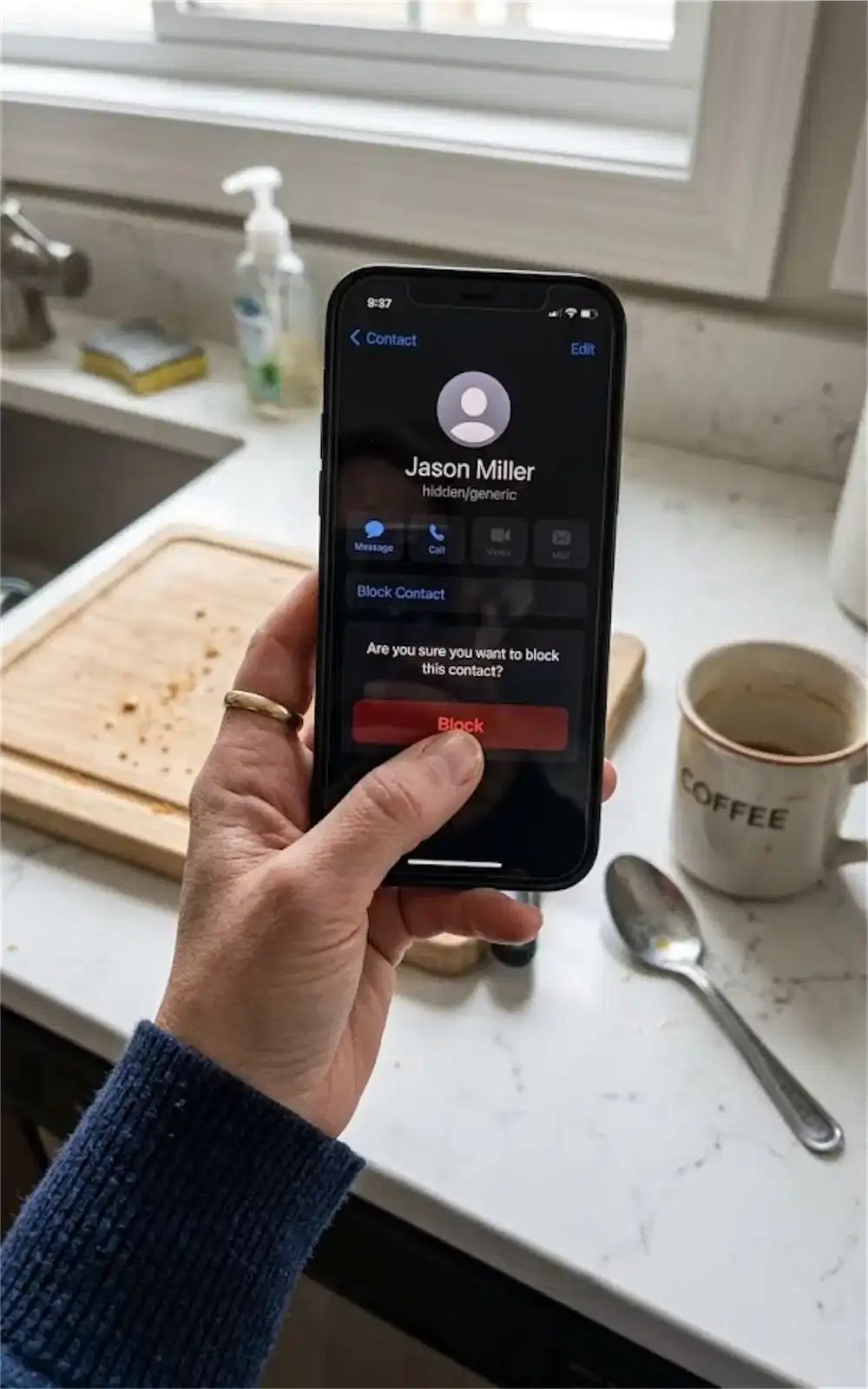
Let’s make this simple: if you keep getting pings from them, you keep reopening the wound. Trauma bonds thrive on contact, ambiguity, and hope.
No Contact is not a punishment. It’s a detox protocol for your brain.
Here’s what “No Contact” looks like in real life now:
- Block phone, email, and all social accounts (including “secondary” apps).
- Turn off unknown callers (most smartphones have a setting for this).
- Mute mutuals who keep re-surfacing your ex’s life into your feed.
- Search your inbox for their name and archive the threads so you are not re-reading at 1 a.m.
- Make a plan for “hoovering”: if they come back suddenly sweet, you do not decide in the moment. You wait 48 hours and talk to someone safe.
If you want a step-by-step setup, use my guide: https://traumaunbonded.com/narcissist-no-contact-guide/
And if you need the “why it works” explained in plain language (so you stop second-guessing it), read: https://traumaunbonded.com/why-no-contact-works-narcissistic-abuse/
One more thing people do not talk about enough: partial contact (peeking, replying once, checking stories) can keep the attachment alive because it keeps the reward unpredictable. That unpredictability is exactly what makes these loops stubborn.
Nervous System Regulation: The Fastest Way to Loosen a Trauma Bond
This is the part that changed everything for me. I kept trying to “think” my way out of longing. But my body was in survival mode. When you are dysregulated, your brain romanticizes whatever feels familiar, even if it’s harmful.
Also, trauma-bond recovery often comes with intrusive thoughts and mental loops. Learning to respond differently to those thoughts is a real skill, and CBT is one evidence-based approach used for unwanted intrusive thoughts.
Try this “daily regulation stack” for 14 days before you judge it:
- Morning: 10 minutes of walking outside (no phone). Light + movement tells your system “we’re safe now.”
- Midday: one protein-based meal (blood sugar crashes can mimic emotional panic).
- Afternoon: a 2-minute grounding drill: feel your feet, name 5 things you see, slow your exhale.
- Evening: a wind-down routine that repeats every night (your body learns by repetition). If you want ideas: https://traumaunbonded.com/evening-routines-heal-trauma-bond/
If journaling makes you spiral, do it with structure. “Morning pages” helped me get the thoughts out without contacting them. Here’s my approach: https://traumaunbonded.com/morning-pages-heal-trauma-bond/
If you want a simple tool to keep by your bed, search-based options that readers often like:
About supplements: some people ask about magnesium, L-theanine, or omega-3s for stress. I’m not giving medical advice here. If you want to explore, do it with your clinician, especially if you take other meds. (If you’re browsing: magnesium glycinate (Amazon search).)
Rumination can also keep you stuck. Harvard Health notes that rumination is linked with worse anxiety, depression, and sleep issues, and it can keep stress responses going. That was true for me, too. The more I replayed the “best moments,” the worse I slept, and the worse I slept, the more I replayed them.
What Finally Makes Idealization Stop (The Part Nobody Wants to Hear)
Idealization usually fades when two things happen at the same time:
- You stop feeding the bond (No Contact, no checking, no “one last talk”).
- You build a life that feels safe without them (routine, people, purpose, self-trust).
I didn’t “get over” my ex because I found better quotes on the internet. I got over them because I stopped negotiating with reality, and I started treating my nervous system like it deserved consistency.
If codependency is part of your pattern, a classic starting point is: Codependent No More (Amazon search). And if you want something specifically about getting emotionally whole after toxic dynamics, you can search: Whole Again (Amazon search).
When to Get Professional Help (And What to Look For)
If you feel panicky, depressed, or obsessed for weeks, or you’re unable to function at work or with your kids, please take that seriously. You deserve support. Trauma-bond recovery often responds well to trauma-informed therapy, especially when it also addresses:
- Attachment wounds (why you bonded so hard)
- Boundaries (how you kept abandoning yourself)
- Emotional regulation (how to ride urges without acting)
- Shame (the silent fuel behind “I need them to validate me”)
If you want a research-grounded snapshot of how intermittent abuse and power dynamics relate to attachment, this PubMed record is a solid reference point: https://pubmed.ncbi.nlm.nih.gov/8193053/
And for intrusive thoughts support and treatment framing in plain language, Mayo Clinic Press has a helpful overview: https://mcpress.mayoclinic.org/mental-health/coping-with-unwanted-and-intrusive-thoughts/
Takeaway: You Don’t Miss Them. You Miss the Relief.
If you only remember the sweet version of your ex, ask yourself: How often did that version actually show up consistently? A healthy partner doesn’t require you to earn basic care through anxiety.
The trauma bond breaks faster when you stop re-exposing yourself to them (even digitally) and start giving your body steady, predictable safety. That’s how I got my life back after 12 years. Not by winning them. By returning to me.
Recommended Resources
These are search-based Amazon links (so they always work) with my associate tag. They’re optional, but genuinely useful:
- “I Hate You, Don’t Leave Me” (BPD understanding) (Amazon search)
- DBT Skills Workbook (distress tolerance + emotional regulation) (Amazon search)
- “Complex PTSD: From Surviving to Thriving” (Amazon search)
If you want more recovery tools on the site, start here: https://traumaunbonded.com/recovery-tools/

Meet Your Guide
Helen Brooks
After surviving a 12-year NPD/BPD relationship, I dedicated over a decade to studying trauma bonding and nervous system recovery. My mission is to help you break free from the fog and reclaim your authentic self.
Ready to break the trauma bond and reclaim your life?