10 Healthy Ways to Move On After a Narcissistic Breakup Without Revenge Games
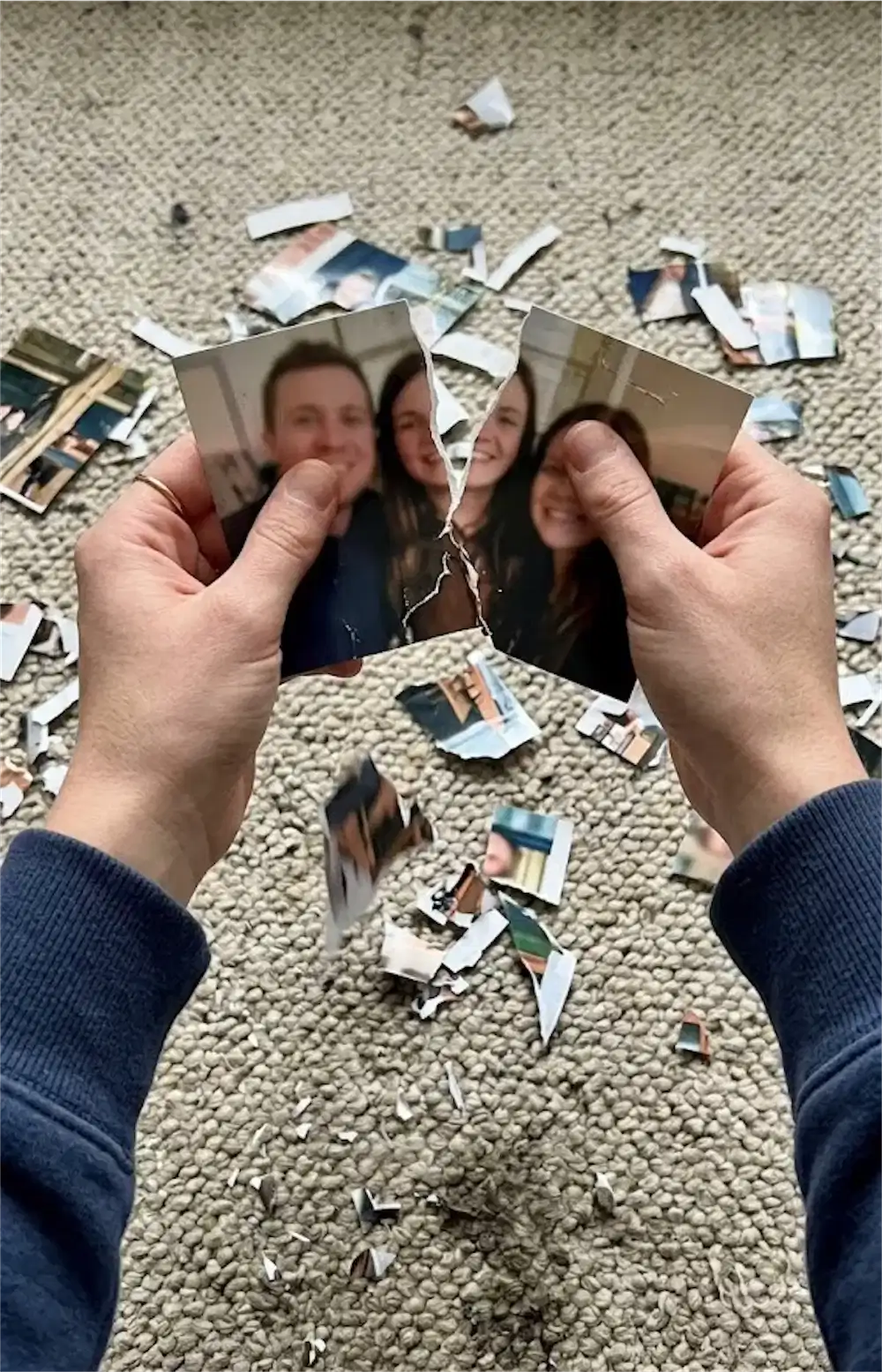
There is a moment, somewhere in the fog of a narcissistic breakup, where the thought crosses your mind. You want them to feel what you felt. You want them exposed, humiliated, or at least rattled. You want them to see you thriving while they spiral. That urge is human. It makes complete sense given what you went through.
But here is what I learned after 12 years in a relationship with a partner who had both narcissistic and borderline personality traits: revenge games do not heal you. They keep you tethered. Every minute you spend plotting your “best revenge” is a minute your nervous system stays locked into the relationship dynamic that broke you down in the first place.
Real freedom does not look like a dramatic confrontation or a viral post exposing them. It looks quiet. It looks boring, actually. It looks like a Tuesday morning where you drink your coffee and realize you did not think about them once the night before. That is the goal. That is what this article is about.
Below are 10 genuinely healthy ways to move on after a narcissistic breakup, grounded in both psychology and the kind of lived experience that only comes from years inside and years outside one of these relationships.
Why Revenge Games Keep You Stuck After a Narcissistic Breakup
Before we get into the healthy alternatives, let’s be honest about why revenge is so tempting. After a narcissistic relationship, your sense of justice has been completely violated. You spent months or years being manipulated, gaslit, devalued, and discarded, often while the person doing it presented a polished, charming face to the outside world. Nobody saw what happened behind closed doors. That injustice is real.
The problem is that pursuing revenge requires maintaining an emotional and cognitive focus on the person who hurt you. It keeps them central to your story. And narcissists, particularly those with traits of both NPD and BPD, are experts at using any engagement, including hostile engagement, to their advantage. Even a scathing public post about them feeds the very thing they crave: attention and relevance.
Research on post-traumatic growth consistently shows that survivors who shift their focus toward rebuilding their own lives, rather than targeting the person who harmed them, experience faster emotional recovery and report stronger long-term wellbeing. The healing is in the turning away, not the fighting back.
If you want to understand why no contact is the most powerful tool in this process, our guide on why no contact works for narcissistic abuse survivors breaks it all down.
10 Healthy Ways to Move On After a Narcissistic Breakup
1. Grieve the Relationship Fully, Without Shame
One of the cruelest side effects of narcissistic abuse is that survivors often feel embarrassed about their grief. People say things like “they treated you terribly, why are you even sad?” And that question, while well-intentioned, completely misses the point.
You are not grieving who they actually were. You are grieving who you believed they could be. You are grieving the version of the relationship that existed in the love bombing phase, the promises, the moments that felt real even if they were manufactured. That is a legitimate loss, and it deserves legitimate grief.
Suppressing that grief does not speed up recovery. It pushes the wound underground, where it quietly sabotages your ability to trust, attach, and feel again. Let yourself cry. Let yourself feel the weight of it. Grief is not weakness. It is the processing your nervous system needs to begin releasing the attachment.
After 12 years, my grief was enormous and completely out of proportion to how badly I had been treated, or so I thought at the time. My therapist helped me understand that the length and depth of a trauma bond makes grief equally deep. There is nothing wrong with you for hurting this much.
2. Cut the Digital Cord Completely
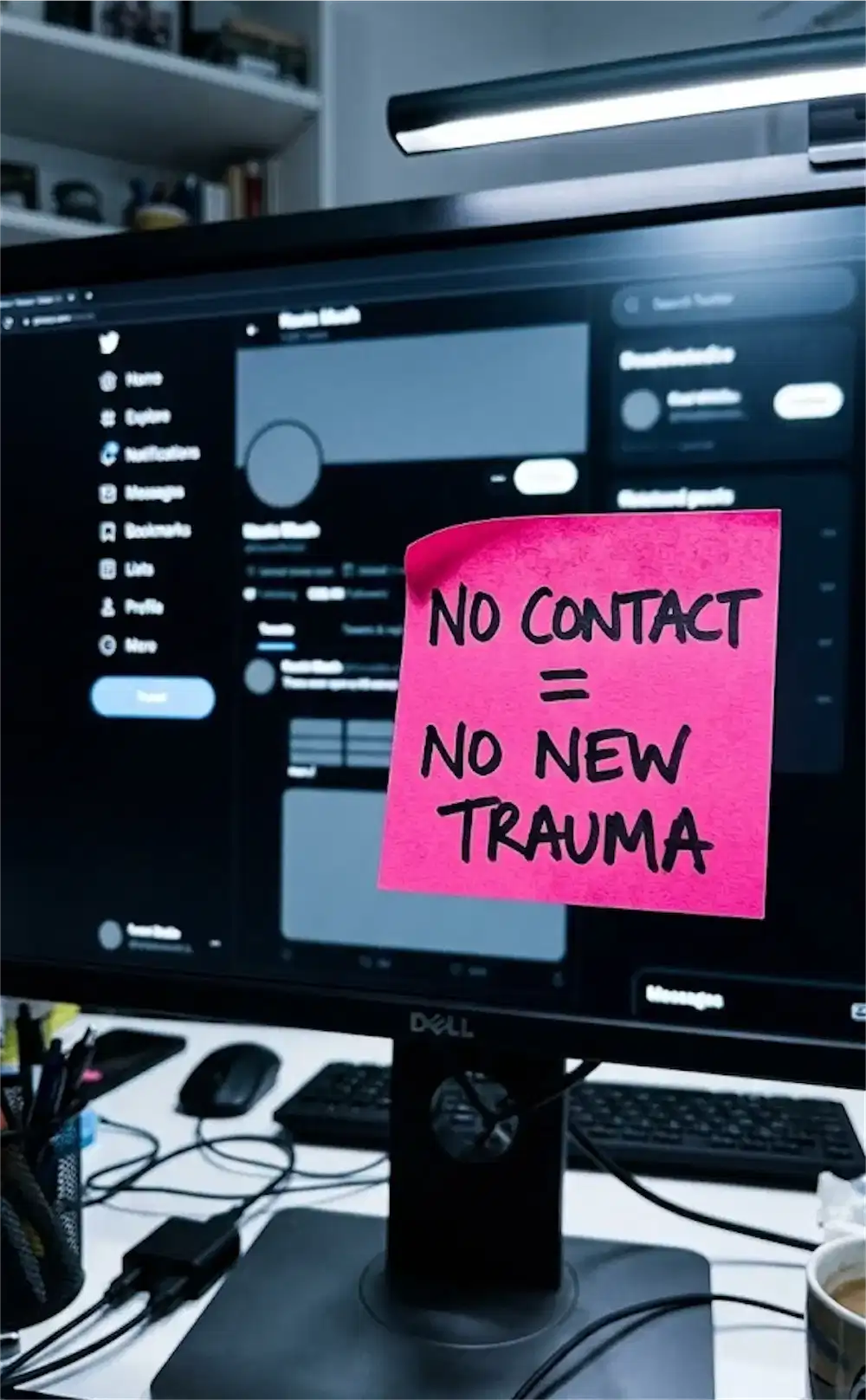
Checking your ex’s social media is not healing. It is the behavioral equivalent of picking a scab. Every time you look, you reset your own nervous system back to the alert state it was in during the relationship. The anxiety, the comparison, the hope and dread cycling through you in the span of one scroll. That is not moving on. That is staying.
Block them on every platform. Not because you are angry, but because you need a clean environment for your brain to stop scanning for information about them. This includes unfollowing mutual accounts that post about them, muting people who might share updates, and, if needed, taking a full break from social media during the most vulnerable weeks of early recovery.
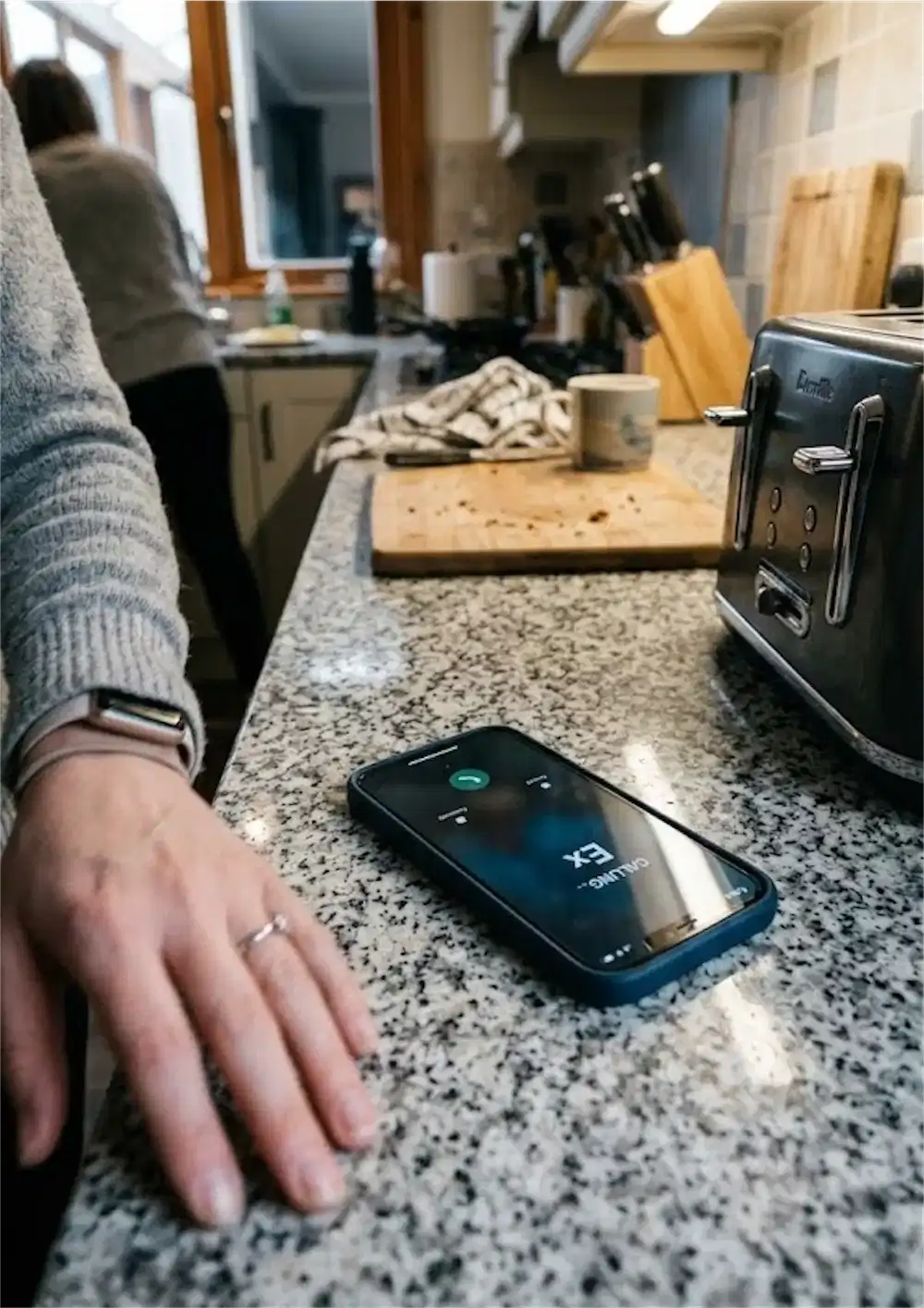
The practical side matters too. Delete their number if you have to. Put your phone across the room at night. Put friction between yourself and the impulse to look them up. We have a whole article on strategies to stop checking your ex’s social media that goes deeper into the specific tools that work.
One thing that genuinely helped me in those first weeks was putting my phone in a drawer at night and replacing the late-night scroll habit with a different sensory input, like an audiobook or podcast. Small, practical friction can interrupt an automatic behavior faster than willpower alone.
3. Start Moving Your Body Again
Trauma lives in the body. That is not a metaphor. Research by Dr. Bessel van der Kolk, whose work forms the scientific foundation of much of modern trauma treatment, shows that unprocessed trauma is held in the nervous system and that physical movement is one of the most direct routes to release it.
After my breakup, I had completely abandoned exercise. I had no hobbies, no routine, nothing. The first time I went for a walk around the block, I cried the whole way through. But I also came back feeling slightly lighter than when I left. That was enough to do it again the next day.
You do not need a gym membership or a training plan. You need movement. Walking, yoga, swimming, dancing alone in your kitchen. Whatever lowers the tension in your body even a fraction is worth doing. Our article on how exercise helps break a trauma bond explains the neurological reason this works so well.
If you are looking to build a simple home practice, a quality yoga mat makes starting incredibly easy. There are solid options for home use available on Amazon: browse yoga mats on Amazon.
4. Start Journaling, Even Badly
Journaling after a narcissistic relationship is not about writing beautifully. It is about externalizing the chaos that is happening inside you so that it stops swirling and starts making sense. When you write something down, you shift it from an overwhelming internal experience to something you can look at from a slight distance.
Morning pages, the practice of writing three unfiltered pages first thing in the morning before your analytical brain fully wakes up, are particularly useful in early recovery. They let the grief, confusion, and anger surface without judgment. You are not writing for an audience. You are writing to clear the pipes.
If you are not sure where to start, our guide on journaling prompts specifically for post-narcissist breakup recovery gives you a structured starting point. And if you prefer a guided format, there are excellent trauma-focused recovery journals on Amazon: find a recovery journal on Amazon.

5. Get Into Therapy, Specifically Trauma-Informed Therapy
Regular talk therapy is helpful. Trauma-informed therapy is a different level of helpful. There is a significant difference between a therapist who will listen to your story and a therapist who understands trauma bonding, narcissistic abuse dynamics, and the specific way long-term emotional abuse reshapes a person’s nervous system and self-concept.
Look for therapists who specialize in CPTSD, which stands for Complex Post-Traumatic Stress Disorder, attachment trauma, or narcissistic abuse recovery. Modalities like EMDR (Eye Movement Desensitization and Reprocessing), schema therapy, and somatic therapy have strong evidence bases for treating exactly the kind of relational trauma you are carrying.
My first therapist was helpful but had limited knowledge of narcissistic dynamics. When I found one who truly understood NPD and BPD relationship patterns, everything shifted. It was like the difference between treating symptoms and addressing the actual root. Our article on schema therapy for healing from a narcissistic relationship is a good place to understand what these approaches look like in practice.
6. Learn About Trauma Bonds and Codependency
A trauma bond is not a love story with a bad ending. It is a specific psychological attachment pattern formed through cycles of abuse and intermittent reinforcement, where pain and relief alternate in a way that conditions you to cling to the source of both. Understanding this is not about assigning blame. It is about removing confusion.
When I finally understood what a trauma bond actually was, so much of my own behavior started making sense. The reason I kept going back. The reason I made excuses. The reason I felt more anxiety at the thought of leaving than I did during the abuse itself. It was not weakness. It was neuroscience.
Codependency often runs alongside trauma bonds in these relationships. Codependency, in simple terms, is when your sense of self-worth becomes so wrapped up in another person’s needs and approval that you lose track of your own needs entirely. Books on codependency recovery were genuinely transformative for me. Codependent No More by Melody Beattie remains one of the most practical starting points, and you can find it on Amazon here: search for Codependent No More on Amazon.
For more on understanding these patterns, our piece on strategies to overcome codependency and toxic stress is a practical companion read.
7. Rebuild a Small, Consistent Daily Routine
After a long-term narcissistic relationship, many survivors describe feeling completely unmoored. Your entire schedule, your habits, your social life, and often your sense of identity were organized around another person. When that person disappears, so does the structure.
This is why routine matters so much in early recovery. Not ambitious, overhauled, new-year-new-me routines. Just small, consistent daily anchors that tell your nervous system: today has a shape, you are safe, things are predictable.
A morning glass of water. Making your bed. Walking for 20 minutes. Eating a real breakfast. These things sound mundane because they are. That is the point. The mundane is stabilizing. Our article on morning routines for NPD breakup recovery has specific, tested ideas for building this foundation step by step.
If your sleep is completely disrupted, which is extremely common after narcissistic abuse, a magnesium glycinate supplement has solid research behind it for supporting sleep quality and reducing anxiety. It is one of the few supplements with a real evidence base in this area. You can find quality options here: magnesium glycinate supplements on Amazon.
8. Reconnect With People You Pulled Away From
Narcissistic relationships almost always involve social isolation. Sometimes it is overt, they openly discouraged your friendships. Sometimes it is subtle, you gradually stopped making plans because the drama at home consumed everything. Either way, you probably ended the relationship feeling more alone than you did when it started.
Rebuilding those connections is uncomfortable at first. There is often shame involved. You may have made excuses for your partner’s behavior or disappeared for years without explanation. Most real friends understand more than you expect. And the ones who do not were not serving your recovery anyway.
Start small. A text to someone you used to be close to. Coffee with one person. You do not need to explain everything right away. Just showing up is enough to begin rebuilding the social support that protects mental health in every peer-reviewed study on recovery from relational trauma.
9. Process the Guilt Without Letting It Win
Guilt after leaving a narcissistic relationship is extremely common, and it is one of the sneakiest obstacles to actual healing. You feel guilty for leaving. Guilty for not leaving sooner. Guilty for the things you said in arguments. Guilty for the version of yourself you became inside the relationship.
Here is the distinction that helped me: guilt about specific actions is sometimes appropriate and worth examining. But pervasive, shapeless guilt that was seeded by years of being told you were the problem is not moral awareness. It is a symptom of abuse.
Narcissists are exceptionally skilled at keeping their partners in a state of guilt and self-doubt because a partner who is constantly apologizing and trying harder is easier to control. That internalized guilt does not vanish automatically when you leave. You have to actively work through it. Our article on processing guilt after leaving a narcissist goes into this in detail.
10. Redefine What “Winning” Looks Like
This last one is the reframe that changed everything for me. For a long time, “winning” in my mind meant them seeing what they lost, being publicly called out, or watching them crash and burn without me. Every one of those scenarios kept me focused on them.
Real winning, it turns out, is the version that has nothing to do with them at all. It is a random afternoon where you laugh until you cry with a friend. It is the morning you realize you slept all the way through the night without waking up in a panic. It is choosing yourself, quietly and without an audience, every single day until choosing yourself becomes the default.
The goal is not a better story to tell about them. The goal is a better life for you. And that goal is genuinely achievable. Our reflection on lessons from 12 years with a narcissist explores what that reorientation actually feels like from the other side.

The Science Behind Why These Strategies Work
These are not feel-good suggestions pulled from a wellness blog. There is a solid body of research behind why this approach to recovery works, and why revenge-focused coping does not.
Studies on post-traumatic growth, a framework developed by psychologists Richard Tedeschi and Lawrence Calhoun at the University of North Carolina, show that survivors of interpersonal trauma who experience the most meaningful recovery are those who find new personal narratives, rebuild relationships, and develop a sense of personal strength, rather than those who focus on the perpetrator’s punishment or public exposure.
Dr. Ramani Durvasula, one of the most cited clinical psychologists working specifically in the field of narcissistic abuse recovery, has consistently pointed out in her published work and clinical commentary that survivors who maintain any form of engagement with their former partner, including negative engagement, show delayed emotional recovery compared to those who implement strict no-contact boundaries. Her research on narcissistic relationship patterns is essential reading for anyone trying to understand what they survived.
On the neurological side, prolonged emotional abuse and unpredictable relationship dynamics have measurable effects on the brain’s threat-detection system, particularly the amygdala. Physical exercise, consistent routine, and therapeutic processing are among the interventions with the strongest evidence base for restoring that system to a baseline of calm. This is why the strategies listed above are not just emotionally helpful. They are neurologically necessary.
Rebuilding Your Identity After Narcissistic Abuse
One of the longest shadows a narcissistic relationship casts is over your sense of self. By the end of 12 years, I genuinely did not know what I liked, what I thought, or who I was outside the context of that relationship. My personality had been gradually shaped around managing their emotions, avoiding their triggers, and earning their approval.
Identity reconstruction is not a fast process. But it is one of the most meaningful parts of recovery. It starts with small, low-stakes questions. What do you actually want to eat? What kind of music do you like when no one else is in the car? Is there a hobby you abandoned years ago that you could revisit?
These questions feel almost childishly simple. But for someone who spent years having their preferences minimized or mocked, they are actually significant acts of reclamation. You are not just picking a restaurant. You are practicing the basic assertion that your preferences exist and matter.
Rebuilding identity also involves confronting the false beliefs that got installed during the relationship, things like “I am too sensitive,” “I am impossible to love,” “I am lucky anyone wants me at all.” Our article on false beliefs absorbed in narcissistic relationships addresses these directly and provides tools for challenging them.
Reading accounts from other survivors can be enormously grounding during this phase. Psychopath Free by Jackson MacKenzie was one of the first books that made me feel seen and understood rather than pathologized. It is written by a survivor, not a clinician, and that perspective matters. You can find it on Amazon: search for Psychopath Free by Jackson MacKenzie.

What Nobody Tells You About Moving On After a Narcissistic Relationship
Moving on is not linear. You will have days that feel genuinely good, and then a song, a smell, a random Thursday, and you are back on the floor. That is not failure. That is the actual anatomy of grief and trauma recovery.
You may also find that some people in your life, people who did not witness what happened, minimize your experience or tell you to “just move on” or “stop giving them power.” Those people mean well. They are also wrong about how trauma works. Healing is not a decision you make once. It is a series of decisions you make every day, some of which are invisible to everyone around you.
You may grieve the relationship even while knowing it was bad for you. You may miss the person who love-bombed you in year one while also knowing that person was not real. Both of those things can be true at the same time. Holding that contradiction without collapsing under it is part of the work.
And at some point, further out than you might expect but closer than it feels right now, the grief softens. The intrusive thoughts get quieter. The hypervigilance starts to lift. You catch yourself making plans for the future that have nothing to do with them. That is not forgetting. That is healing.
For more on the specific habits worth dropping during recovery, our piece on habits to quit after a narcissistic breakup covers the behavioral patterns that quietly extend the pain.
The Takeaway
Moving on after a narcissistic breakup without revenge games is not about being the bigger person. It is about being a smarter person. Revenge keeps you in the story. Healing writes you a new one.
The 10 strategies above are not quick fixes, and none of them are glamorous. Grieve properly, cut the digital cord, move your body, journal, get the right therapy, understand the psychological patterns, build a routine, reconnect with people, process the guilt, and redefine what winning means for you.
Each one chips away at the hold the relationship still has on your nervous system. Each one is a vote for the version of yourself that existed before the relationship did its damage and that version is still in there. I know because I found mine again, and I was not sure that was possible.
If you are early in the process and need a broader framework for what recovery looks like, our self-healing tips for narcissistic abuse survivors is a good next read.
Authoritative Sources
- Tedeschi & Calhoun, Post-Traumatic Growth: Conceptual Foundations and Empirical Evidence (PMC, peer-reviewed)
- Dr. Ramani Durvasula, licensed clinical psychologist specializing in narcissistic personality and relationship trauma
Recommended Resources
These are books and tools that genuinely helped me move forward, and that I recommend to anyone navigating life after a narcissistic relationship:
- The Body Keeps the Score by Bessel van der Kolk — The most important book on understanding how trauma is stored in the body and what actually releases it. Essential reading before or alongside therapy.
- Should I Stay or Should I Go by Dr. Ramani Durvasula — Written specifically for people in or leaving narcissistic relationships. Clear, research-backed, and completely non-judgmental.
- Weighted Blanket for Anxiety and Sleep — Research supports the use of deep pressure stimulation for reducing cortisol and improving sleep quality. Simple, low-cost nervous system support that actually works in early recovery.

Meet Your Guide
Helen Brooks
After surviving a 12-year NPD/BPD relationship, I dedicated over a decade to studying trauma bonding and nervous system recovery. My mission is to help you break free from the fog and reclaim your authentic self.
Ready to break the trauma bond and reclaim your life?