Co-Parenting with a BPD Ex: Strategies for Parallel Parenting and Protecting Your Kids
If you are currently co-parenting with a BPD ex, you know how exhausting it is to navigate the unpredictable waves of emotional instability while protecting your kids from high-conflict custody battles. Trying to maintain a standard cooperative parenting arrangement with a partner who struggles with borderline personality disorder can feel like walking through a minefield. Many survivors of toxic relationships find that traditional cooperative custody methods fail, making parallel parenting the only realistic path to keep your peace of mind and insulate your children from emotional turmoil. During my own 12-year battle with an undiagnosed partner, I quickly realized that traditional co-parenting was a recipe for constant chaos, and finding tools like this Co-Parenting with a BPD Ex Guide saved my sanity.
How do you shield your little ones when the other parent treats every pickup as an opportunity to spark a battle? How do you maintain your own sanity after years of walking on eggshells? The answer lies in shifting your focus away from changing your ex and toward building an unshakeable boundary structure.
What Is Parallel Parenting with a BPD Ex?
Parallel parenting with a BPD ex is a high-conflict custody method where both parents operate independently with zero direct communication, utilizing strict boundaries and written schedules to raise their children. This approach minimizes contact to protect children from experiencing the unstable emotional shifts and splitting behaviors common in borderline personality disorder.

Why Traditional Co-Parenting Fails with Borderline Personality Disorder
In a healthy scenario, divorced parents talk regularly, adjust schedules on the fly, and present a united front. When dealing with borderline personality disorder, this collaborative model acts as fuel for conflict. The unstable self-image and intense mood swings associated with the condition, as detailed by Mayo Clinic’s guide to borderline personality disorder, mean that a parent’s emotional weather can change in seconds. You might find yourself dealing with BPD splitting, a defense mechanism where your ex views you as entirely evil one day and entirely good the next, dragging the children into the emotional crossfire.
I remember those days vividly. After my 12-year toxic relationship ended, my life was a mess. I was isolated from friends, had abandoned every hobby I once loved, and felt entirely miserable. My ex would send dozens of texts a day, switching from pleading for reconciliation to throwing vicious insults, often with our kids sitting right next to them. If you try to co-parent in this environment, your ex will likely use the kids as a way to maintain access to you, triggering your unresolved BPD relationship trauma recovery goals.
Parallel parenting steps in to cut these strings. Instead of trying to agree on parenting styles, you accept that you have zero control over what happens at their house. Your job becomes creating a secure, predictable sanctuary when the children are with you.
Setting Rock-Solid Communication Boundaries
To make parallel parenting work, you must remove the personal element from all interactions. This means moving all communication away from text messages and phone calls. Utilize a court-mandated parenting app where all messages are documented and can be monitored by legal professionals. This setup naturally curbs the impulse to send hostile, late-night paragraphs. Implementing a solid grey rock coparenting guide strategy is your best line of defense here.
When you must reply to an inquiry about school or medical needs, keep your responses brief, informative, friendly, and firm. Do not defend your character, do not argue, and do not explain your personal choices. If an email does not contain a direct, necessary question about the kids, do not respond. It sounds simple, but when you are dealing with a deeply ingrained trauma bond brain chemistry, resisting the urge to defend yourself takes conscious practice.
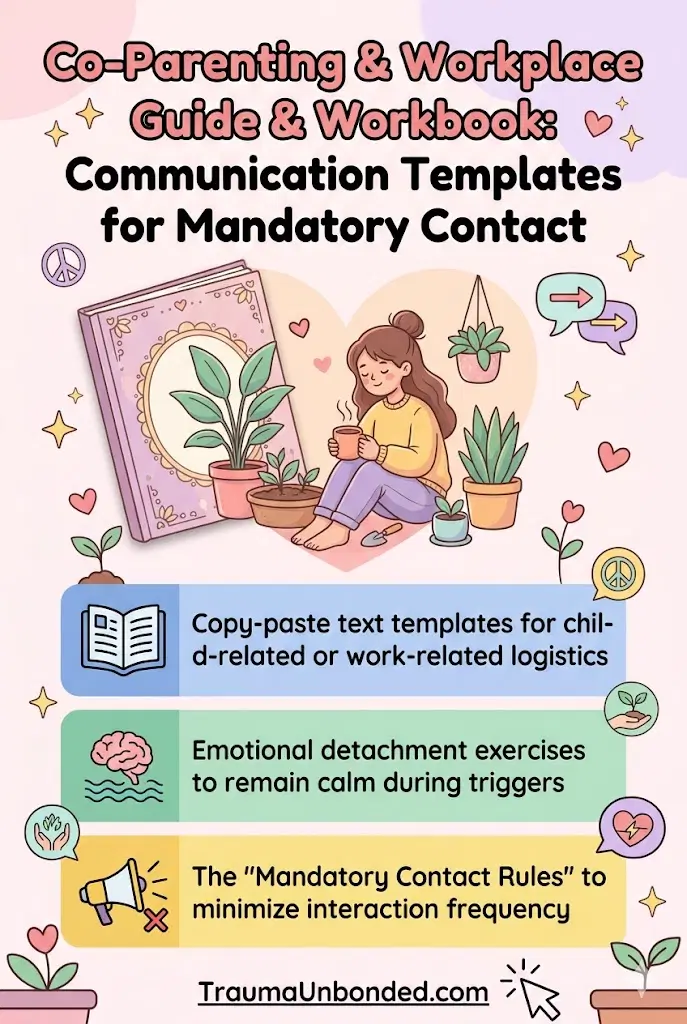
Taking back control of your communications is only the first step. To completely untangle your life and build a defensive strategy against hostile custody situations, having a step-by-step roadmap is crucial. That is why we designed a dedicated program to help you navigate these exact legal and emotional challenges.
Protecting Your Kids From Emotional Splitting
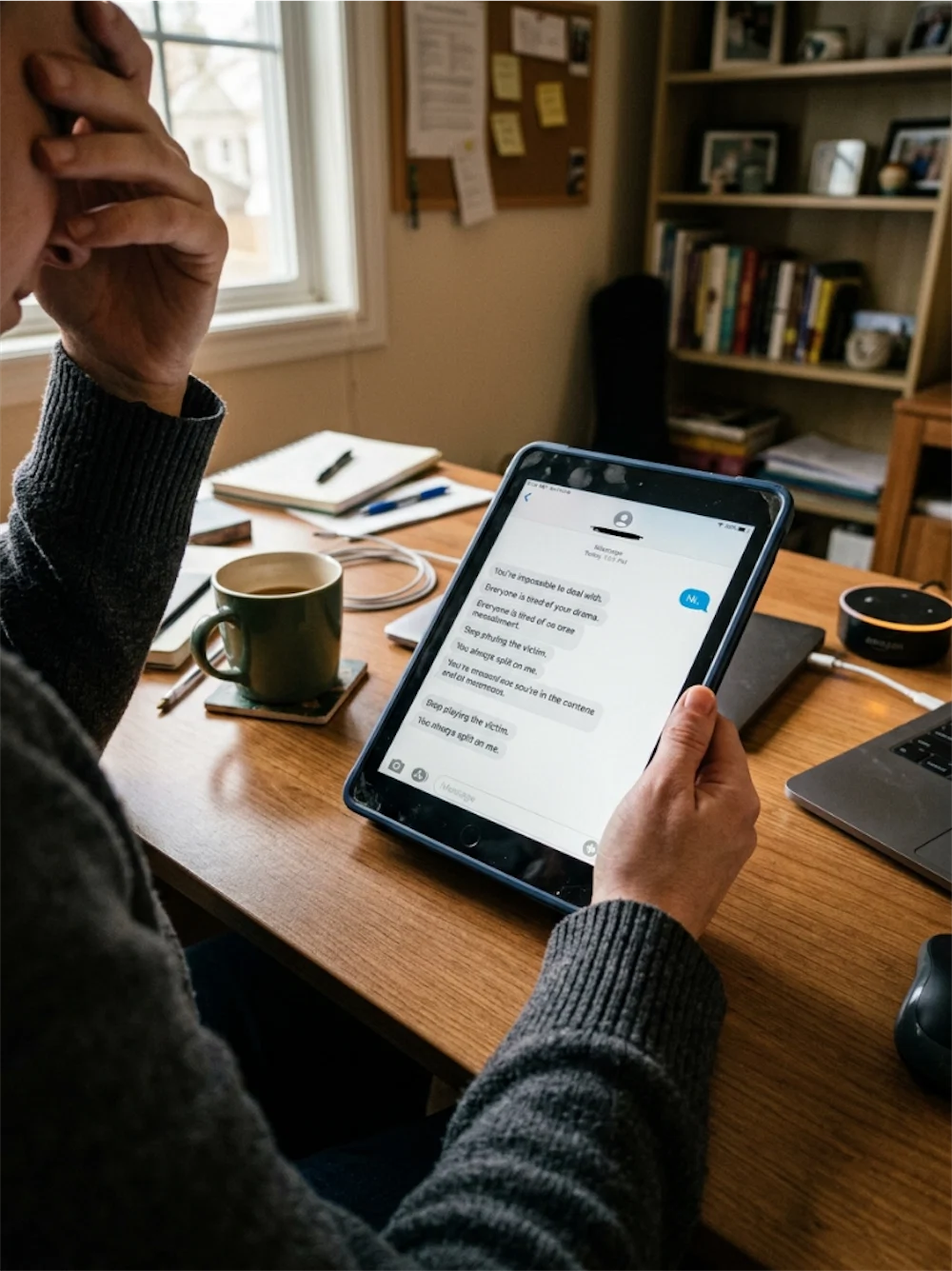
One of the hardest aspects of co-parenting with a BPD ex is watching your children navigate their parent’s extreme emotional swings. In a BPD dynamic, a child may suddenly be put on a pedestal or, conversely, blamed for the parent’s emotional pain. This splitting behavior confuses children, leaving them feeling anxious and responsible for keeping the adult happy. Your primary job is to remain a stable, grounded anchor so they always know what to expect when they are with you.
Never badmouth your ex in front of your kids, no matter how tempting it is to correct the lies. When children hear you criticize the other parent, they often internalize it as a criticism of themselves. Instead, focus on validating their feelings. If they return from a visit anxious or upset, say things like, “It is okay to feel confused, and you do not have to fix anyone else’s feelings.”
Keeping a Consistent Safe Space at Your House
To undo the stress of an unpredictable household, you must focus on structure. Maintain consistent bedtimes, predictable meals, and clear rules that do not change based on your mood. Children who experience instability at one house thrive when the other house feels safe, quiet, and reliable. After years of therapy and recovery, I realized that my own grounded nature was the best gift I could offer my kids. Building a safe calming healing space at home gives them a physical and emotional soft landing place.
Encourage your children to pursue hobbies and friendships outside of the family dynamic. When I was deep in the fog of my toxic relationship, I let my entire social world slip away. By helping my children build their own independent interests, I helped them see that their worth is not tied to keeping a parent happy. It teaches them that their identity exists outside of the emotional storm.
Managing the Legal and Documented Side of High-Conflict Custody
In high-conflict custody situations, handshakes and verbal agreements do not work. Every transition time, holiday schedule, and medical decision must be written clearly in a court-ordered parenting plan. If the order says pickup is at 5:00 PM at a neutral location, you arrive at 5:00 PM at that exact location. Do not offer flexibility, because any gray area will be used to create conflict or accuse you of violating the agreement.
Keep meticulous logs of all interactions, missed pickups, and hostile messages. This documentation is not for seeking revenge, but for keeping a clear record if you ever need to return to court. When you document calmly and objectively, you protect your legal standing and reinforce your boundaries. It helps you stay grounded in reality rather than getting pulled back into the crazy-making cycle.
Reclaiming your life while protecting your children from the aftermath of a toxic partnership is a long, slow process. It took me years of therapy, self-reflection, and learning about codependency to finally return to my cheerful, optimistic self. But I promise you, peace is entirely possible. By stepping away from the conflict and holding fast to your parallel parenting rules, you show your kids that stability and calm are the natural states of a healthy home. If you are ready to put an end to the endless arguments and build an airtight strategy for your family’s future, start utilizing the step-by-step templates inside our Co-Parenting with a BPD Ex Guide today.

Meet Your Guide
Helen Brooks
After surviving a 12-year NPD/BPD relationship, I dedicated over a decade to studying trauma bonding and nervous system recovery. My mission is to help you break free from the fog and reclaim your authentic self.
Ready to break the trauma bond and reclaim your life?