Cognitive Dissonance and Narcissists: Making Excuses for Abuse
I remember sitting on my cold kitchen floor at 3:00 AM, staring at my phone and trying to make sense of the text messages. One minute he was telling me I was the love of his life, and the next, he was screaming that I was the reason everything in his life had failed. For twelve years, I lived in that mental fog. I was a shell of the cheerful person I used to be, isolated from my family and left with zero hobbies because my entire existence was dedicated to managing his moods. Does this sound familiar to you? Are you constantly asking yourself why you keep defending someone who treats you so poorly?
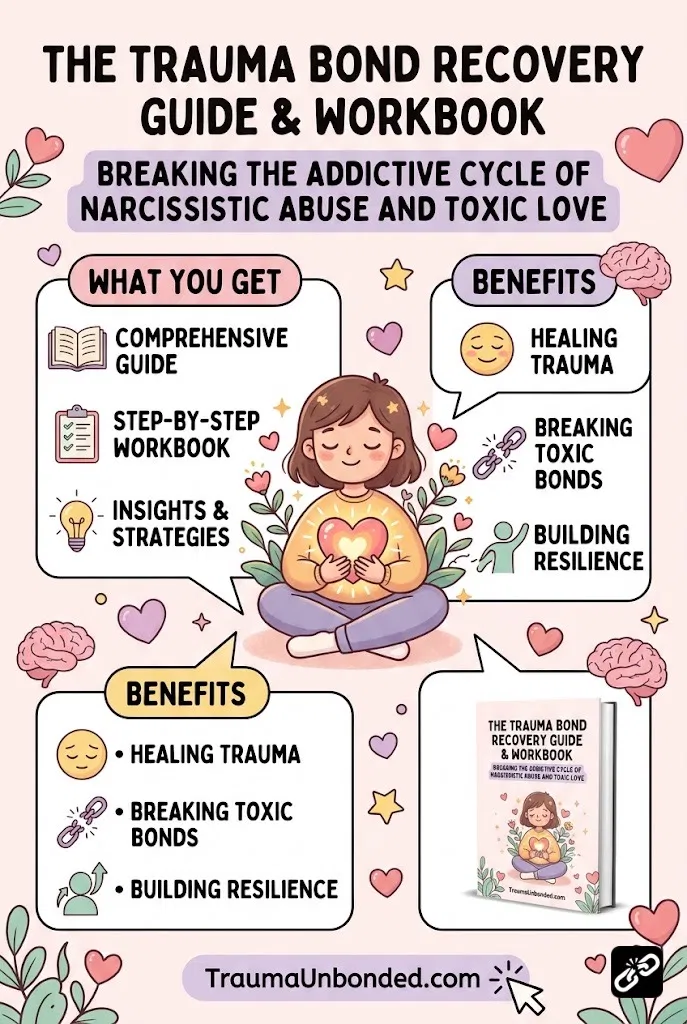
What you are experiencing has a name, and it is the primary reason why survivors stay in toxic loops for so long. Cognitive dissonance is the mental discomfort that happens when you hold two conflicting beliefs at the same time. In a relationship with a partner who has Narcissistic Personality Disorder (NPD) or Borderline Personality Disorder (BPD) traits, this feels like having two different versions of the same person living in your head. If you feel stuck in this mental trap right now, I highly recommend looking into The Trauma Bond Recovery Guide & Workbook to help you start separating the fantasy from the reality.
When you are in the thick of it, you do not see the abuse for what it is. You see a “misunderstood” person who just needs more love, more patience, or more understanding. You focus on the 5% of the time they were kind and use it to excuse the 95% of the time they were cruel. I did this for over a decade, and it nearly destroyed me. Understanding how this mental mechanism works is the first step toward getting your life back.
What is Cognitive Dissonance in Narcissistic Abuse?
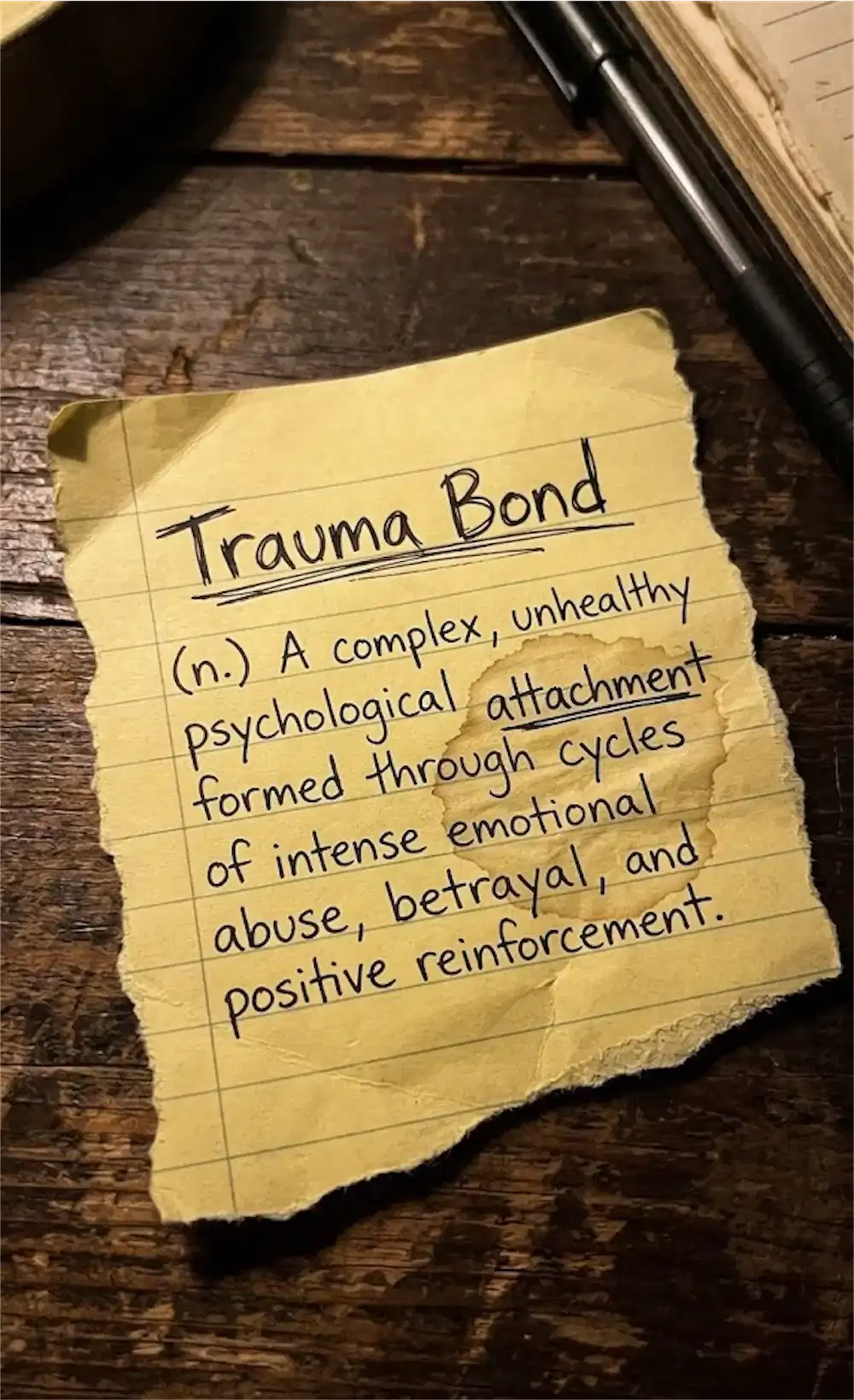
In simple terms, cognitive dissonance after narcissistic abuse symptoms involve a massive internal war. One part of you knows the truth: they lied, they cheated, or they put you down until you felt like nothing. The other part of you is addicted to the “good version” of them from the beginning of the relationship. This is the version that love-bombed you and made you feel like a queen or king.
During my 12-year relationship, I spent hours every day trying to “fix” the version of him that was hurting me so I could get back to the version I loved. It is like trying to put together a puzzle where the pieces from two different boxes are mixed together. You keep trying to force them to fit, but they never will. This mental exhaustion is why you feel like you have brain fog or why you cannot make simple decisions anymore. Your brain is literally maxed out trying to resolve a lie.
Why do we do this? Because the alternative is too painful to accept. If we accept that the person we love is intentionally hurting us, our entire world falls apart. We would have to admit we are in danger, that our future plans are a lie, and that we need to leave. Making excuses is actually a survival mechanism. It is your brain’s way of protecting you from a reality that feels too heavy to carry.
Why We Keep Making Excuses for Abusive Behavior
If someone on the street screamed at you the way your partner does, you would walk away and never look back. So why is it different with a narcissist or someone with BPD traits? It is because they have spent months or years grooming you to believe that their behavior is actually your fault. They use gaslighting to make you doubt your own memory. After a while, you start saying things like, “He only yelled because he had a bad day at work,” or “She only hit me because I pushed her buttons.”
In my experience, making excuses for abusive behavior became a full-time job. I became an expert at defending the indefensible. I told my friends he was just “passionate” or “intense.” I told myself that his childhood trauma gave him a free pass to treat me like a punching bag. Have you ever found yourself apologizing to them after they were the ones who hurt you? That is the dissonance at work. You are trying to keep the peace at the expense of your own sanity.
The narcissist counts on your empathy. They know you are a kind person who wants to see the best in people. They use your own goodness against you. When they do something horrible, they might follow it up with a “hoovering” attempt, where they act vulnerable or cry. This triggers your caretaking instincts, and suddenly, the abuse is forgotten because you are too busy comforting the person who just attacked you.
Breaking this cycle requires more than just willpower. It requires a structured plan to see the truth clearly every single day. If you are struggling to stop the mental loops and the constant justifications, you need a roadmap that explains the science behind why your brain is stuck.
I know how exhausting it is to keep defending someone who is destroying your soul. To help you stop the mental gymnastics and finally find clarity, I recommend using this specific resource that helped me rebuild my reality from the ground up.
The Role of Trauma Bonding and Brain Chemistry

You might wonder, “Am I crazy or is he abusive?” The answer is that your brain is actually responding to a trauma bond and biochemical addiction. When a partner is “hot and cold,” your brain releases dopamine during the “hot” periods and cortisol during the “cold” ones. This creates a literal drug-like addiction to the relationship. You aren’t weak, you are chemically bonded to the person who is hurting you.
During my recovery, my therapist explained that my brain was trying to find a “logical” reason for the chaos because it couldn’t handle the randomness of the abuse. If I could blame myself, then I had the power to fix it. If the abuse was just a result of his “stress,” then I could wait it out. This is how we stay for twelve years. We are waiting for the chemicals in our brain to level out, but they never do as long as we are in contact with the source of the stress.
This is why no contact is so hard. It is like going through heroin withdrawal. Your mind will play tricks on you, reminding you of the time they bought you flowers or the one weekend where you didn’t fight. It will conveniently “forget” the names they called you or the way they isolated you from your friends. This “forgetting” is the cognitive dissonance trying to lure you back into the trap.
How to Break the Trauma Bond and Find Clarity
The only way out is to start looking at the facts without the filter of “hope.” One technique that worked for me was writing a “The Reality List.” I wrote down every single mean thing he ever said, every lie I caught him in, and every time he made me cry. Whenever I felt the urge to call him or felt myself making an excuse for his behavior, I forced myself to read that list. You have to heal from gaslighting and trust your reality again.
You also need to stop asking “why” they do what they do. It doesn’t matter if it’s because of their mother, their ex, or their job. The behavior is the behavior. When you stop looking for the “why,” the cognitive dissonance starts to lose its power. You begin to see that a person who loves you does not intentionally cause you pain. It sounds simple, but when you have been in a toxic fog for a decade, this realization feels like a lightning bolt.
Recovery is not a straight line. You will have days where you miss them so much it feels physical. That is normal. Your brain is just craving that hit of dopamine. On those days, you have to be your own protective parent. You have to tell yourself, “I am making excuses because I am in pain, but the excuses are not true.” Slowly, the “original you” starts to come back. I found my love for hiking and music again after twelve years of silence. You can find your “original self” too.
The journey away from a narcissist or someone with BPD is the hardest thing you will ever do. But I promise you, the peace on the other side is worth every ounce of effort. You deserve a life where you don’t have to explain away someone’s cruelty. You deserve to be optimistic and grounded again. Start by putting down the burden of their excuses and picking up the truth. If you need a helping hand to guide you through the process of breaking those mental chains, The Trauma Bond Recovery Guide & Workbook is a perfect place to start your new life.
Your Takeaway: Cognitive dissonance is a mental shield that protects you from the pain of reality, but it also keeps you trapped in abuse. Breaking it requires looking at the raw facts of the relationship without making excuses for the person hurting you. You are not crazy, you are just healing from a deep psychological bond, and with the right tools, you can and will recover.

Meet Your Guide
Helen Brooks
After surviving a 12-year NPD/BPD relationship, I dedicated over a decade to studying trauma bonding and nervous system recovery. My mission is to help you break free from the fog and reclaim your authentic self.
Ready to break the trauma bond and reclaim your life?