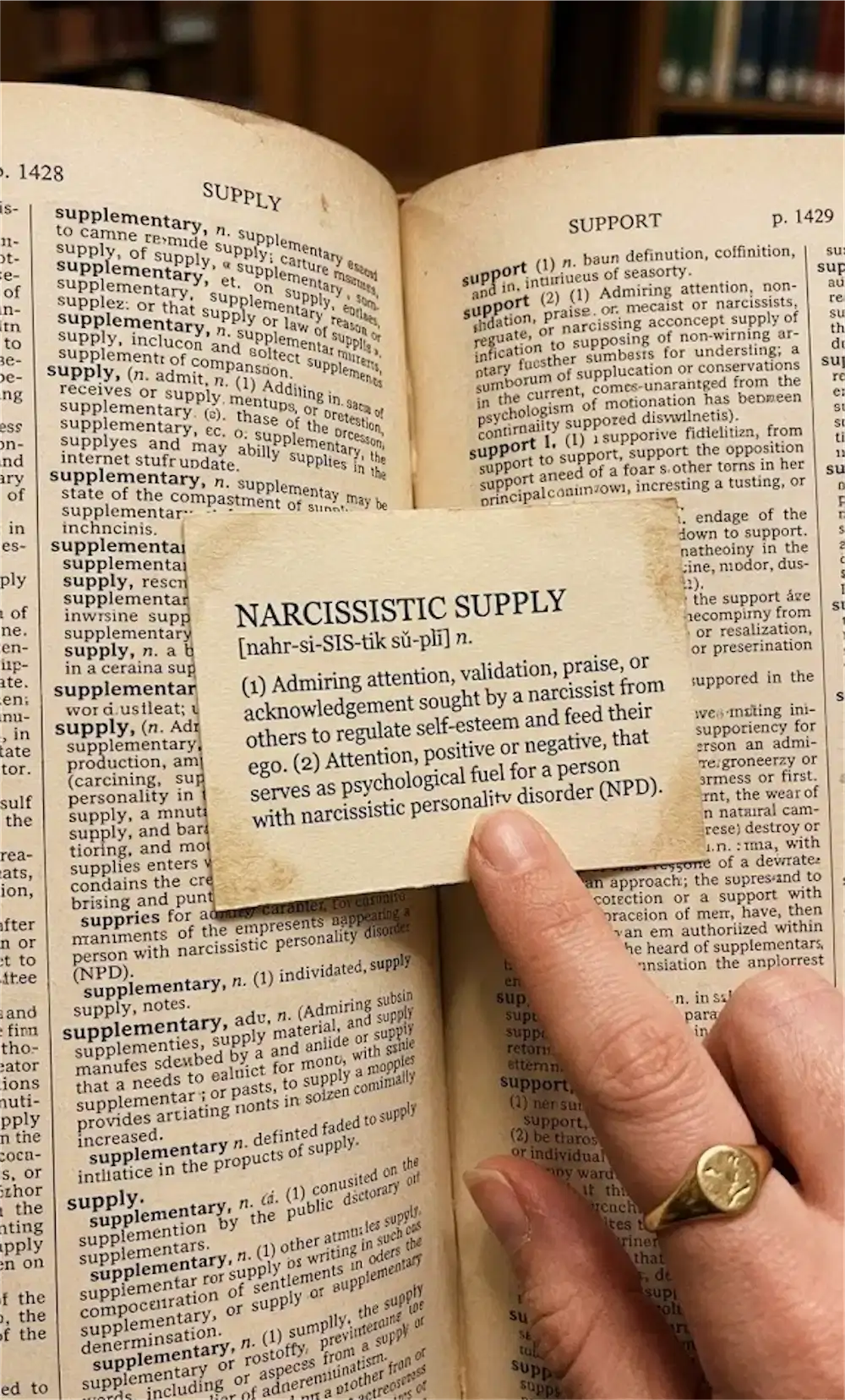
4 Psychological Concepts for Understanding Life After Narcissistic Abuse
After I left my 12-year relationship, I did what most survivors do. I thought leaving was the finish line. It wasn’t. It was the starting gun.
The confusion, the pull to go back, the inability to trust my own mind — none of it made sense to me at the time. I just thought something was broken inside me. What I didn’t know was that there were actual, well-documented psychological mechanisms running the show behind the scenes. And once I started learning their names, I stopped feeling crazy.
This article is for anyone asking “why do I still feel this way?” after leaving a narcissistic partner. These four psychological concepts gave me more clarity than months of trying to just “move on.”
1. Trauma Bonding: Why Leaving Feels Like Withdrawal

Let’s start with the big one. Trauma bonding is what happens when an intense emotional attachment forms between an abuse survivor and their abuser — not despite the abuse, but partly because of it.
It sounds counterintuitive. But think about it like this: imagine a slot machine. You don’t get hooked because it always pays out. You get hooked because sometimes it pays out. That intermittent reward is the most addictive pattern known to behavioral psychology.
That’s exactly what a narcissistic relationship looks like. Explosive fights followed by tearful apologies. Brutal criticism followed by moments of real warmth. You spend years chasing the good version of the person, convinced it’s the “real” them. A trauma bond is a psychological response that occurs when a person forms an attachment to someone who intermittently abuses or mistreats them, developing through recurring cycles of affection and mistreatment that create intense emotional connections that are difficult to break.
There’s a neurochemical reason this is so hard to break. Trauma bonds are influenced by your own hormone system — dopamine, oxytocin, and opioids — and the opioid system can make you addicted to things that are genuinely harmful to you. That’s not weakness. That’s your biology.
Research confirms this isn’t just emotional immaturity either. Trauma bonding is not a failure of emotion or cognition, but a neurobiological survival imperative that bypasses logic and emotional processing altogether, rooted in how survival states override conscious thought and reorganize behavior at the level of reflex.
When I finally left, I kept expecting relief. Instead I felt like I had ripped out something I needed to survive. That’s trauma bonding. It mimics grief. It mimics withdrawal. Research illustrates that trauma bonds arise under key conditions, including power differentials, intermittent maltreatment, manipulation, and when escape feels unimaginable.
Understanding this concept changed everything for me, because I stopped asking “why do I miss someone who hurt me?” and started asking “what does my nervous system need to feel safe again?”
If you want to go deeper on this, I wrote about it more thoroughly in my guide: Lessons From 12 Years With a Narcissist. And for a science-backed breakdown of the no contact rule — which is directly tied to breaking a trauma bond — read: Why No Contact Works in Narcissistic Abuse Recovery.
One book that genuinely helped me understand what was happening in my body and brain is The Body Keeps the Score by Dr. Bessel van der Kolk. It isn’t specifically about narcissistic abuse, but it explains with incredible clarity why trauma gets stored in the body — and why you can’t just think your way out of it.
2. Cognitive Dissonance: The War Inside Your Own Mind
Here’s a question I used to ask myself constantly: “How can I love someone and also be terrified of them?”
The answer is cognitive dissonance. At its core, cognitive dissonance is the mental discomfort you experience when you hold two contradictory beliefs at the same time. Cognitive dissonance refers to the mental discomfort experienced when a person holds two or more contradictory beliefs, ideas, or values simultaneously, and research by psychologist Leon Festinger demonstrated that individuals are driven to reduce this discomfort by changing their attitudes, rationalizing their thoughts, or denying information that conflicts with their core beliefs.
In a narcissistic relationship, this plays out in a very specific way. You know, somewhere deep down, that what’s happening isn’t right. But you also believe — because you’ve been told repeatedly — that you’re the problem. So your brain works overtime to make those two things fit together. The victim fixates on positive relationship aspects while simultaneously minimizing negative facets, and women with a positive self-image at the onset of maltreatment may engage in augmented distortions, minimizations, or denials to balance the discrepancies between self-perception and cognitive dissonance.
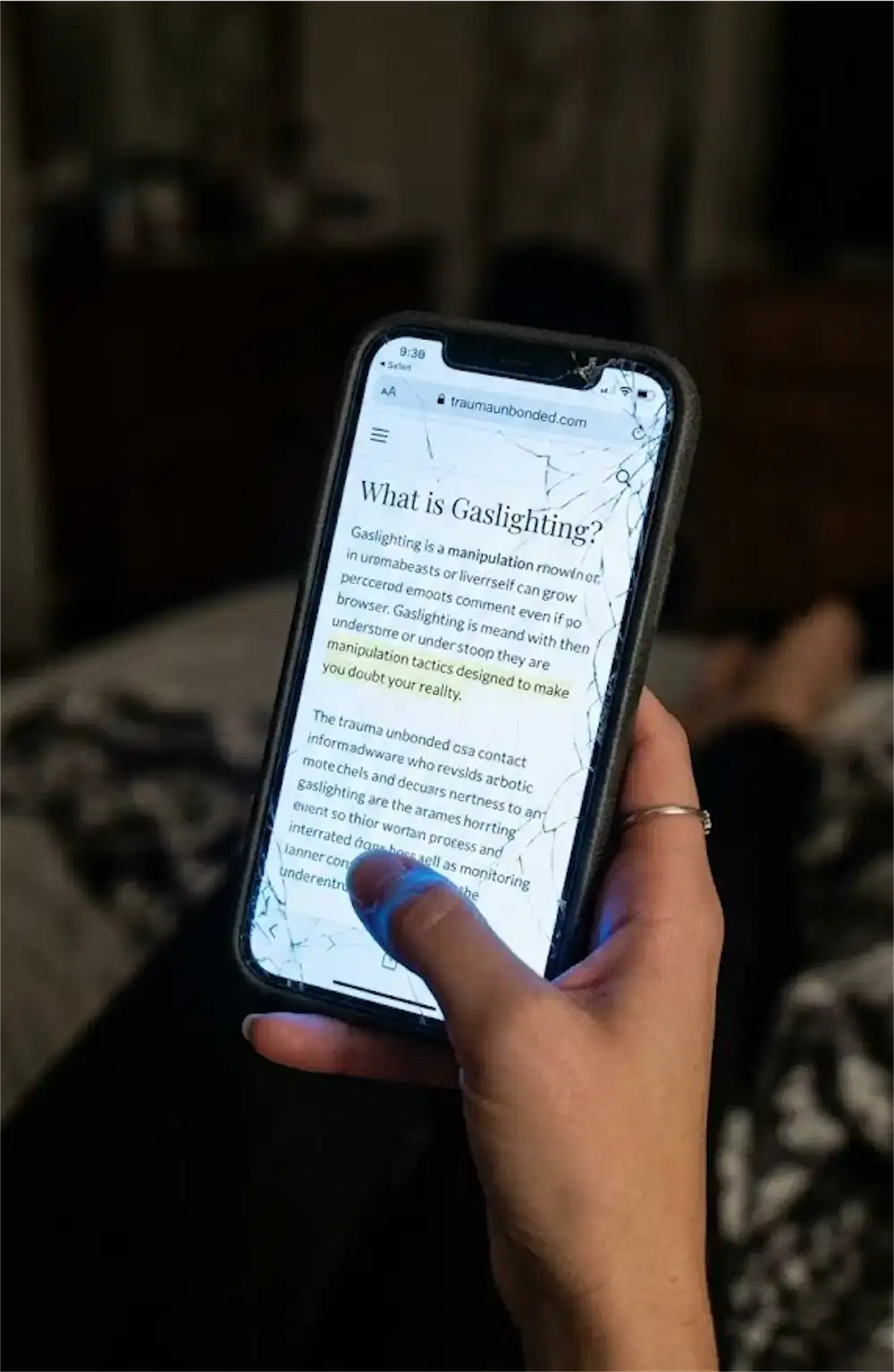
What makes this worse in narcissistic relationships specifically is the constant gaslighting. When someone is consistently telling you that your memory is wrong, your reactions are overblown, and your perceptions are distorted — you start to believe them. You stop trusting yourself. Cognitive dissonance is both a symptom and a cause of trauma bonds: the more a person justifies or denies the abuse to maintain emotional connection, the stronger the trauma bond becomes, and it thrives in environments marked by unpredictability and manipulation.
I remember spending years rereading texts, replaying conversations, trying to figure out if I had “really” experienced what I thought I experienced. That mental exhaustion is cognitive dissonance at work. Leaving a relationship elevates cognitive dissonance arousal, and years, time, and effort expended into the relationship can entrench a victim’s belief in enduring the abuse to sustain relationship continuity.
Breaking through it isn’t about reading one article. It took me months of therapy and, honestly, journaling my way through it. Writing the truth of what happened — the actual events, not the version I’d been gaslit into believing — was what started to resolve it for me. If you haven’t tried it yet, these journaling prompts for post-narcissist breakup recovery are a good starting point.
Another book worth picking up is Should I Stay or Should I Go by Dr. Ramani Durvasula, a clinical psychologist who specializes in narcissistic abuse. Her writing cuts through the fog better than almost anything I’ve read.
3. Learned Helplessness: Why You Stopped Trying to Fight Back

Do you remember a time early in the relationship when you pushed back? When you spoke up, said “this isn’t okay,” and tried to assert yourself? And then, slowly, you stopped doing that?
That’s not a personality flaw. That’s learned helplessness — and it’s one of the most well-documented psychological responses to long-term, uncontrollable stress.
The concept was pioneered by psychologist Martin Seligman in the 1960s through experiments with dogs exposed to unavoidable electric shocks. Eventually, even when they could escape, they didn’t try. They had learned that their actions didn’t change outcomes. Martin Seligman’s Learned Helplessness Theory provides a crucial perspective on why victims continue to remain in abusive situations — individuals eventually cease attempting to change their circumstances, even when they have the option to escape, if they are subjected to unpleasant situations over which they believe they have no control.
In a 12-year relationship, every time I tried to set a boundary, it was mocked, punished, or twisted against me. Every conversation I tried to have about my feelings ended with me apologizing. Learned helplessness is submission to an external locus of control, preventing agency for leaving the abusive relationship. Over time, you internalize the belief that you are powerless. It’s not that you gave up. You were conditioned into it, systematically.
As denial and cognitive dissonance grow, you do and allow things you wouldn’t have imagined when you first met. You develop “learned helplessness,” your shame increases as your self-esteem declines, you feel guilty or responsible for the abuse, and you wonder what happened to the happy, self-respecting, confident person you once were.
The recovery from learned helplessness requires rebuilding a sense of agency — slowly, in small doses. This is why so many therapists recommend starting with tiny wins. Choosing what to eat, where to go, how to spend your evening. These micro-decisions retrain your brain that your actions matter again.
It’s also why physical movement was such a turning point in my own recovery. There’s something about exercise — the direct cause-and-effect between effort and result — that directly counters the helplessness. Read more about that here: How Exercise Helps Break the Trauma Bond After BPD Abuse.
If you’re working through this with a therapist (which I strongly recommend), ask specifically about schema therapy — it targets the deep-rooted beliefs formed from learned helplessness better than most modalities.
For self-directed work on rebuilding agency, a structured journal can help enormously. Something like the Trauma Recovery Journal for Narcissistic Abuse Survivors on Amazon gives you daily prompts designed specifically for this kind of healing work.
4. Complex PTSD and Nervous System Dysregulation: When Your Body Is Still Stuck in the Relationship
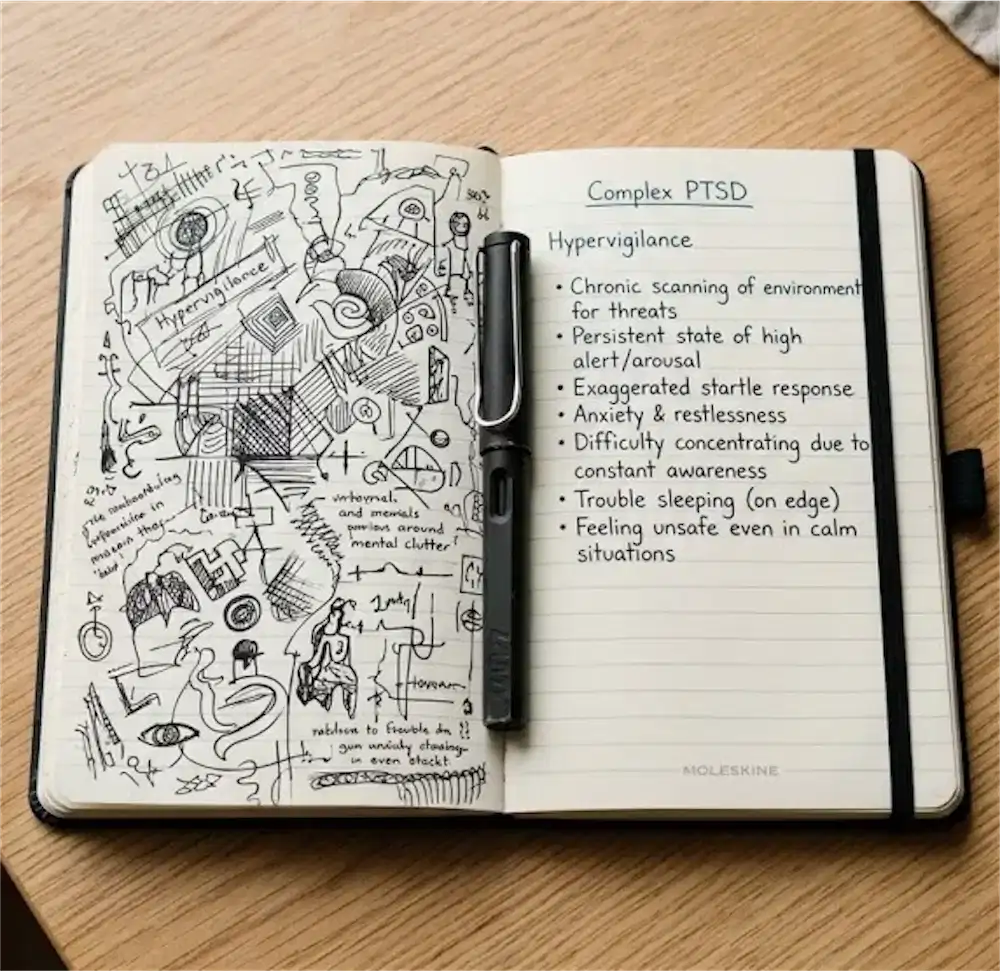
You left. You’re in a safe place. There’s no reason to panic. And yet your heart races when you hear a notification. Your stomach drops when someone raises their voice. You flinch at the kind of sudden movement that used to precede an argument.
This is not you being dramatic. This is Complex PTSD — and specifically, it’s your nervous system doing exactly what it was trained to do.
Complex PTSD is a form of PTSD that results from sustained trauma, particularly in situations where the victim feels trapped or powerless — unlike standard PTSD, which is typically triggered by a single traumatic event, C-PTSD develops over time as a result of repeated emotional or psychological abuse.
What does this look like day to day? It includes difficulty managing intense emotions leading to overwhelm, anger, or sadness; a pervasive sense of worthlessness or shame internalized from the abuser’s criticism; struggles with trust and intimacy; a constant state of hypervigilance; and dissociation — feeling detached from yourself or your surroundings, as if observing life from a distance.
Neurologically, this makes complete sense. According to Stephen Porges’ Polyvagal Theory, when the nervous system cannot resolve threat, it cycles through three states: social engagement (safe and connected), sympathetic activation (fight or flight), and dorsal vagal collapse (freeze, shutdown, or dissociation) — and survivors of prolonged narcissistic abuse often become chronically dysregulated between these states, oscillating instead between hyperactivation and collapse.
This dysregulation is not a psychological choice. It is a physiological adaptation. That distinction matters more than I can explain. You didn’t choose this response. Your body chose survival.
The physical toll is real too. Research consistently demonstrates a direct link between C-PTSD and physical health consequences — chronic nervous system dysregulation produces measurable physiological effects including immune system suppression, elevated cortisol, disrupted sleep architecture, and increased susceptibility to autoimmune conditions. This is why I had chronic fatigue and constant illness for the first year after I left, and no doctor could find a medical reason for it.
For recovery, the research is fairly clear on what works. Therapists trained in EMDR, Somatic Experiencing, IFS, Schema Therapy, or sensorimotor psychotherapy offer the strongest evidence base for C-PTSD. Talk therapy alone often isn’t enough — you have to work with the body directly.
For more on what complex PTSD actually looks like in the aftermath of a narcissistic relationship, I’ve written a full breakdown here: Long-Term Effects of Narcissistic Abuse and How to Heal. And if you want to understand how physical symptoms connect to nervous system dysregulation, this one is worth reading too: Physical Health Symptoms of a Toxic Relationship.
One of the most important books I read in my recovery was Complex PTSD: From Surviving to Thriving by Pete Walker. Walker is a therapist and C-PTSD survivor himself, and his approach to emotional flashbacks — those sudden waves of shame and fear that hit out of nowhere — finally gave me language for something I’d been experiencing for years without understanding.
How These Four Concepts Connect
These aren’t four separate issues. They’re interlocking. Trauma bonding keeps you chemically attached. Cognitive dissonance makes you rationalize staying. Learned helplessness convinces you that leaving won’t change anything. And C-PTSD / nervous system dysregulation means your body keeps responding to threats that no longer exist.
Understanding how they connect is the foundation of understanding why recovery is not linear — and why simply deciding to “move on” doesn’t work. You’re not dealing with a bad memory. You’re dealing with rewired neurobiology.
The good news? All of it can be reversed. Not quickly, and not easily. But with the right support and tools, every single one of these mechanisms can be untangled. I know because I untangled them. I still have hard days. But I also have the framework to understand what those hard days actually are — and that understanding is everything.
If you’re still in the early stages, bookmark Insights From the First 3 Months of Narcissist Recovery — it’s one of the most honest articles I’ve written about what that phase actually looks like.
A Note on Getting the Right Help
None of this article replaces professional support. If you recognize yourself in any of these four concepts, please consider seeking a therapist who has specific training in trauma and narcissistic abuse — not just a general counselor. Narcissistic abuse necessitates expanded therapeutic approaches, integrating trauma-informed methods such as Trauma-Focused Cognitive Behavioral Therapy (TF-CBT) and Eye Movement Desensitization and Reprocessing (EMDR).
A useful academic resource on the overlap between narcissistic abuse and these psychological mechanisms is this peer-reviewed paper: Narcissistic Abuse and the Silent Crisis of Domestic Violence (IJRAR, 2025) — it covers trauma bonding, learned helplessness, and C-PTSD within a single framework.
For a broader neurological and clinical view of how trauma bonds work at the brain level, the SSRN paper When Survival Takes the Helm: Trauma Bonding and the Eclipse of Emotion and Logic (Wolf, 2025) is a rigorous and surprisingly readable read.
Resources
These are books and tools that made a genuine difference in my recovery. I recommend them honestly — not because they fix everything, but because understanding what you’re going through is the first real step out of it.
- The Body Keeps the Score by Dr. Bessel van der Kolk — The definitive guide to how trauma lives in the body and how to heal it. Essential reading for C-PTSD recovery.
- Complex PTSD: From Surviving to Thriving by Pete Walker — Practical, compassionate, and written from lived experience. Covers emotional flashbacks better than almost any other resource out there.
- Should I Stay or Should I Go by Dr. Ramani Durvasula — Clinical psychologist and one of the leading voices on narcissistic abuse. This book is particularly useful if you’re still navigating the decision to leave — or trying to understand why leaving felt so hard.
This post contains Amazon affiliate links. If you purchase through these links, I may earn a small commission at no extra cost to you. I only recommend books and tools I’ve personally found helpful in recovery.

Meet Your Guide
Helen Brooks
After surviving a 12-year NPD/BPD relationship, I dedicated over a decade to studying trauma bonding and nervous system recovery. My mission is to help you break free from the fog and reclaim your authentic self.
Ready to break the trauma bond and reclaim your life?