8 Best Books on Overcoming Codependency After BPD Relationships
If you’re here because you got out of a relationship with someone who had BPD traits (or you strongly suspect they did), and now you can’t stop caretaking in your head, replaying every fight, and wondering if you were the “problem”… I get it.
I survived a 12-year toxic relationship with a partner who showed strong NPD and BPD traits. When it ended, I was wrecked. Isolated from friends. No hobbies. Just a miserable, collapsed version of myself. What finally helped was therapy plus learning (very slowly) what codependency and trauma bonds look like in real life, not just as definitions on a screen.
This list is the set of books I wish I had in year one, when my nervous system was still acting like the breakup was an emergency.
Important note: BPD is a real mental health condition that only a qualified clinician can diagnose. Not everyone with BPD is abusive. This article is for people recovering from relationships that were chaotic, manipulative, or emotionally unsafe, where codependent patterns got “trained into” you over time. For a clinician-reviewed overview of borderline personality disorder, see the National Institute of Mental Health.
NIMH: Borderline Personality Disorder (Signs, Symptoms, Treatment)
Codependency After a BPD Relationship: Why It Feels Like Withdrawal

Codependency after a BPD-style relationship often feels less like “missing someone” and more like withdrawal. Why?
- Your brain learned the push-pull rhythm. Intensity, closeness, crisis, breakup threat, reunion, apology, repeat. That instability can hook you even when the relationship was hurting you.
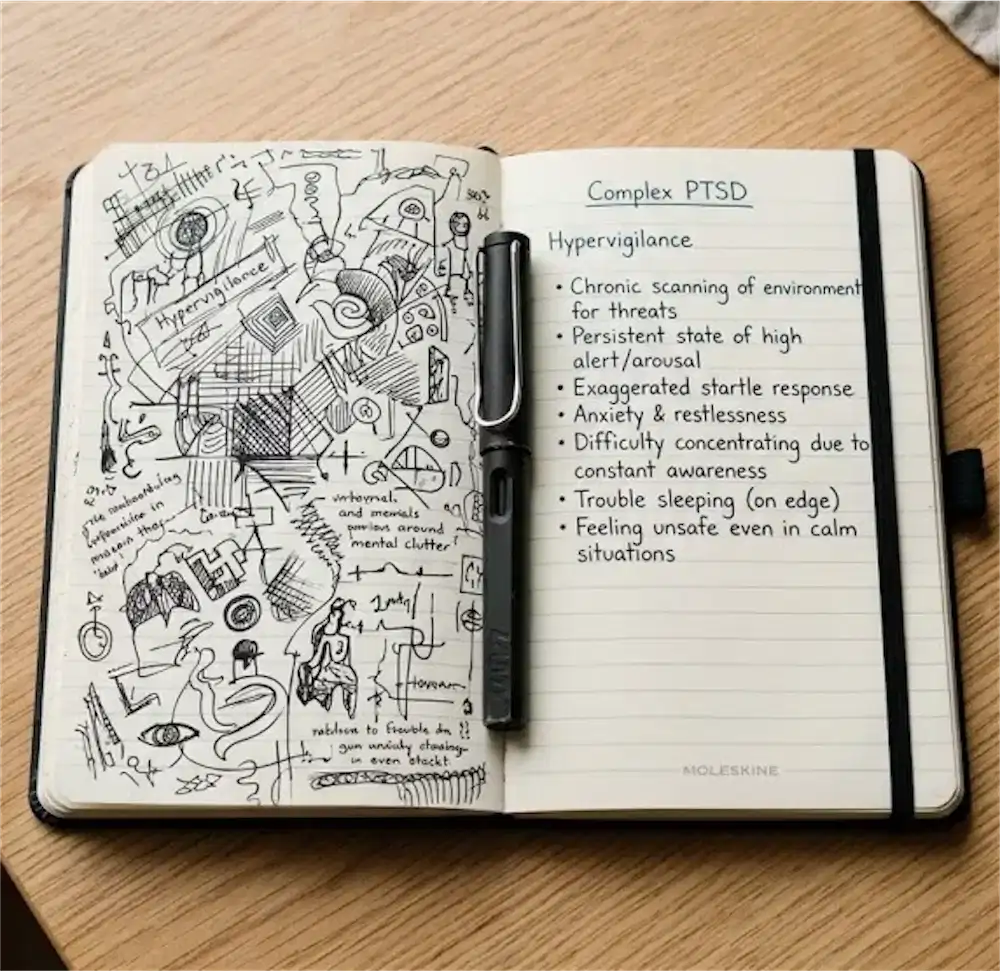
- You were trained to scan moods. You learned to read micro-signals so you could prevent the next explosion. After the breakup, that hypervigilance doesn’t just shut off.
- Your identity shrank into “the fixer.” In my 12-year relationship, I stopped asking what I wanted because wanting things felt “selfish.” My job became keeping the peace.
And yes, part of the confusion is that “codependency” is not a formal DSM diagnosis. It’s a popular framework for patterns like chronic people-pleasing, over-responsibility, poor boundaries, and self-abandonment. That doesn’t make it fake. It makes it a practical label many survivors use to spot the pattern and change it.
If you want a deeper “this is why my body is doing this” explanation, you’ll probably like these internal guides too:
- BPD Relationship Trauma Recovery Guide (2026)
- Strategies to Overcome Codependency and Toxic Stress
- Why Books Won’t Heal a Trauma Bond (But Still Help)
The 8 Best Books on Overcoming Codependency After BPD Relationships (Quick Comparison)

I’m giving you eight because codependency after BPD relationships is not one problem. It’s usually a stack of problems: attachment wounds, boundary collapse, guilt addiction, conflict fear, and “I can fix it if I try harder” thinking.
| Book | Best for (after BPD relationships) | If you only read one chapter first… |
|---|---|---|
| Stop Caretaking the Borderline or Narcissist (Fjelstad) | Breaking the caretaker role and drama cycles | The part that names the caretaker pattern |
| Codependent No More (Beattie) | Detaching from obsession and rescuing | Detachment + self-focus basics |
| Set Boundaries, Find Peace (Tawwab) | Scripts and practical boundary language | Boundary types + how to say it |
| The DBT Skills Workbook (McKay, Wood, Brantley) | Emotional regulation so you stop spiraling | Distress tolerance tools |
| Attached (Levine, Heller) | Understanding anxious attachment and protest behavior | The anxious-avoidant trap section |
| Facing Codependence (Mellody) | Seeing how early wounds shaped adult patterns | Boundaries and “symptoms” overview |
| Adult Children of Emotionally Immature Parents (Gibson) | Untangling guilt, obligation, and emotional loneliness | The parent “types” section |
| Too Much (Cole) | High-functioning codependency (overgiving, overdoing) | The cost of overfunctioning |
1) Stop Caretaking the Borderline or Narcissist (Margalis Fjelstad)
This is the book I recommend when someone says: “I know I shouldn’t have to manage another adult’s emotions… but I still do it automatically.”
In a BPD-leaning relationship dynamic, the caretaker role can become your whole personality. You explain, soothe, prevent, apologize, absorb, and then feel shocked that you’re depleted. Fjelstad names that loop clearly and keeps pulling you back to one question: What are you responsible for, and what are you not responsible for?
- What it helped me do: stop arguing like a lawyer and start acting like a grown adult with choices.
- Best for: people who stayed “because they felt guilty leaving.”
Find “Stop Caretaking the Borderline or Narcissist” on Amazon
2) Codependent No More (Melody Beattie)
Beattie’s core message is simple and still painfully relevant in 2026: you can care about someone without abandoning yourself.
If your post-breakup life looks like checking your phone, checking their socials, re-reading old texts, trying to “understand what happened,” and secretly hoping you’ll get one message that makes it all make sense, this book helps you stop feeding the obsession.
Also worth knowing: a revised edition was released in October 2022, which is helpful if you want an updated read.
Find “Codependent No More” on Amazon
3) Set Boundaries, Find Peace (Nedra Glover Tawwab)
After a BPD relationship, lots of survivors know what they should do, but can’t find the words in the moment. This is where Tawwab is gold: she makes boundaries feel like normal adult communication, not a courtroom speech.
- Best for: people who freeze during conflict, then overexplain later.
- What it gives you: scripts. Clear examples. “Try this sentence” energy.
Find “Set Boundaries, Find Peace” on Amazon
4) The Dialectical Behavior Therapy Skills Workbook (Matthew McKay, Jeffrey C. Wood, Jeffrey Brantley)
This one is less about “understanding your ex” and more about stopping the internal chaos that keeps you bonded to the relationship.
DBT skills can be especially useful after BPD-style dynamics because the relationship often trained you into extremes: idealizing, crashing, panicking, texting too much, apologizing too much, then feeling ashamed. This workbook gives you structure for distress tolerance, emotion regulation, mindfulness, and interpersonal effectiveness.
DBT is also included in formal guidance for treating borderline personality disorder in some settings (for example, NICE discusses DBT in its BPD guideline context). You’re not “being dramatic” for needing tools. These are real skills.
Find “The DBT Skills Workbook” on Amazon
5) Attached: The New Science of Adult Attachment (Amir Levine, Rachel Heller)
If you identify as anxiously attached, this book can feel like somebody finally explains why you did the things you did. The begging. The spiraling. The “I’ll do anything to fix it” energy.
In my case, understanding attachment didn’t excuse what my partner did, but it helped me stop calling myself “crazy.” I wasn’t crazy. I was activated. And I kept trying to earn safety from someone who couldn’t give it consistently.
6) Facing Codependence (Pia Mellody)
This is the book I’d hand to the version of me who kept saying: “I don’t get why I stayed.” Mellody doesn’t just talk about codependency as a habit. She talks about it as a development problem: when your early environment trains you to earn love through performance, peacekeeping, or emotional labor, you carry that into adult relationships.
Fair warning: it can be intense. It’s not a cute “tips and tricks” book. It’s more like holding up a mirror, then holding it there.
Find “Facing Codependence” on Amazon
7) Adult Children of Emotionally Immature Parents (Lindsay C. Gibson)
If codependency is your present, this book often explains the past that built it.
Many people who bond hard to emotionally chaotic partners grew up in families where their feelings weren’t safe, welcomed, or taken seriously. So as adults, they choose partners where love is something you “manage.” Gibson’s work can help you name that early emotional loneliness and stop trying to repair it through romantic suffering.
Find “Adult Children of Emotionally Immature Parents” on Amazon
8) Too Much: A Guide to Breaking the Cycle of High-Functioning Codependency (Terri Cole)
Some of us don’t look codependent on the outside. We look competent. Helpful. Reliable. The person everyone leans on.
Terri Cole’s framing of “high-functioning codependency” fits a common post-BPD breakup reality: you were the stable one, the logical one, the one who carried the relationship. Then when it ended, you realized you had no idea how to carry yourself without a crisis to solve.
Find “Too Much” by Terri Cole on Amazon
No Contact Boundaries After a BPD Breakup (And Why Your Body Fights It)

Even if you’re not doing full no contact, you need contact rules. Not to punish them. To protect you.
After my 12-year relationship ended, I told myself I could “stay kind” and “be mature” and “talk it out.” What actually happened was I got pulled back into the same roles: caretaker, translator, emotional punching bag, therapist, emergency contact. Every interaction reset my healing to day zero.
Start here if you need a practical structure:
- One channel only: email only (or a coparenting app only), so you’re not getting surprise texts.
- Time windows: you respond once per day, at a set time. No “instant calming.”
- No emotional debates: you don’t defend your character, you don’t litigate the past, you don’t chase closure through circular conversations.
- Boundary = action: not a speech. If they violate it, you follow through.
If you want a step-by-step framework, these internal guides are built for exactly this stage:
- Narcissist No Contact Guide
- Why No Contact Works in Narcissistic Abuse
- Stop Checking Your Ex’s Social Media: Strategies That Work
And if you want a non-therapy support option, many people find community in Co-Dependents Anonymous. Even if you don’t love everything about 12-step language, the patterns list can be a surprisingly clear mirror.
CoDA: Patterns and Characteristics of Codependence
If you’re feeling unsafe, having thoughts of self-harm, or your anxiety is turning into crisis, please contact local emergency services. In the US, you can call or text 988 for the Suicide & Crisis Lifeline.
30-Day Codependency Recovery Reading Plan (Built for Post-BPD Breakups)

You don’t need to read eight books in a month. You need a plan that rewires your reflexes.
Here’s a simple 30-day structure that I’ve seen work (and yes, it’s the kind of routine I used when I had zero motivation and my mood depended on whether my ex seemed calm that day).
Days 1 to 7: Stabilize your nervous system first
- Read: DBT Skills Workbook (distress tolerance basics).
- Practice daily: one skill when triggered (ice water, paced breathing, grounding, short walk).
- Journal prompt: “What does my body do right before I break a boundary?”
Extra support: Nighttime Habits to Regulate Your Nervous System
Days 8 to 15: Break the caretaker reflex
- Read: Stop Caretaking the Borderline or Narcissist.
- Write a “responsibility list” with two columns: Mine vs Not mine.
- Boundary micro-action: say one clean “No” (no apology essay afterward).
Extra support: Strategies to Overcome Codependency and Toxic Stress
Days 16 to 23: Learn the language of boundaries
- Read: Set Boundaries, Find Peace.
- Create 5 “scripts” for your highest-risk situations (late-night calls, guilt texts, blame loops, triangulation with friends).
- Journal prompt: “Where do I confuse kindness with self-abandonment?”
Days 24 to 30: Heal the root, not just the symptom
- Read: Adult Children of Emotionally Immature Parents or Facing Codependence (choose the one that fits your story).
- Write: “What did I have to become in childhood to be loved or safe?”
- Choose one re-parenting habit for the next month (sleep routine, meals, movement, friend time).
If journaling is hard because your brain goes blank (very normal after prolonged emotional stress), use guided prompts:
Therapy (and the “Right Kind” of Help) After BPD Relationship Trauma
Books can change your thinking. Therapy changes the part of you that still feels like love equals anxiety.
If your relationship involved chronic instability, threats of abandonment, or emotional volatility, you might benefit from trauma-informed therapy approaches. If you want an evidence-based public guideline reference point for BPD treatment context (including mention of DBT programs in some cases), NICE is a solid place to read.
NICE Guideline: Borderline Personality Disorder (Recognition and Management)
And if you’re rebuilding your life piece by piece (new routines, new friends, new identity), you might like:
- Recovery Tools
- Essential Recovery Tools for Narcissistic Abuse
- Self-Healing Tips for Narcissistic Abuse Survivors
Recommended Resources (Extras That Help Codependency Recovery Stick)
These are optional, but they’re practical. If your brain is tired, tools help you follow through.
- Workbook support (for when reading isn’t enough): Codependent No More Workbook (Amazon search)
- Boundary practice prompts (great if you freeze under pressure): Set Boundaries Deck by Nedra Tawwab (Amazon search)
- DBT skills on cards (for panic moments): DBT Skills Cards (Amazon search)
Clear takeaway: Pick two books, not eight. One should target the caretaker loop (Stop Caretaking or Codependent No More). One should give you skills (DBT Skills Workbook or Set Boundaries, Find Peace). Then build tiny daily follow-through so your nervous system learns: “I can survive conflict, guilt, and silence without chasing love.”

Meet Your Guide
Helen Brooks
After surviving a 12-year NPD/BPD relationship, I dedicated over a decade to studying trauma bonding and nervous system recovery. My mission is to help you break free from the fog and reclaim your authentic self.
Ready to break the trauma bond and reclaim your life?